
Clinton strategist suggests a new playbook after Trump takes a permanent hit
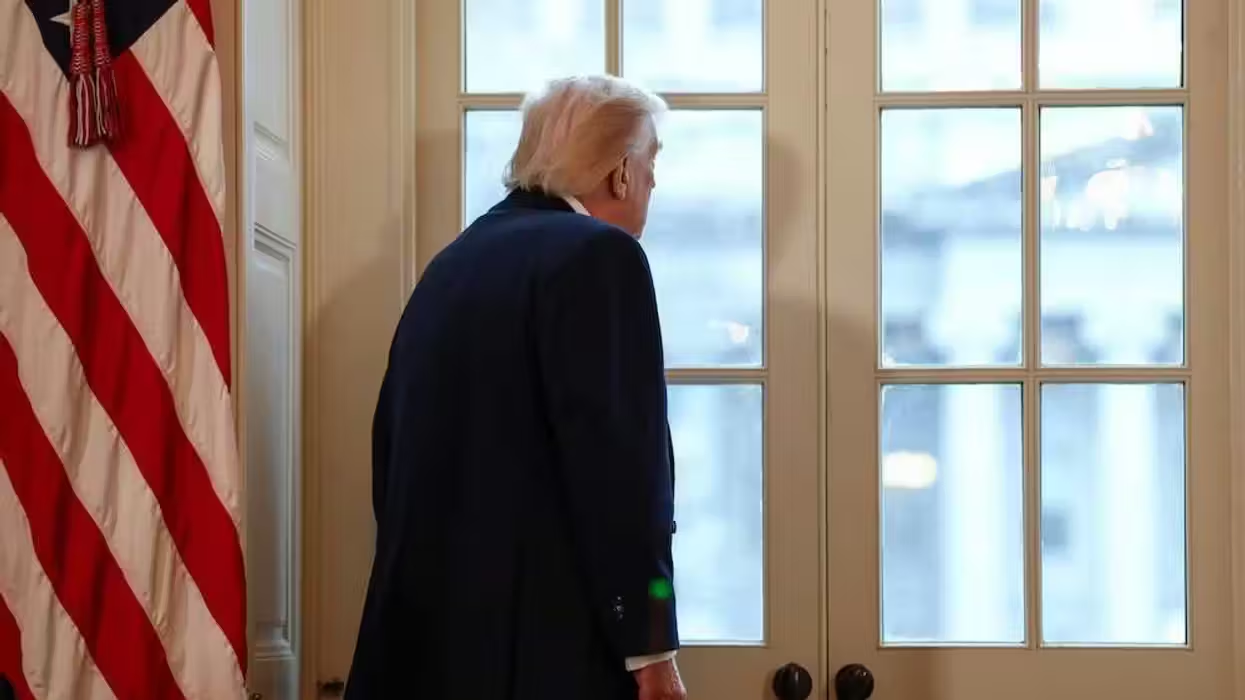
To understand where America is heading after Democrats reclaimed the Senate and House during the 2026 midterm elections, it is useful to look at history — namely, the last time when Democrats led a political realignment that left them in permanent power. By doing so, one can say that President Donald Trump suffered a major blow to his legacy on Election Night 2026, while Democrats have an opportunity the party has not seen this century.
Just compare the late 20th century Democrats to their early 21st century counterparts.
In 1985, the Democratic Leadership Council (DLC) was founded by political strategist Al From. A center-left nonprofit, its purpose was to reorient the Democratic Party so that it could perform better in presidential, congressional and state elections. Since 1968, Republicans had nipped at Democrats' heels in Congress and won four out of five presidential elections. From's advice was for Democrats to move to the center and develop strong local roots.
It took a long time (the DLC struggled to retain control over the Democratic Party during the 1988 presidential election), but by 1992 the 501(c)(4) had nominated Arkansas Gov. Bill Clinton for the presidency and then elected him by a decisive margin. The rest of the story is political legend: Clinton served two terms, balanced the budget while causing four surpluses, created nearly 23 million jobs (more than any other president before or since) and presided over a period of unprecedented American foreign policy dominance (governing as he did between the Cold War and 9/11).
More important, at least from a political standpoint, Democrats won the popular vote in 5 out of the last 6 presidential elections between Clinton's first victory in 1992 and Barack Obama's second victory in 2012, whereas they had lost it in 5 out of the 6 presidential elections from when Richard Nixon was first elected in 1968 to George H. W. Bush's sole election in 1988. Then President Donald Trump shook things up by winning in 2016 (without the popular vote), losing in 2020 (but attempting a coup instead of accepting defeat) and winning in 2024 (this time with the popular vote).
That second victory was Trump's chance to create a permanent coalition hat benefited Republicans. Thanks to his unpopular Iran War and its consequent negative impact on the economy, Trump blew that opportunity, so much so that he (at least presently) isn't following through on his threats to contest the results if Republicans lost.
So what will happen next? What should happen next? AlterNet spoke to From to find out.
The following interview has been lightly edited for clarity, context and length.
"An enormous repudiation of President Trump."
Matthew Rozsa: You were the founder of the Democratic Leadership Council, which pushed the Democratic Party to the center on key issues and reinvigorated the progressive brand in the 1980s and 1990s, at a time when right-wing Republicanism seemed like it was going to be long-term dominant in American life. What advice do you have for Democrats after their victories in 2026 to similarly turn things around by winning the presidency in 2028?
Al From: Well, first of all, 2026 was an enormous repudiation of President Trump. And I think the big story goes far beyond the numbers. The United States is really the first, and maybe only, multiracial, multicultural, multiethnic democracy in the world, in history. And Trump tried to move us backwards. And in the end, the American people repudiated him to a level that is unprecedented.
I mean, we had historic gains, but probably not because people viewed us particularly favorably. I think our numbers were lower than the IRS, if I’m not mistaken, in the voter polls. But we also won in places that we haven’t won in a long time. And that’s critical for winning the presidency, because to build a presidential majority, we have to win in a lot of areas that have most recently been voting Republican. And we did that. We did it in South Carolina, in Kansas, in Texas, North Carolina, in Iowa. We had big victories across the board. And our challenge now is to really build support and earn support in those areas. How do you do it? I think we’re going to have to have a fight in our primaries where candidates offer their ideas. We basically have to have a redefinition of our party. And that redefinition is going to come by the debate in the primaries.
And we have a number of governors. I haven’t had a chance to go back and watch all the acceptance speeches of the potential candidates. I heard that Josh Shapiro’s was quite something. I was actually just about ready to watch it when you called. But in any event, the nominating process is where you define a party. In my day, we had a group like the DLC. We went through the 1985 to ‘88 cycle, but then really focused on redefining the party after our ‘88 defeat, and Bill Clinton, Governor Clinton, came out of that movement, took our ideas and won the primaries, and then won the presidency.
And that’s how you redefine a party. You redefine a party in the nominating process. All the think tank work and all that is fine, but if you can’t win in the nominating process and you can’t get a nomination, you’re not going to redefine your party. And so that’s going to have to happen. My hope is that there are a number of candidates who will offer interesting ideas, but that we will quickly have the field whittled down to a couple of candidates representing the various wings of our party, and then we can have a contest and see which one voters support. I believe if that’s the case, a practical, center-left candidate will emerge. But that’s the way we’re going to have to do it.
Matthew Rozsa: May I interject?
Al From: Yeah, sure.
Matthew Rozsa: I’ve read, as you know, The New Democrats and the Return to Power, your 2013 Palgrave Macmillan political memoir about your co-founding of the Democratic Leadership Council and how that led to President Bill Clinton’s election and the policies that he implemented during his two terms. Throughout the book, you show that when Clinton stuck by the core ideas of opportunity, responsibility and community, both in his messaging and in his policies, he performed better. And when he strayed from those ideas in his rhetoric and in what he actually did as president, his approval ratings tended to be worse. Do you think that was because of the content of the message, opportunity, responsibility and community? Or do you think it’s because he was consistent, and that in itself is important?
Al From: Well, I think what you stand for matters. I think that’s the most important thing. Bill Clinton had some ups and downs, but basically he had a consistent message that was grounded in those values about opportunity, responsibility and community. But in a party as diverse and as broad, as big a tent, as the Democratic Party, you have to do battles along the way, and sometimes you slip a little bit. But to get a good sense, go back and read Clinton’s speech to the DLC at Hyde Park in May of 2000, where he took the principles that we laid out in 1990 in the New Orleans Declaration, which was our value statement, and showed how everything that he did that succeeded as president emanated from that.
I think it’s important for a Democratic candidate to have a set of basic values that connect with the American people, that make sense to the American people and define exactly who they are. And then you figure out the policies that further those values and deal with the issues that are of most concern to them.
"Key to the Democratic Party forever."
Matthew Rozsa: Opportunity, responsibility and community: are they still the guiding ideals for the Democratic Party today, in your opinion?
Al From: I think those are basically values that have been key to the Democratic Party forever, and I think they still are, because they’re the core of our democracy. Our democracy is grounded in granting people a chance to get ahead, but we all have a responsibility to be part of that. We have to work together in a community. I think those are basic American values, and I think they define the Democratic Party at its best. So yes, I think the values are still there.
Matthew Rozsa: You said earlier that there are a number of candidates who are going to compete and who will have impressive resumes and presentations when they do so. As someone who has been heavily involved in Democratic Party politics since the 1970s, you obviously have a knack for sizing people up. Who would you say are the strongest candidates in the Democratic field right now?
Al From: Look, I think we have a number of governors who could be strong candidates. But as somebody who’s been involved in Democratic politics for half a century, as hard as that is to believe, it’s what happens when you get old, I don’t think you know who will connect with the American people until they make it out on the trail. You have a lot of candidates who on paper look terrific, and they’re great in their home states. But national politics is a different ballgame. What I think will happen is a lot of the governors, maybe some senators, maybe people like AOC out of the House, will get into the race. And I think you’ll probably have candidates to the left and candidates who will be more center-left.
And I think they’ll all have some ideas, and we’ll have a debate. I can’t tell you right now who’s going to emerge. I think there are some people who look very good. This is a personal matter, but I think Josh is terrific. Gavin Newsom has been a friend of mine a long time and is a great idea guy. Coming from California, that may be a challenge, but I think Gavin is an extraordinarily talented guy. My own governor, Wes Moore, who’s sitting about two blocks from me right now, is a talented guy. Jon Ossoff has come out of this campaign looking like a very attractive candidate, and there are a lot of others. JB Pritzker in Illinois. I don’t really like to go through and name candidates, because I’ll probably miss some.
I think Rahm Emanuel has been offering some very sound advice, and of the people who have been trying to shape the national debate, I think Rahm has had as many good ideas as anybody. I have no idea whether he can be a strong candidate or not. It’s whether he can connect with voters. And what we really don’t know is about governors. Josh Shapiro, for example, just won a swing state by 22 points. He brought in four new Democratic congressmen with him, or members of Congress, not all men. He has been extraordinarily successful, but his strategy was to win big in his home state, and that’s always a very good strategy. But we don’t know what’ll happen if he decides to run.
So I don’t think you can project who’s going to emerge. But what I hope happens is that in 2027, we have a rigorous debate. I’m very happy to have all parts of the party engage in that debate. And then, if the party has to choose a direction, I hope a spokesman for each direction emerges as the leading candidate for each force. And then you have a debate and a clear choice made in the primaries. What I hope we avoid is a situation like the Republicans had in 2016, where you had 15 mainstream candidates. Most of them stayed in too long, and they allowed Trump, the crazy extremist, to begin winning with 20% or 25% of the vote in primary states.
Now, their system looks different, because they have a lot more winner-take-all primaries. But the point is, what you want is for voters to be able to make a clear choice, and not have one side eliminated because its vote is split up in so many different directions.
Matthew Rozsa: I have one last question for you, and it goes back to your book and your discussion of how, from 1968 to 1992, Democrats only won a single presidential election, but from 1992 until, and I’m now moving this forward, the present, they’ve only lost the popular vote in two presidential elections. So clearly, something that Bill Clinton did in 1992 caused a realignment. What do you think that thing was, and what do you think Democrats today should learn from the legacy of Bill Clinton in the early ’90s?
Al From: Well, look, I think we said going into 1992 that it was going to be a turning point for Democrats, and it was. What did Bill Clinton do? He basically restored Democrats as a party of opportunity. He made clear that in a democracy, everybody has a responsibility to pitch in. And he also showed that Democrats could govern effectively. And all of those things helped turn the national political system around. While we’ve won the popular vote in, I think, seven of the last nine elections, which, if I’m not mistaken, is as long a period as any party has dominated, we’ve not always won the presidency because of the Electoral College.
And what Clinton showed is that we could go beyond our base and reach out. As a political matter, what he showed is you could go with ideas that make sense. You can go beyond your base and reach out in areas that you don’t necessarily always win. And that’s a lesson that we’ve got to take to heart. We won in a lot of places in 2026 that we haven’t won in a long time. Now our challenge is to consolidate those victories into long-term Democratic support. And I think, ironically, what President Trump, who ran all these personal, vitriolic, hateful, bigoted campaigns, showed is that in the end, the American people are good and decent people, and what you stand for matters.
And they came to realize, it took them a long time, but they came to realize that what he stands for is not what America is about. So I think what we have learned from Clinton is you’ve got to reach out, you’ve got to have good, common-sense approaches, and what you stand for matters. Ideas matter in politics. And I hope what we see over the next two years in this presidential debate is not just vitriolic name-calling campaigns, but a real debate on the direction the party ought to take. I have my own views on it, but we’re new generations of Americans, and the voters need to decide. I think there are some really important issues that I hope we debate.
To me, the fact that the average age of people getting a first house is 40 years old basically undermines the American dream, because a half century ago, 25 years ago, that number was in your late 20s. For most people like me, buying a first home in your 20s and then being able to sell it and realize the equity has been the route to the middle class, and that basically has been turned off. We need to figure out what to do about that. That’s one of the reasons for the great disillusionment that voters have. I think we need to completely revamp our education system. We’ve got to listen to some of the things Rahm Emanuel is saying about education.
I’m not an expert on it, but all I know is that what you learn is what you earn in today’s world. And our public schools are generally not very good at it. We need to pull that system up and redo it. As Democrats, I hope we spend some time focusing on really reforming the government, not the crazy stuff that DOGE did. We don’t need purges. What we need is a reinventing government effort again, to modernize the government the way Clinton did, so it works for the American people. I think education is key to an opportunity agenda, but we need an opportunity agenda because most people are having a very hard time getting ahead. I mean, you know—
"Compassion to care, toughness to govern."
Matthew Rozsa: May I interject for a moment about what you said about the opportunity agenda?
Al From: Yeah.
Matthew Rozsa: But please put a pin in what you said before, because I want to get back to that. When I interviewed Dr. Robert J. Shapiro, and I’m sure you know who he is, I’ve read his book about working with President Clinton, he said, “All the polls say the public supports raising taxes on high-income people and corporations and cutting defense spending. It’s there. But when Clinton enacted his first budget, which included all of this, he didn’t get a single Republican vote. He had to twist arms to get it through the House, because House Democrats knew they’d be attacked in the midterms for raising taxes. They were, and we lost Congress. That also had to do with the failure of the health care initiative. Voters punish failure, but he had to twist arms. That’s why I said he had to convince Democrats. I think someone who runs for president in 2028 on a promise to raise more revenue from high-income people and corporations and bring discipline to defense spending can absolutely get a budget like that passed. It requires leadership, because politicians today are so risk-averse.” What do you think of what Shapiro said?
Al From: I always think what Rob says makes a lot of sense. But look, basically what Clinton brought to the Democratic Party over the eight years is the compassion to care and the toughness to govern. And that’s what you need. You need to be able to make tough decisions, and any kind of tough budgetary decision, including raising taxes, is tough. And you need leadership. You need somebody to make the argument to the American people and build support for it. I’m always hesitant, without really understanding where we are at a particular time, to make generalizations about taxing and spending, because things change depending on circumstances. I’m sure that taxing the wealthy is generally going to be popular.
As Russell Long used to say, “Don’t tax you, don’t tax me, tax the man behind the tree.” But different circumstances demand different fiscal policies. I was one of the authors of the Congressional Budget Act in 1973 and ‘74, which was incredibly important to create a Congressional Budget Office. It was a bipartisan bill, and in the end, all the sponsors of that bill did it with the idea that we were doing it to cut the budget and move toward a balanced budget. But then we went into a recession, and the first budgets under the Budget Act, by President Ford, who was very fiscally conservative, were very expansive. But as a general matter, progressive taxation is the right way, and that means you tax people who have more, more. And I think cutting defense spending, or certainly bringing discipline to it, really modernizing the Defense Department, probably could cut a lot of expenses if you did that.
It’s probably popular, but it depends on what the security threats are at the moment, and that does change. But I think the key element is that you also have to make people believe that their tax money is being spent effectively. They see that in whether or not they’re getting hit personally, but they also see it in whether they think government is offering good services. So modernizing government, reforming government, has got to be an essential element for a party that believes in activist government, because if people don’t trust government to be effective and efficient, over the long haul they’re not going to support the party that supports activist government.
Matthew Rozsa: Excellent. And I believe you had a chance to finish the thought I interrupted before.
Al From: I’m fine.
Matthew Rozsa: All right. Is there anything else you’d like to say?
Al From: Well, the only thing I’d say is, don’t read too much into this election, the 2026 election, in terms of the Democrats. This is a straight-out referendum on Trump. He made it a referendum on himself, and he proved that he was completely detached from the world and what’s going on. But he’s done enormous damage, and people basically wanted to stop it. Here’s something you might find interesting, actually. When you think about Trump’s closing speech at the Lincoln Memorial, where he’s telling people about the reflecting pool, and he had a crowd of about 60 people who were press corps and park rangers, it reminded me of the final scene of Point of Order, which is the documentary on Joe McCarthy.
It was done in the ’60s. In the final scene, he’s ranting and raving about all the communists in government in a Senate hearing room. And one by one, senators leave, and McCarthy’s still there ranting and raving, because he’s the only one left in the room. And that’s where I think Trump is now. And so the American people have just repudiated that to a degree that I don’t think they’ve ever repudiated a president before. So that’s what I really think is the key to this election. But it gives the Democrats an opportunity to build a new center-left majority. To do that, they’ve got to welcome people who are in the center, the independents, and those who are center-right but looking for decent leadership. And if we do that, we should win the presidency, and we could build a much longer-term and more durable majority.