
Judge suggests Trump may have covered up for Epstein perpetrators
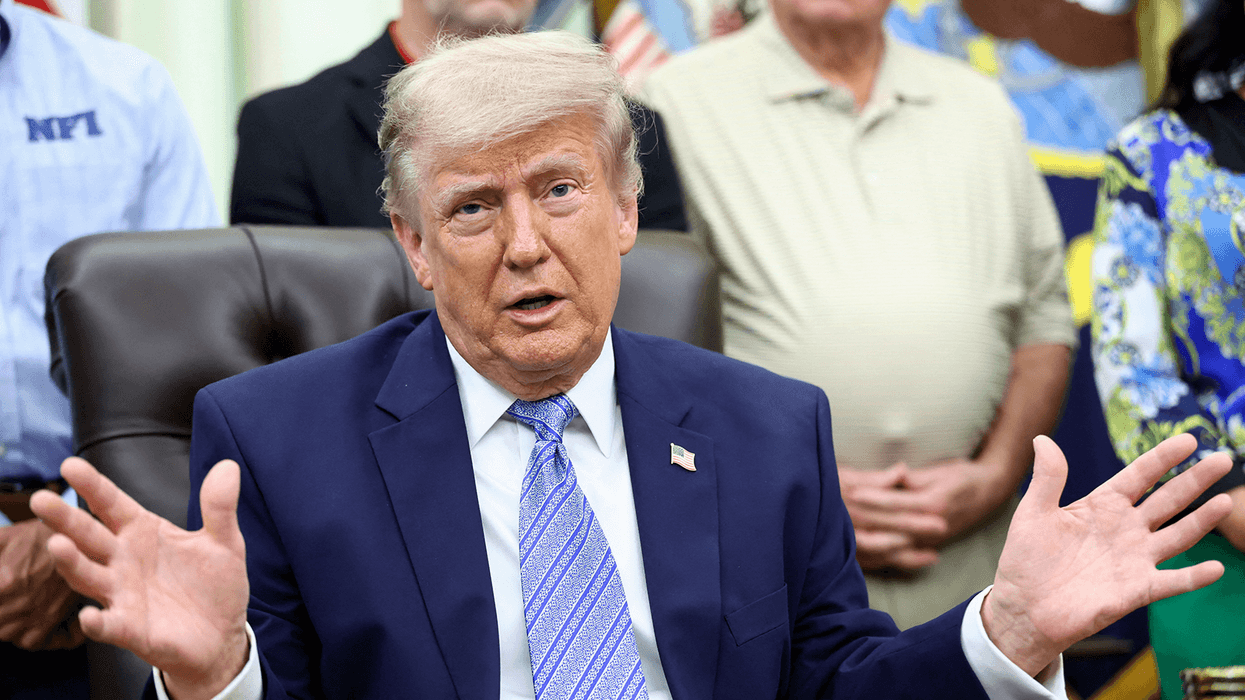

The late convicted child sex offender Jeffrey Epstein may have been blasé about his legal troubles, but his longtime friend and fellow partygoer President Donald Trump and his administration have not. From begging a judge presiding over the still-unreleased Epstein files for an extension to First Lady Melania Trump delivering an angry speech denying her proved connections to Epstein, Trump world has done its best to downplay everything Epstein-related.
Now they have a new problem: A judge, appointed with bipartisan support, is accusing them of redacting names from the Epstein files that they claimed belonged to his underage victims — but which allegedly did not.
"JUST IN: Judge Emmet Sullivan sets hearing next week on DOJ's Epstein file disclosures, says he's not convinced all those redacted as victims really are, questions DOJ's withholding of handwritten notes 'similar' to typed docs," reported Politico's Josh Gerstein in a post on X. "Sets 8/13 hearing."
Sullivan was appointed by both Republican presidents (Ronald Reagan, George H. W. Bush) and Democrats (Bill Clinton), and in his decision made it clear that he is unpersuaded by the ongoing explanations.
"In its Order of July 25, 2026, the Court ordered the Defendant to provide documentation supporting his representation that certain names that have been redacted in the published version of certain documents are the names of victims," the decision pointed out. Yet it continued that "the Defendant did not provide such documentation; rather, he asserted that certain redacted text contains the identities of victims or potential victims whose counsel have contacted the government and requested that the persons be treated as victims." Indeed, "the Defendant's assertions do not comply with the Court's Order, which requires documentation to support the assertions. The Defendant shall be prepared to discuss what document."
Sullivan went on to argue that some of the redacted names protected perpetrators, not victims.
Judge Emmet Sullivan set an August 13, 2026 hearing after the Department of Justice failed to justify redactions in the Jeffrey Epstein files. The legal battle stems from a transparency lawsuit demanding unredacted records, compliance with the Epstein Files Transparency Act, and full disclosure of withheld FBI materials.
The tension between the Trump administration and the judiciary intensified after journalist Katie Phang sued for full disclosure under the Epstein Files Transparency Act. Judge Emmet Sullivan ordered the Department of Justice to produce unredacted records or legally justify its extensive blackouts. Instead of complying with the order to provide verifiable documentation logs, federal prosecutors merely asserted that the hidden identities belonged to victims who requested privacy. Sullivan rejected this explanation, forcing a high-stakes August 13 hearing. The court's scrutiny centers on allegations that the administration actively misused victim privacy protections to shield powerful perpetrators and hide handwritten FBI investigative notes.

