
Your MAGA uncle will listen to reason —if you stop making assumptions: study
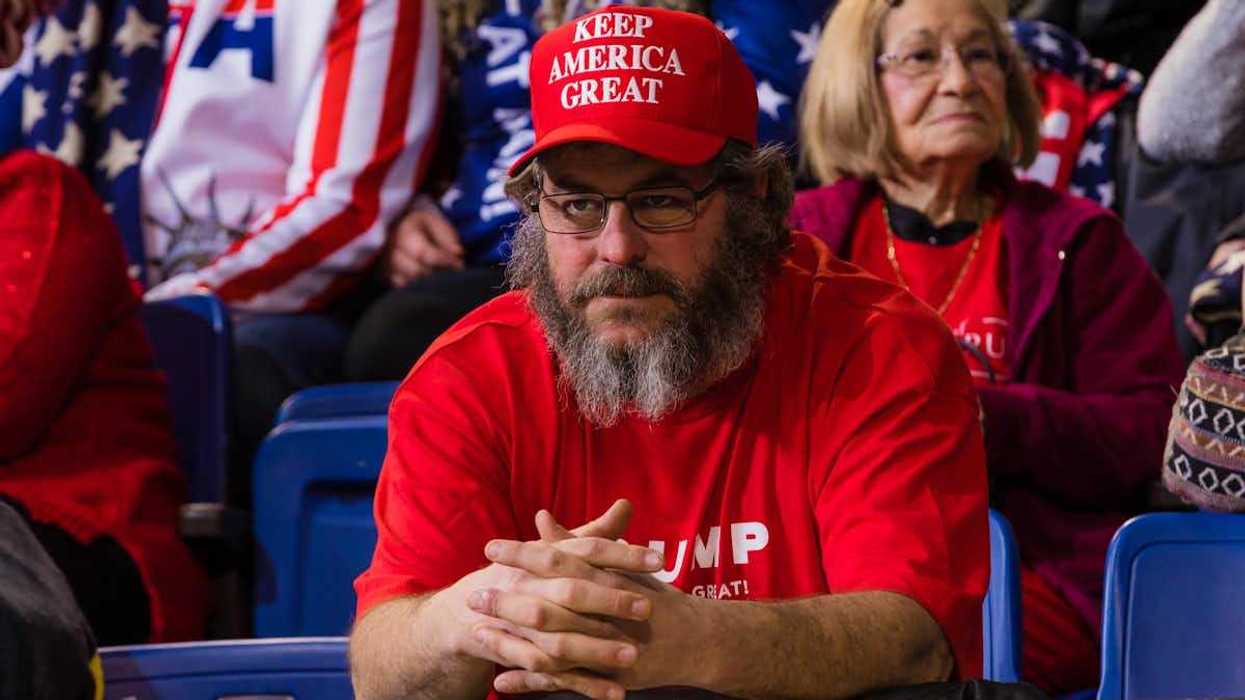

President Donald Trump's supporters have been varying described, by critics at least, as anything from a cult to simply cravenly willing to be pushovers to the Republican leader. Now a new study, which involved four separate experiments, reveals that regardless of what people think of those who politically disagree with them, they can in fact be engaged regardless of whether they're on the far left or the far right.
"These studies show that perceptions of other people's receptiveness are equally important, if not more," wrote the authors for the study at the Journal of Experimental Social Psychology on Monday. Studying Portugal and Sweden but using rubrics with implications for politics all over the world, the authors wrote that the studies show that "specifically, they show that people are overly pessimistic about the degree to which other people might be open to different political ideas, and that these misperceptions are associated with negative expectations and intentions regarding talking to other people about political topics (or even other unrelated topics). The upside is that correcting such misperceptions might offer a route for ameliorating polarization and ideological conflict."
To explain the study's origins, on Monday Karina Petrova of PsyPost wrote that "a research team, led by psychologist André Mata at the University of Lisbon along with colleagues from Linköping University, investigated the psychological barriers preventing inter-partisan dialogue. They suspected that a primary obstacle is how people perceive the receptiveness of others. If someone believes that a political opponent is completely closed off to new ideas, they will naturally avoid interacting with them. The researchers designed a series of studies to measure these perceptions and test whether changing them could increase people’s willingness to engage in political conversations."
Speaking with AlterNet in August, Clarine Riddle Nardi, — Connecticut attorney general (1989-1991), judge on the Connecticut Superior Court and former chief of staff to Sen. Joe Lieberman (I-CT) — broke down how bipartisanship has deteriorated in Washington.
"I've worked in local government; I've worked in state government; I've worked in the federal government; I've worked in the legislative branch; I've worked in the executive branch; and I've worked in the judicial branch. So I've been able to span all of the branches and all the levels," Nardi said. "And I do think there are a number of things that have happened along the way."
She added, "One of them was [Republican former House Speaker Newt] Gingrich, in '92 or '94 — I can't remember which year, but I could pin it down — when he urged everybody not to move to D.C., but to stay in their districts and campaign so they could keep getting elected. I think that was a turning point in people not meeting other people here in DC and getting to know them. Because if they only come in on Monday night and leave on Thursday night, they're doing partisan stuff Tuesday, Wednesday, and Thursday, and they're not getting to know their colleagues. They're not getting involved in the community with their family. They're totally focused on partisan types of things."

