
The reckoning ahead and the harsher comeuppance brewing for Trump’s enablers
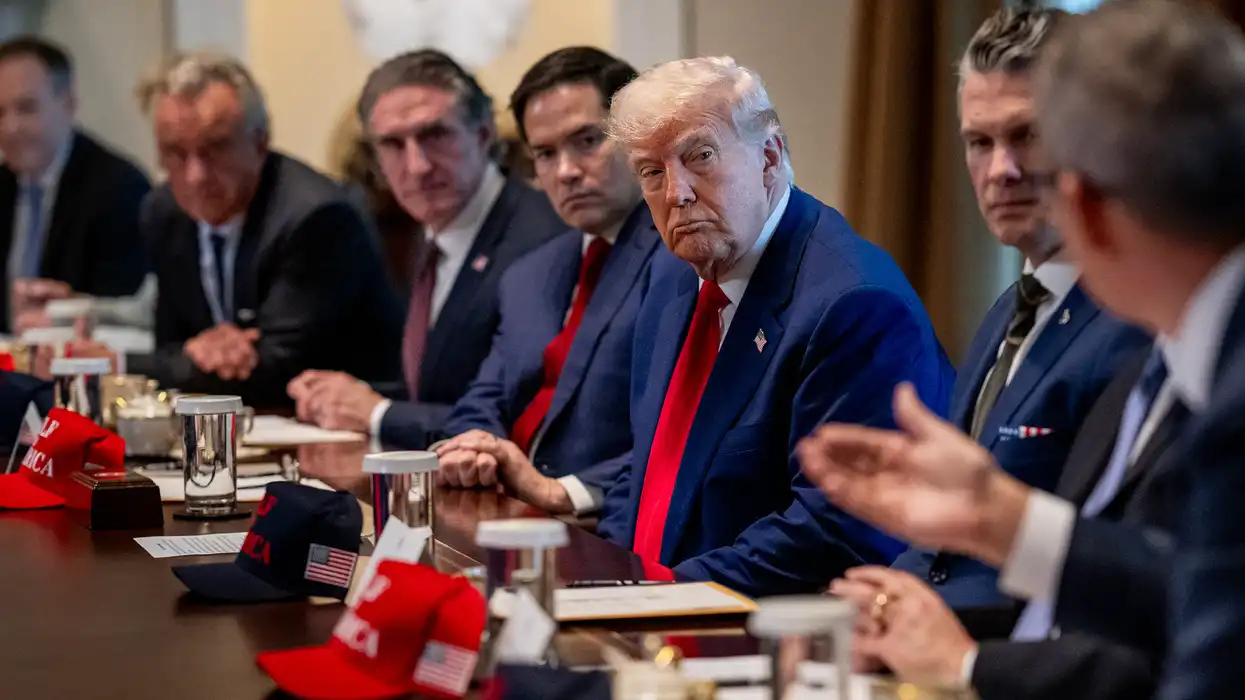
(Official White House Photo by Molly Riley)
President Donald Trump holds a Cabinet meeting, Wednesday, April 30, 2025, in the Cabinet Room.

President Donald Trump holds a Cabinet meeting, Wednesday, April 30, 2025, in the Cabinet Room.
The corporate, financial, and legal titans backing Donald Trump’s second term have completely upended traditional political alignment, abandoning any pretense of institutional independence in exchange for a highly transactional relationship with power. According to a sweeping analysis by Frank Rich for New York Magazine, the prominent figures once viewed as the steady "adults in the room"—such as Treasury Secretary Scott Bessent, Interior leader Doug Burgum, and newly confirmed Attorney General Todd Blanche—have instead chosen to insulate a highly volatile executive branch. Yet, as their economic and political influence peaks, this network of high-profile enablers is facing a cascading wave of corporate panic, impending congressional subpoenas, and severe reputational damage.
At the core of this institutional alignment is pure financial opportunism. Rather than pushing back against the administration's disregard for constitutional norms, elite billionaires from Wall Street and Silicon Valley have prioritized a clear list of policy demands: major tax breaks, aggressive deregulation, federal contracts, and lax antitrust enforcement. The historical blueprint for this corporate behavior is well-documented; as David de Jong detailed in his historical analysis Nazi Billionaires, the vast majority of tycoons who cooperate with authoritarian regimes are not driven by shared ideology, but are simply "calculating, unscrupulous opportunists looking to expand their business empires at any cost."
In the current landscape, this "business as usual" mindset has led to dramatic behavioral pivots across the technology and media sectors that go far beyond abstract compliance. According to investigative reports by The Wall Street Journal, Amazon founder Jeff Bezos heavily scaled back the editorial autonomy of The Washington Post—notably blocking a presidential endorsement—to directly protect the commercial interests of his aerospace firm, Blue Origin. This pivot yielded immediate dividends; reporting from Gizmodo reveals Blue Origin has racked up over $1.1 billion in federal contracts since Trump returned to office, including a massive $2.4 billion Space Force mission agreement and lucrative NASA lunar contracts.
Meanwhile, tech leaders like Mark Zuckerberg have aggressively realigned their public stances to ensure favorable regulatory treatment, and finance executives like Stephen Schwarzman have funneled tens of millions into Republican campaigns while reaping major corporate tax rewards.
Despite the immediate rewards of this collaboration, multi-source reporting indicates that severe fractures are forming within the administration’s core leadership:
With the upcoming midterm elections threatening to flip control of Congress, the private sector is bracing for a wave of aggressive oversight. Investigative reports highlight that Democratic investigators are explicitly planning to bypass blockaded executive agencies by directly subpoenaing outside political allies, private corporate data, and campaign donors.
This imminent threat has already driven corporate giants like Meta to issue defensive political contributions and prompted entertainment conglomerates to secure bipartisan lobbying firms to mitigate the incoming legal exposure.

