
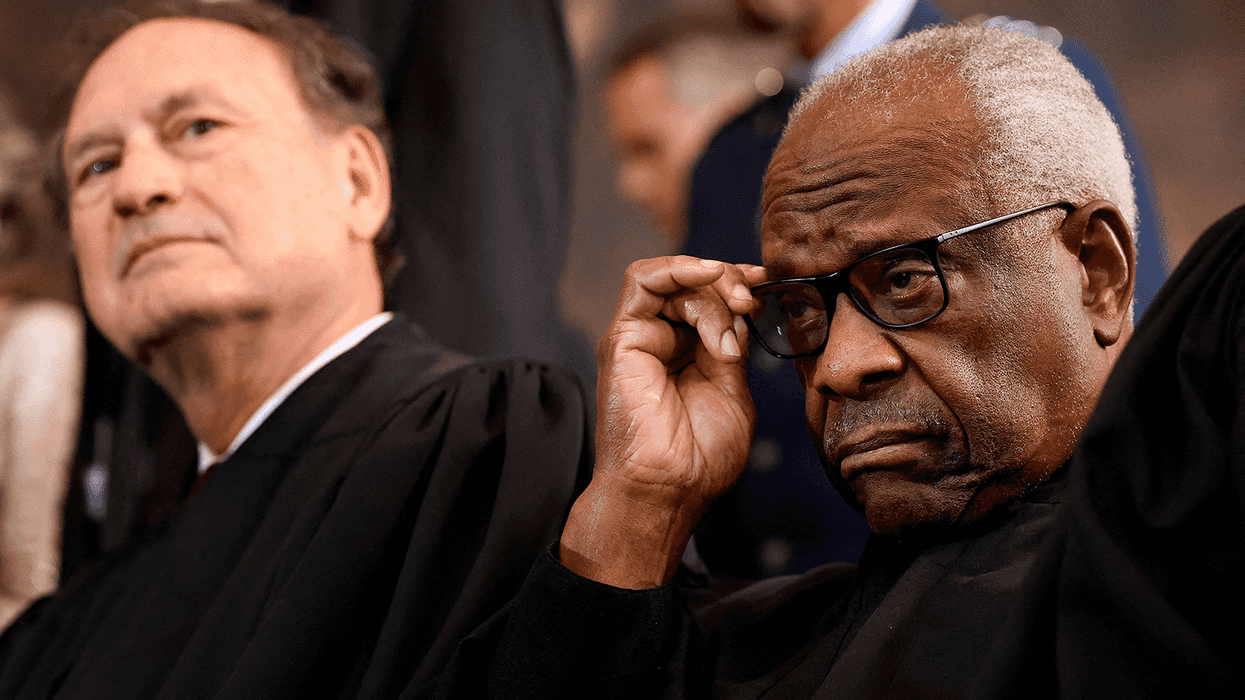


Supreme Court Justice Samuel Alito has spent his career skeptical of the rigid version of originalism championed by Justice Antonin Scalia. Now, that skepticism has placed him in an unexpected position: as a model for a Trump-era legal movement increasingly impatient with old conservative rules.
Jack Goldsmith, a professor of law at Harvard, states in an article for The Atlantic that the new book by Alito, titled So Ordered: An Originalist’s View of the Constitution, the Court, and Our Country, demonstrates a justice who is attempting to reshape originalism even though the New Right has moved beyond it.
The view of originalism holds that the Constitution should be understood in the light of its meaning at the time that its provisions were adopted, and for many years it has been the central doctrine of the conservative legal movement since it committed to limiting judges from imposing their political preferences.
Yet Alito has never been able to fit properly into that pattern.
Goldsmith points out that when he was serving on the federal appeals court, Alito seldom used originalist reasoning and at times disagreed with Scalia after he had joined the Supreme Court; in his book So Ordered, Alito sets out what he terms a "working judicial" form of originalism which allows judges more scope to use their judgment in cases where the Constitution does not offer a clear answer.
He also regards restraint as not being the main aim, on the ground that originalism “sometimes calls for bold action.”
As Goldsmith points out, this reflects a broader change on the right. The idea behind traditional originalism was to keep judicial decisions separate from political consequences. However, a growing New Right legal movement aligned with President Donald Trump has become dissatisfied with that arrangement, favoring conservative results and judges willing to uphold Trump’s program over strict adherence to originalist methodology.
Goldsmith refers to originalism as an increasingly "zombie creed" since it is still used as a way of earning conservative credentials even though it has little effect in explaining how the Supreme Court's right-wing majority arrives at its decisions in important cases.
Goldsmith notes that a number of conservative justices, such as those appointed by Trump, have joined the liberals in opposing major initiatives of the second term administration. The fact that they have made these rulings has annoyed Trump and his supporters, who have in turn attacked the conservative lawyers and judges that they regard as not loyal enough.
Goldsmith stresses that Alito is not formally a member of that New Right movement and that he does not depict his judicial decisions merely as a means of achieving political results; instead, he presents Alito as a serious lawyer whose legal philosophy is influenced by conservative instincts, even though those principles may be difficult to reconcile.
The similarity is clear. Goldsmith states that Alito, along with Clarence Thomas, has supported the administration in all of the major cases during its second term, and at the same time his focus on results, his skepticism about restraint, and his attitude towards the cultural wars are in line with the legal movement that has developed around Trump.
Which is why, Goldsmith concludes, Alito has become a figure he never originally intended to be: the Supreme Court's unintended face of the Trumpian legal agenda.
Report typos and corrections to:
feedback@alternet.org.

#story_page_sidebar
MOST POPULAR
{{ post.roar_specific_data.api_data.analytics }}
MOST POPULAR
ContactAdvertise with AlterNetPrivacy PolicyWriter GuidelinesPress InformationAbout AlterNetMeet the AlterNet StaffDebug Logs
@2026 - AlterNet Media Inc. All Rights Reserved. - "Poynter" fonts provided by fontsempire.com.