Republicans pulled out their funding support from North Carolina about a month before the election. They clearly saw the writing on the wall and knew the money was needed elsewhere.
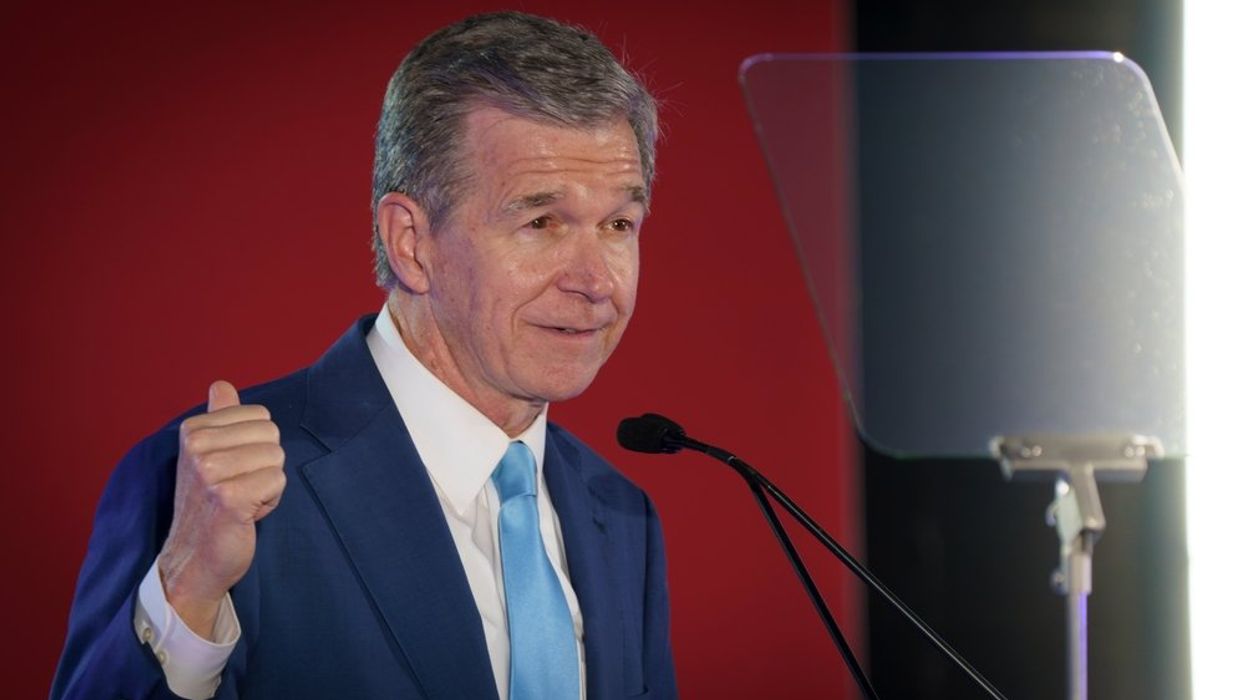
So, on Tuesday night, the Associated Press and MS NOW officially called the race for former Gov. Roy Cooper (D) to be the next senator from the state.
Cooper was popular as governor and left office with high approval ratings. By early to mid October, Cooper's polling showed him ten points ahead of Republican Michael Whatley.
When Sen. Thom Tillis (R-N.C.) announced his retirement, President Donald Trump hoped his daughter-in-law, Lara Trump, would be handed the seat. She ultimately announced she would not seek the election, citing family priorities. In a 2025 interview with TIME, she said it would be very difficult to serve as a U.S. senator with two young children at home. She said it would be difficult to uproot them and move to Washington, assuming she won the race.
She then revealed that she had previously turned down a possible appointment to the U.S. Senate seat in Florida after now-Secretary of State Marco Rubio left it vacant.
Whatley, former chairman of the Republican National Committee and the North Carolina Republican Party, was then chosen by Trump to run. The former chief of staff to U.S. Sen. Elizabeth Dole had a powerful fundraising advantage over his GOP challengers and longtime relationships with local GOP officials across the state.
Despite being an established party operator, he'd never actually run for office himself. National Republicans wanted to consolidate quickly. National Republican Senatorial Committee Chairman Tim Scott (R-S.C.) endorsed Whatley, urged senators to contribute and helped organize fundraising. The strategy was to put a unified, well-supported nominee against Democrats’ strongest recruit rather than spend months fighting internally.
The strategy was to put a unified, well-supported nominee against Democrats' strongest recruit rather than spend months fighting internally. The central gamble was that the GOP infrastructure and Trump’s backing could compensate for Whatley’s lack of electoral experience.
The problem with that strategy is that Cooper entered the race as a twice-elected former governor with a high statewide identity and affection. Despite Whatley being a dedicated North Carolinian, he was still forced to introduce himself to those outside of Republican Party politics, all while trying to appeal to less partisan voters with a growing dissatisfaction with Trump.
Looking back at the New York Times polling aggregator, it's unclear whether Whatley ever had much of a chance against someone as well-liked as Cooper. At his lowest point, in late July 2025, Cooper still led Whatley.