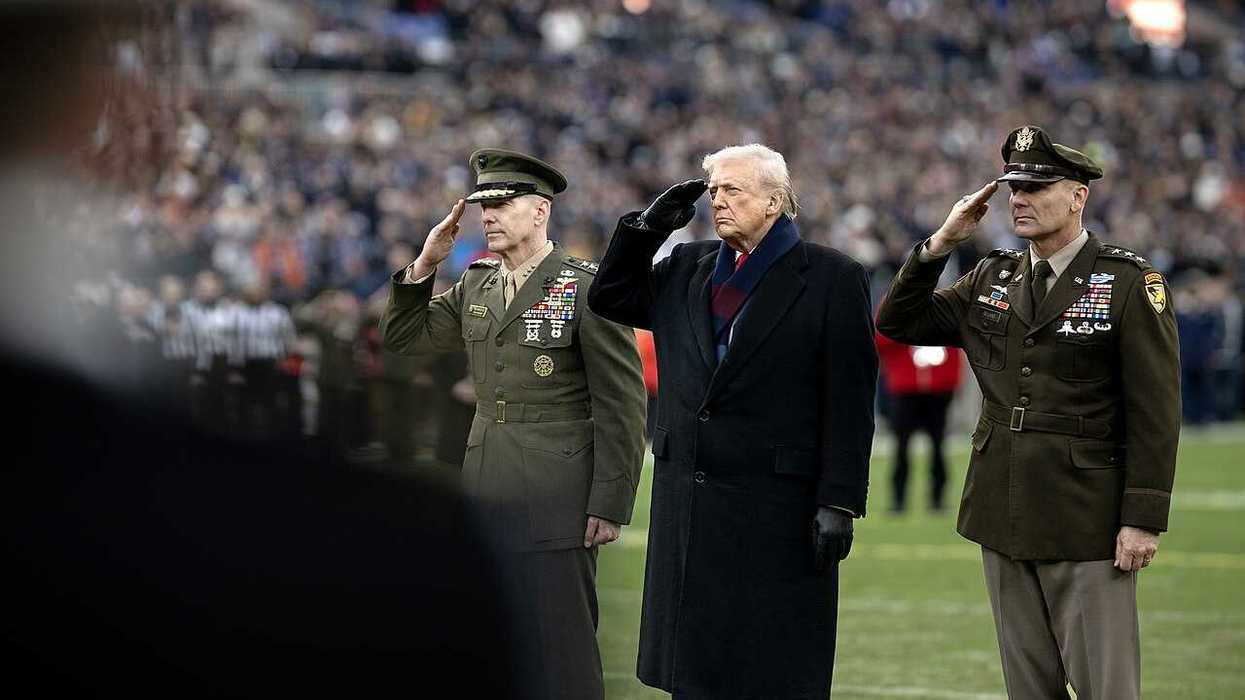
After being sworn in as defense secretary for the second Trump Administration, former Fox News host Pete Hegseth vowed to bring a "warrior ethos" to the U.S. military and purge it of "wokeness." As Hegseth sees it, liberals and progressives deprived the military of the machismo it once had — and it's his job to restore it.
In a think piece published by the conservative website The Bulwark on April 21, however, retired U.S. Army Lt. General Mark Hertling argues that "might" alone is not enough for the military to be effective — and that "will" is equally crucial during major military operations.
"There are some who talk about military power as if it can be counted," Hertling explains. "Troops, aircraft, ships, budgets — these are the metrics that often dominate headlines and shape early judgments about who will win and who will lose in a war…. And one of the most enduring truths — often overlooked in the early phases of conflict — is that power is best understood not as a static inventory, but as a relationship. A useful way to think about that relationship is something I learned, long ago, from a senior officer who was a mentor to me: Power = Will × Resources."
Hertling points to Ukraine as an example of how important "will" is during wartime, stressing that despite the size of the Russian military, "will" plays a crucial role in Ukraine's battle against an invasion by Russian forces.
According to Hertling — who served as commander of U.S. Army Europe under former President Barack Obama — another thing the Trump Administration forgets is the importance of maintaining strong alliances.
"Alliances, whether formal or informal, are not optional; they are essential amplifiers of both will and resources," Hertling argues. "Ukraine understood this from the outset and has nurtured those relationships carefully. The United States, by contrast, appears to be ignoring this critical factor of modern war. In Ukraine and in other global crises, the current administration's approach — publicly questioning alliances, dismissing their value, and at times openly insulting and threatening long-standing partners — has begun to erode one of America's greatest strategic advantages,"
Hertling continues, "Allies are not just contributors of material support; they are sources of legitimacy, shared purpose, and sustained political will. Undermining them diminishes all three. It's a dangerous course, and we are beginning to see why."
According to the former U.S. Army Europe commander, "will" is a major advantage that Iran has in its war with the United States.
"That is why the most effective strategies in war are those that work constantly to align and sustain both resources and will," Hertling writes. "Ukraine has done this with remarkable effectiveness. Russia is struggling to do so. Iran is attempting to, betting that its will is strong enough to overcome its resource scarcity. And the United States, despite its immense material advantages, is increasingly at risk as it assumes that resources alone are enough. They are not."
Hertling adds, "Power comes from the alignment of will and resources — and from understanding that while resources may be measured, will is a result of how we, as a nation, are led."