
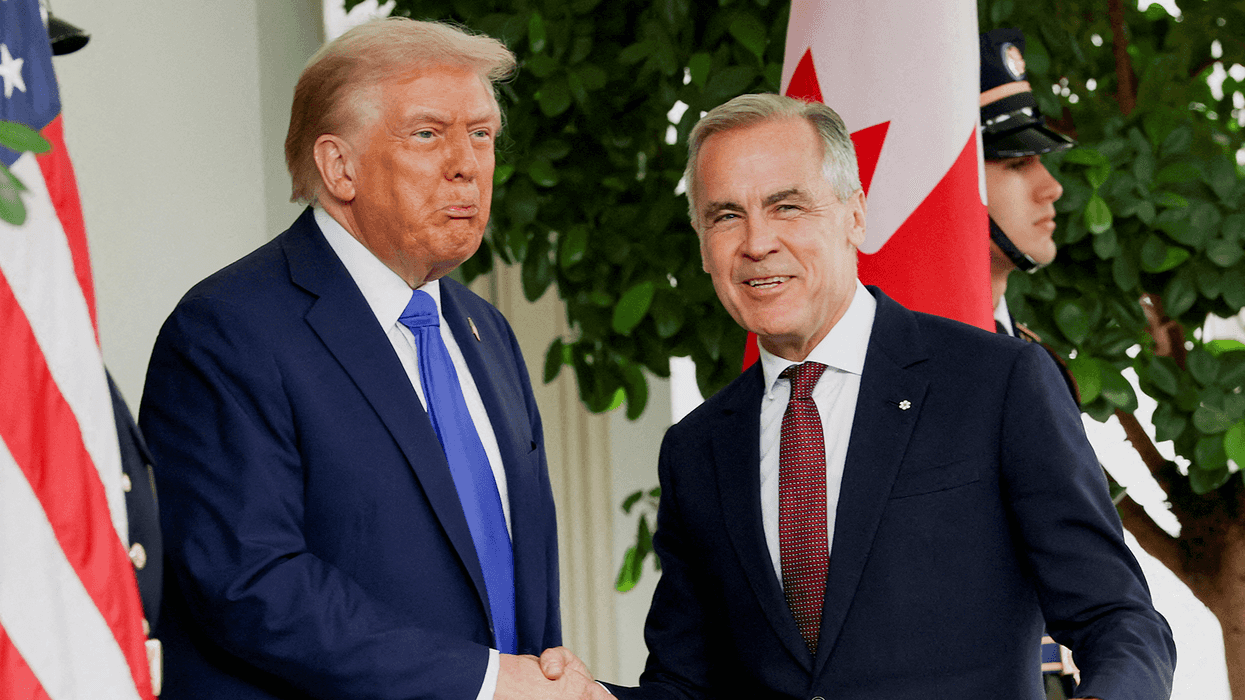


The European Union has formally invited Canada to work toward becoming the 27-nation bloc’s first "associate member," marking a major geopolitical shift aimed at strengthening economic and security alliances. European Commission President Ursula von der Leyen extended the historic invitation to Canadian Prime Minister Mark Carney during her annual State of the European Union speech in Strasbourg, France. Describing the proposal as a partnership for "common strength" rather than an alliance directed against any specific nation, von der Leyen’s speech was met with a standing ovation from European lawmakers.
This unprecedented proposal emerges against a backdrop of severe international trade disruptions and shifting global alliances. Canada is currently embroiled in an intense trade war with the United States following the sudden collapse of bilateral trade negotiations. With Washington imposing aggressive tariffs and floating rhetorical provocations about making Canada the 51st state, Ottawa has sought to urgently reduce its heavy economic reliance on its southern neighbor. At the same time, both Canada and the EU find themselves navigating an increasingly competitive relationship with China and the wider fracturing of the post-Cold War rules-based international order. As documented in the BBC News Coverage, Prime Minister Carney previously emphasized this urgent reality at the World Economic Forum, warning that middle powers must act collectively to maintain their global standing rather than being left off the geopolitical menu. While "associate membership" is not a pre-existing legal designation within European treaties, the proposal aims to establish a deep, unprecedented framework for a non-European nation. According to details outlined in The Guardian's World Report, the cooperation will build upon the existing Comprehensive Economic and Trade Agreement (CETA) to create a broader network spanning several critical sectors:- Advanced Technology and AI: Establishing a collaborative tech alliance to intertwine research institutions and rival the dominant American tech ecosystem.
- Defense and Security: Integrating defense industrial bases and aligning security strategies in response to shifting global threats.
- Energy and Critical Minerals: Securing vital supply chains, including Canadian exports of raw materials, while exploring natural gas infrastructure to aid European energy independence.
- The Arctic Region: Launching a flagship joint project specifically focused on the strategic and environmental management of the Arctic.
Despite the enthusiasm in Strasbourg, Canadian officials have clarified that the country is pursuing a unique alliance rather than full EU membership. Because EU treaties historically restrict full membership to European geographic territories, an associate model allows Canada to bypass territorial constraints while avoiding a loss of domestic sovereignty. As analyzed in the CBC News Political Analysis, senior Canadian officials have emphasized that Ottawa will not cede regulatory rights to Brussels. Instead, Canada hopes to negotiate practical benefits, such as investment frameworks and easier transatlantic transit for workers, without compromising its independence. Further details regarding the scope of the associate membership are scheduled to be thoroughly analyzed and negotiated during the upcoming EU-Canada summit at the end of October.
Report typos and corrections to:
feedback@alternet.org.

#story_page_sidebar
MOST POPULAR
{{ post.roar_specific_data.api_data.analytics }}
MOST POPULAR
ContactAdvertise with AlterNetPrivacy PolicyWriter GuidelinesPress InformationAbout AlterNetMeet the AlterNet StaffDebug Logs
@2026 - AlterNet Media Inc. All Rights Reserved. - "Poynter" fonts provided by fontsempire.com.