
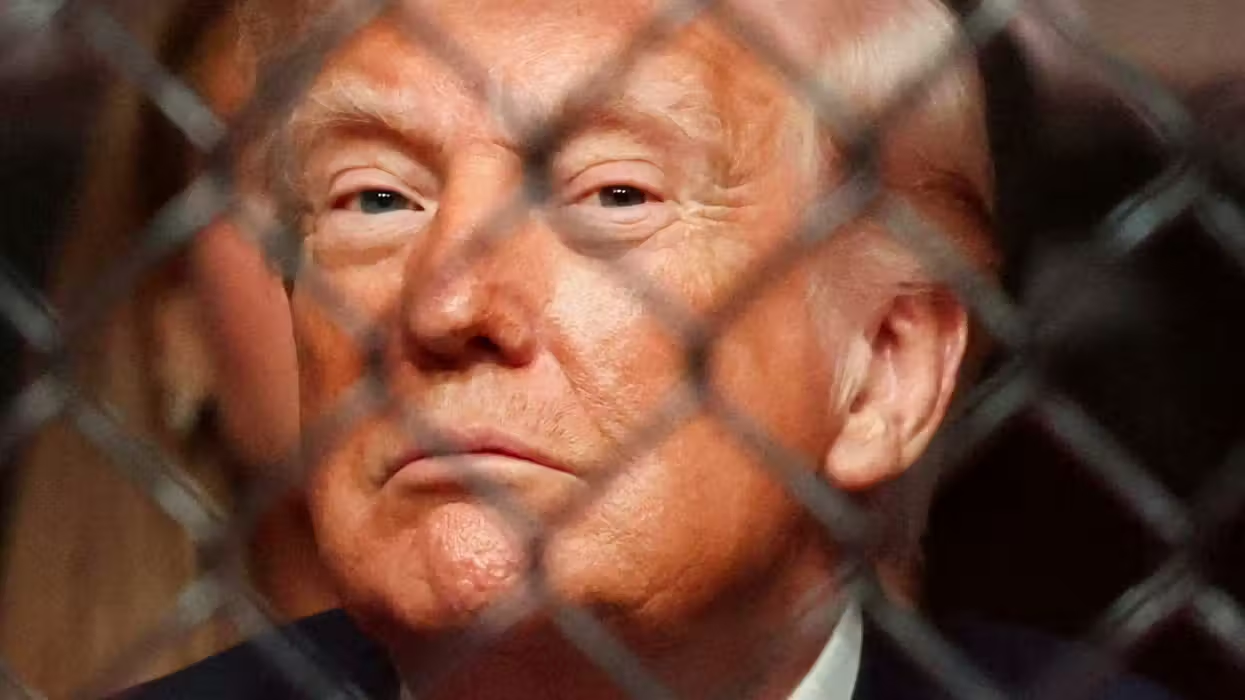


On Tuesday, a federal judge slapped down the latest attempt to add President Donald Trump’s name to the Kennedy Center, ruling that to do so is beyond the powers of the center’s board – which itself was handpicked by Trump. According to Lawfare Senior Editor Roger Parloff, who was reporting from the hearing, the lawyers arguing on Trump’s behalf were desperate to do his bidding, even if they had “no idea” whether it was legally feasible.
As Parloff explains, the judge presiding over the matter was pushing for an agreement that would close the Kennedy Center for two years of renovations without filing for bankruptcy, which the board claimed could only be prevented if Trump’s name were added to the building to help increase donations to keep the center from financial disaster. Attorneys for Representative Joyce Beatty (D-OH), a Kennedy Center Trustee who had sued to block the board’s efforts, argued that an agreement was unlikely unless the question of Trump’s name was settled, and for their part, Parloff reports that lawyers arguing for the president seemed to “want to let [the] center go bankrupt unless Trump’s name goes back on it.”
The judge then asked a practical question: What happens if a public charitable trust becomes insolvent? Can it go into bankruptcy in the first place? According to Parloff, government lawyers “had no idea.” Here the government attorneys made it clear that they “desperately” wanted permission to file for a summary judgment motion, which would resolve the case quickly one way or another. According to Parloff, they felt “cocky about winning” an appeal to the Supreme Court should they lose. Beatty’s attorneys “desperately” wanted “discovery,” a process that would allow them to look for further evidence, as they thought the government was “lying about the facts at every turn.”
Shortly after that, the judge handed down his decision, blocking the renaming of the building and the board’s plans to rename the campus where it’s located the "President Donald J. Trump Plaza." The judge made his decision straightforward, declaring, “Simply put, defendants cannot install memorials for President Trump or anyone or anything else at the Kennedy Center without Congress' blessing.”
While the president’s loyalists on the board have argued that the center is losing money fast and can only be rescued by the addition of Trump’s name, many have noted that he has in fact contributed to the problem. As Reuters notes, “After Trump began exerting more direct control over the Kennedy Center last year, artists canceled performances in protest, the Washington National Opera and the National Symphony Orchestra were forced to find other venues, and revenue cratered.”
Shortly after the judge delivered his ruling, the board voted for the center to close, citing financial issues — details are still unfolding.
Report typos and corrections to:
feedback@alternet.org.

#story_page_sidebar
MOST POPULAR
{{ post.roar_specific_data.api_data.analytics }}
MOST POPULAR
ContactAdvertise with AlterNetPrivacy PolicyWriter GuidelinesPress InformationAbout AlterNetMeet the AlterNet StaffDebug Logs
@2026 - AlterNet Media Inc. All Rights Reserved. - "Poynter" fonts provided by fontsempire.com.