
Trump's dead-enders are trapping the GOP in a toxic strategy
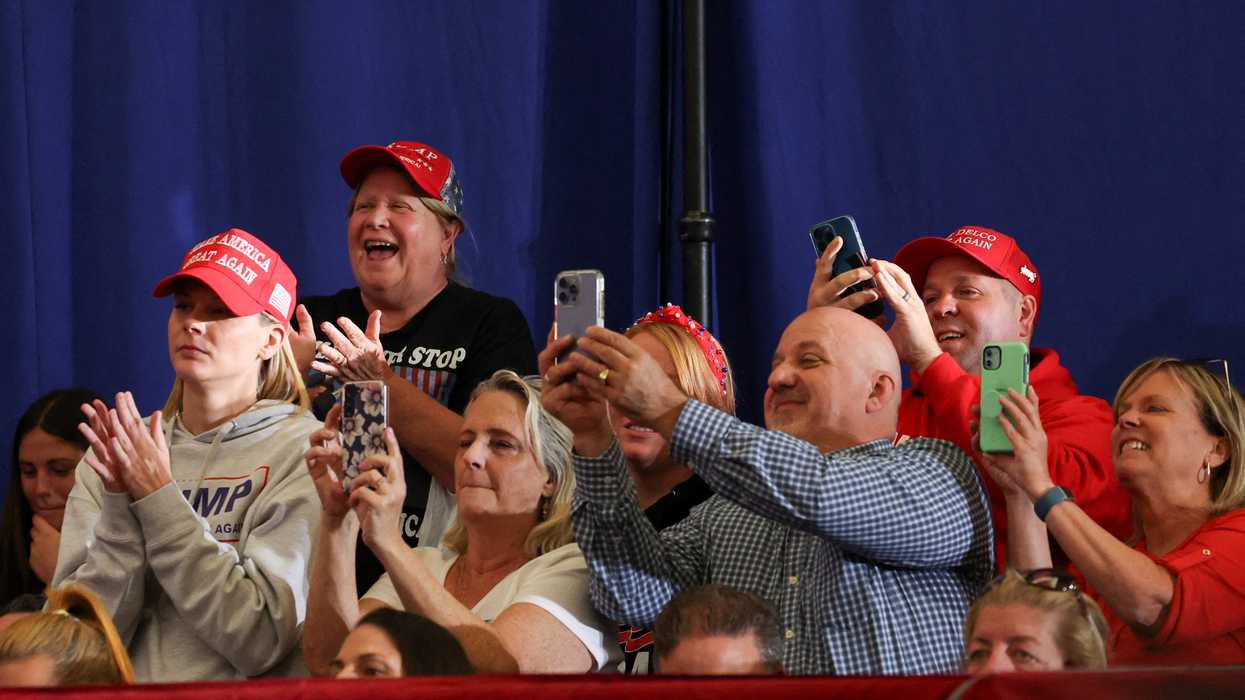

As the November 2026 midterm elections approach, Donald Trump's broader political coalition has suffered severe erosion, revealing deep fissures within the electorate and creating a unique psychological phenomenon that defies standard political gravity.
An October 2026 national survey from the Pew Research Center reveals his national approval rating has plummeted to 30 percent, with a staggering 68 percent of Americans disapproving of his job performance. A separate Reuters/Ipsos Poll similarly placed his overall approval at a career-low 32 percent, driven by widespread public dissatisfaction over the cost-of-living crisis, soaring fuel prices, and the prolonged Iran war. Despite this collapse among independents and swing voters, a significant portion of the Republican campaign apparatus continues to cater aggressively to Trump's core "dead-ender" base.
This unshakeable core of remaining support functions less like a traditional voting bloc and more like a political fortress, completely insulated from day-to-day economic anxieties.
This demographic stronghold is constructed from deeply entrenched cultural, religious, and generational identities, particularly older, white, and non-college-educated working-class voters who view the political landscape through an existential lens. To them, the media's talk of plummeting approval ratings is not an objective warning, but rather an invitation to dig in their heels. They perceive progressive shifts in education, public institutions, and corporate culture as a direct threat to their way of life, viewing Donald Trump not merely as an executive tasked with managing inflation, but as an indispensable cultural shield.
Consequently, economic downturns do not break their loyalty—instead, they reinforce the belief that they are participating in a critical defense of traditional American identity.
Crucial to sustaining this internal environment is the echo chamber constructed by conservative media networks, which actively fuels this sense of base defiance. In a striking shift, mainstream news executives have implemented high-stakes programming decisions to stop broadcasting the president's campaign rallies live in full, as documented by CNN and detailed in a Yahoo News report.
Yet while the network's daytime coverage has begun to tune him out due to his low poll numbers, prime-time opinion hosts continue to validate the base’s intense siege mentality. Right-wing commentary frames the national polling collapse, mainstream media criticism, and economic volatility not as administrative failures, but as a coordinated assault by political elites against everyday conservatives. By continually filtering real-world economic hardships through the lens of a relentless culture war, these networks ensure that the base views any drop in Trump's public standing as an existential crisis requiring absolute solidarity rather than political reevaluation.
This intense devotion creates an extraordinary dilemma for Republican politicians fighting for survival. From a purely mathematical standpoint, catering to an increasingly isolated, low-approval populist wing risks alienating the vital moderate and independent voters needed to win general elections. Yet, from a structural standpoint, breaking with Trump invites immediate political execution from a hyper-motivated base that completely dominates primary turnouts.
While a Politico-PF Global poll published by The Hill indicates that 26 percent of Trump's 2024 voters believe Republican candidates should break away to win the midterms, a deep-dive analysis by Politico highlights that the remaining vast majority of core MAGA voters demand absolute alignment. Republican strategists worry that any public criticism of Trump will alienate these high-enthusiasm loyalists, depressing the vital voter turnout required to protect vulnerable congressional seats.
To navigate this tension, many Republicans are shifting away from defending tangible economic outcomes and are instead focusing heavily on cultural grievances that animate the core base, such as border security and progressive social policies. They are also utilizing a delicate double-game to validate the base's belief that Trump remains an unblemished champion, often shifting the blame for the affordability crisis away from the president and onto his advisers.
The party is simultaneously relying on structural advantages like redistricting and a massive fundraising edge to preserve narrow congressional majorities, calculating that intense base mobilization can outpace a toxic national environment where generic ballots strongly favor Democrats.
This high-stakes tension is playing out directly across several critical 2026 battleground states. In Kansas, incumbent Republican Senator Roger Marshall accepted a full endorsement from Trump and continues to run on core MAGA themes to shore up his right flank despite a shifting political landscape. In Ohio, Republican nominee Jon Husted is locked in a tight battle against Democrat Sherrod Brown, choosing to double down on motivating high-enthusiasm cultural conservatives and white working-class voters rather than pivoting to the center. Meanwhile, Iowa highlights the severe drag Trump's low ratings place on otherwise favored candidates, as Republican Ashley Hinson is feeling the squeeze in her matchup against Democrat Josh Turk but avoids breaking with the president’s platform for fear of losing the enthusiastic 30 percent base.
The pressure to cater to Trump's unshakeable core is equally intense in competitive House contests across the country. According to a voter enthusiasm survey reported by The Hill, even vulnerable GOP lawmakers in purple districts are actively welcoming the president to campaign for them. While conventional political wisdom suggests distancing from an unpopular administration, a multi-district review published by The Independent shows that candidates are caught in an intense balancing act. Ultimately, many campaigns are betting their final political survival on the unshakeable enthusiasm of Trump's remaining loyalists, even if it risks alienating the moderate majority.

