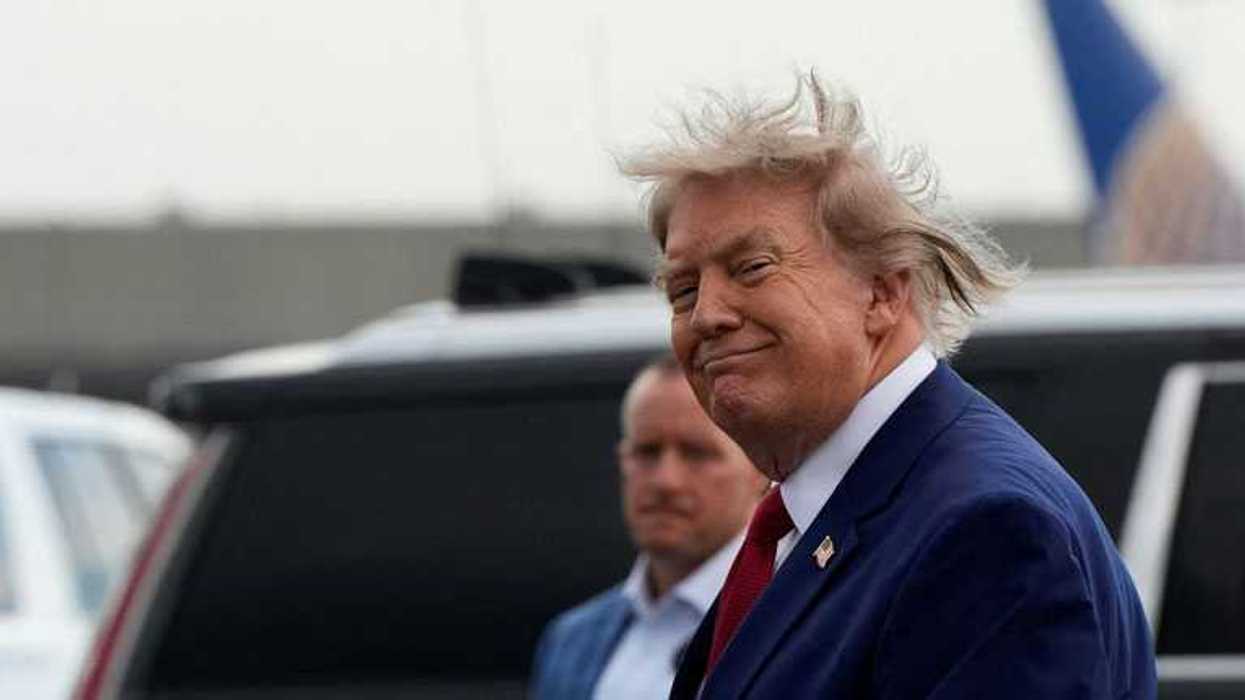
Speaking exclusively with AlterNet, one of America's top election and polling experts explained on Thursday why the 2026 midterm elections didn't end with another coup attempt.
President Donald Trump attempted to rig the 2026 midterm elections before Election Day through many methods. These included attempts at restricting mail-in voting, sending law enforcement to the polls, trying to force states to purge voters from their rolls and threatening to file frivolous lawsuits.
After Election Day, however, Trump accepted the Democrats' sweeping takeover of the Senate and House of Representatives. He didn't declare a national emergency to seize ballots or stop the voting. There was no Big Lie claiming without evidence that the election was stolen, such as the one Trump spread after losing the 2020 presidential election. Instead he did exactly what all candidates are supposed to do in a democracy — graciously accept the election results, at least in public.
So what happened?
"This was such a thumping that even he couldn't deny it with a straight face," Kyle Kondik, Managing Editor at Sabato's Crystal Ball (a top election prediction and analysis group that is centered at the University of Virginia), told AlterNet. He also pointed out that Trump could not stop Joe Biden from winning the 2020 election, even though he tried through illegitimate lawsuits and then the Jan. 6th insurrection.
"This is one of the biggest waves in American history," Kondik added, drawing a comparison between voter dissatisfaction with Republican corruption and inflation in two previous sets of midterm elections with the voters' verdict with the current Republican administration's corruption and inflation.
"The Watergate wave of 1974 might be the only comparable election in modern history," Kondik told AlterNet. "This was kind of like 2006, but clearly bigger." The 1974 midterms occurred under President Gerald Ford, who controversially pardoned his predecessor Richard Nixon after he resigned in disgrace for covering up a politically-motivated burglary (the so-called Watergate scandal). The 2006 midterms occurred under President George W. Bush, who was fighting scandal for misleading the public about why America invaded Iraq. Both also struggled with poor economies marked by high inflation.
After both the 1974 and 2006 midterm elections, Democrats capitalized on widespread dissatisfaction with the economy and scandals that they elected Democrats in the following presidential elections (Jimmy Carter in 1976 and Barack Obama in 2008). Kondik indicated that the victorious party could do this again in 2028.
"When there's such a huge swing all sorts of voters move, but the biggest shifts back toward Democrats seemed to be among young people and Hispanics," Kondik told AlterNet.
He continued, "The giant wave only makes the 2028 Democratic presidential nomination more worth having, because Trump is weak and may never truly bounce back in approval. So Trump may drag down whoever the Republican nominee is. I think the fight for the Democratic nomination is wide open."