

Mandate, schmandate: The elections proved Americans just want one thing
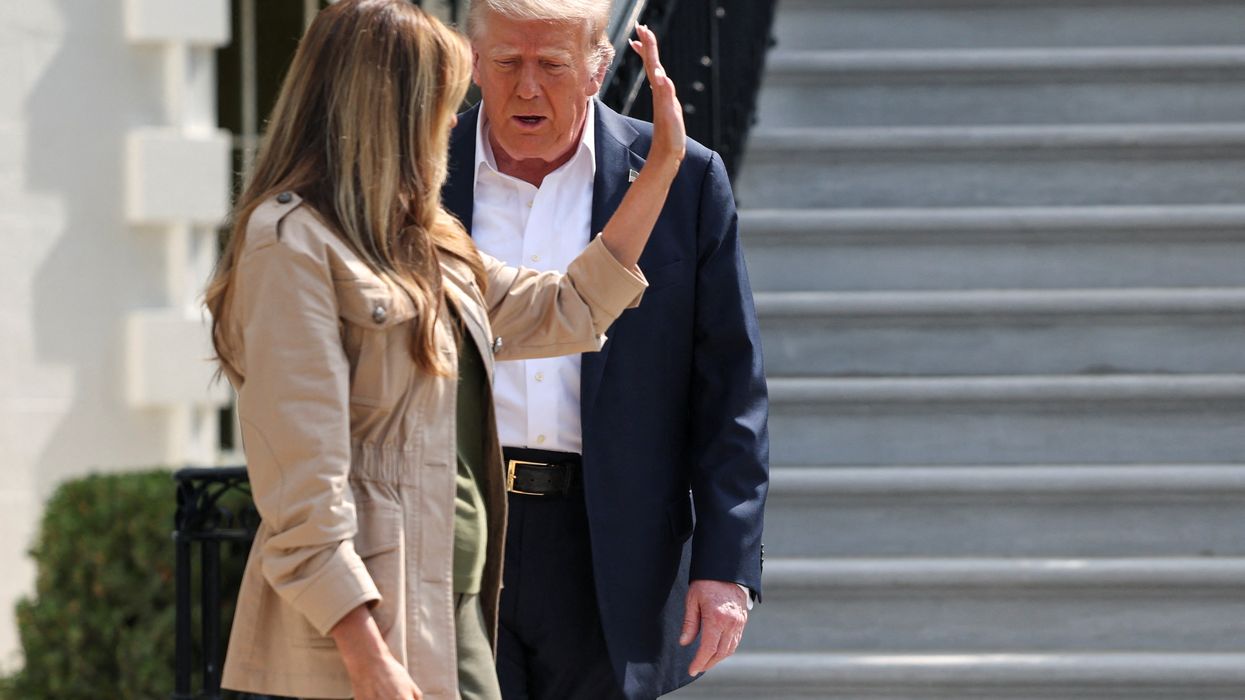
U.S. President Donald Trump and lady Melania Trump depart for travel to Texas to tour areas affected by deadly flash flooding, from the South Lawn of the White House in Washington, D.C., U.S., July 11, 2025.
Here are some more thoughts on Tuesday’s election.
• Mandate, schmandate. There is a lot of talk right now about what the Democrats are going to do with their newfound power, and there is a lot of incentive in Washington to arbitrate the rules by which they use it. The Post reported this morning that so far the Democrats’ “policy agenda remains vague,” adding that “though Democrats pledged on the campaign trail to tackle affordability, they have been light on legislative specifics, floating broad plans to reverse Trump’s cuts to health care funding, roll back his sweeping tariff regime and block his ability to wage war in Iran.” To that, I say let it be vague.
• It’s about trust. Political science tells us that democracy is about choices and that electoral outcomes can be difficult, if not impossible, to interpret in ways that are not overlapping, contradictory and weird. The Washington press corps, however, likes to make-believe that election outcomes are a clear set of instructions that winners must follow or face the consequences. While there are always consequences, no one can say what voters in this election wanted above and beyond the obvious, which is that they don’t like what Donald Trump is doing as president. In other words, elections are about trust. Who has it, who doesn’t, and why? They are not a legally binding contract guaranteeing services rendered. So forget about mandates, wrote political scientists Julia Azari. Elected officials should instead focus on taking “ownership of what they choose to do with that power, following not the mandate of the election but the imperative of the rule of law.”
• If you need a mandate, pick a simple one. That Post article I mentioned is premised on the idea that the Democrats must demonstrate that they are more than the anti-Trump party. That idea is not the empirical truth. It is the product of elite media consensus. It is also not an idea that Republicans apply to themselves. National Review’s Yuval Levin said that in one sense, the range of explanations for what happened Tuesday is “so broad, and the public rebuke so overdetermined, that it might make it hard to decide where and how to change course.” But, Levin added, “the comprehensive character of the problem makes it easier to define: The problem is Donald Trump.” The Republicans know that the president is the single greatest reason voters rejected them. They also know it would be better if the Democrats did not keep reminding voters of that fact. (Democrats should therefore be “more than an anti-Trump party.”) However, it’s OK for the Democrats to be anti-Trump, because Trump is anti-law. If there must be a mandate, let it be restoring the rule of law.
• Enforcing the law is not politically risky. In the wake of the greatest wipeout election in a generation, the elite media is now making it seem like the Democrats face a perilous choice: do they choose to pursue affordability or do they choose to pursue accountability? The implication is that they can’t pursue both without the risk of violating the mandate handed to them. This framing is the product of self-interest. Reporters want to report on conflict, because conflict begets attention, and attention begets status and profits. Yet this framing is false. There is no conflict between affordability and accountability. Indeed, the Democratic candidates in the election’s most high-profile races were explicit about one being hand-in-hand with the other. “We have an affordability crisis, because we have a corruption crisis,” Texas Senator-elect James Talarico said. Congressman Robert Garcia, who will lead the House Oversight Committee, tied that back to an anti-Trump mandate. “People are struggling because of corruption,” he said. “People can’t afford to pay the gas and the groceries, because Donald Trump is ripping off the American people.”
• Democrats, don't overthink it. As I said yesterday, for two years, Trump’s crimes were everything, everywhere, all at once, and the Washington press corps loved it. Democrats can follow his example by flooding the zone. Do not worry about the pundits. Most are cynics or nihilists or worse: paid influencers. But they can be useful in that their interest in conflict can be exploited by go-go-going. Energy! Excitement! That’s what they really want – something to take back to viewers and say LOOK AT THIS! Senator-elect Abdul El-Sayed suggested as much when he said the Democrats should forget about slow-motion consensus-building around bland omnibus bills. Instead, they should rebrand measures to generate buzz but also incentive, and just push them through, one after the other. No one is going to be against the “C--- Lettuce Elimination Act,” he said by way of example. The same dynamic can be applied to the party’s entire agenda, no matter how vague it currently is. Pundits say they want to arbitrate “legislative specifics” but they don’t care about that. The Democrats can satisfy their cynical self-interest with nonstop action.
• “Corruption, corruption, corruption.” The Democrats do not control the presidency. They cannot bring indictments against anyone. They cannot force Trump to sign legislation. Even if the mandate really was affordability alone or accountability alone, there’s only so much they can do (which is another reason why choosing one or the other is meaningless). Yet they must show they can be trusted with the power they have been given if they want voters to expand on that trust in the 2028 election. I think part of that is simply trying to understand what happened. Not the hype. Not the spin. Not the propaganda. I mean why did voters turn the world upside down? Yes, Trump is burning up the economy, but inflation isn’t that high. Unemployment is relatively low. Interest rates aren’t great, but they are not double digits, as they were in the 1980s. Yet something made Texas blow up, and I am going to guess it’s a general feeling – a vibe, you might say – that workaday Americans don’t matter and that for two years everything we believed about ourselves and our country didn’t matter. Despite race, class and gender, there are powers beyond our control trying to control us. We all know the feeling. All that’s missing is a name. Call it oligarchy or authoritarianism or even “data centers.” Mississippi Senator candidate Scott Colom, on the cusp of victory, called it “corruption, corruption, corruption.”
• It was a revolution. The Republicans used to say the midterms of 1994 and 2010 were “revolutions.” But they were nothing compared to 2026. The last time this many members of Congress were wiped out in one night was 1976, the election after Richard Nixon’s resignation and the revelations that he was a criminal president trying to rig an election in order to steal power. Americans did not like it that year. They did not like it this year. To be sure, voter demands are hard to interpret, but any plain reading of either election should come to the same conclusion. They were revolutions against tyranny. Trump came to represent something monstrous and the people said no. There’s no downside to the Democrats validating their rejection or in doing everything they can to prevent it from happening again. “This is not a game of surprise or gotcha,” said Congressman Jamie Raskin, who will lead the House Judiciary Committee, today. “We’re talking about trying to defend our system of government against authoritarians.”

