
Trump admin tactics are putting crews in danger as millions of acres burn
REUTERS/Fred Greaves
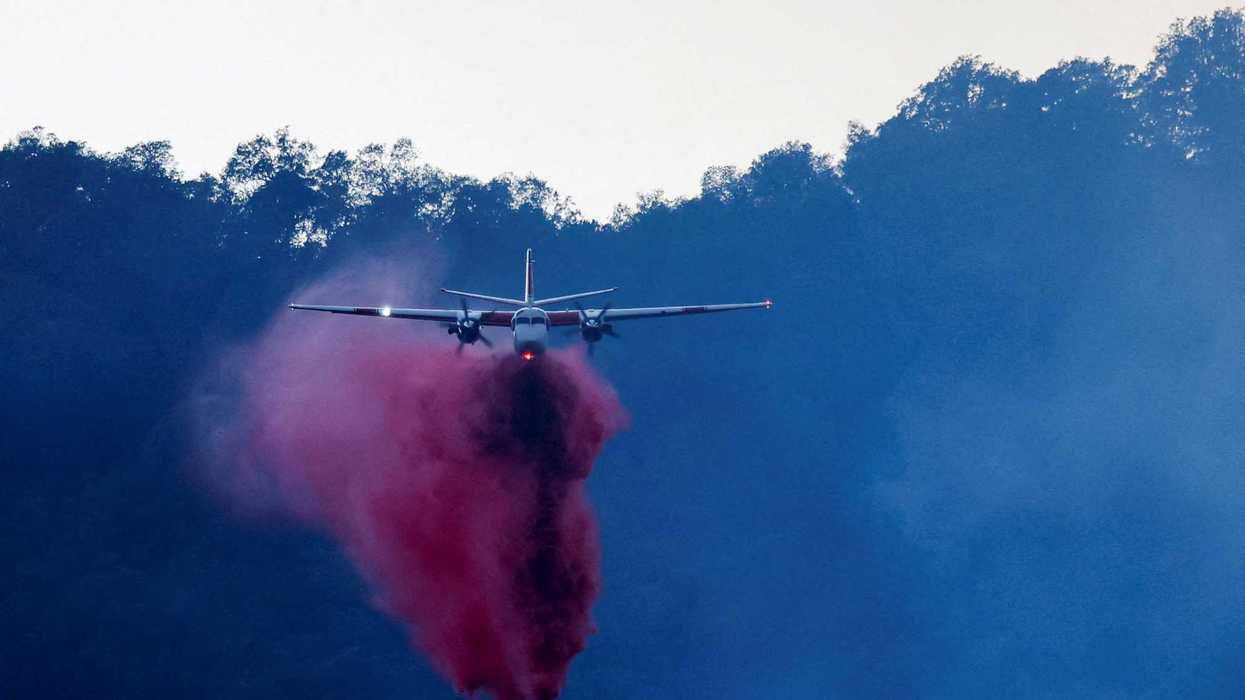
A firefighting aircraft drops retardant during the Feliz Fire, near Hopland, California, U.S., August 1, 2026.

A firefighting aircraft drops retardant during the Feliz Fire, near Hopland, California, U.S., August 1, 2026.
As millions of acres burn across the western United States, some wildland fire veterans are fearful that aggressive fire suppression tactics ordered by the Trump administration — coupled with extreme, fast-moving blazes — could put firefighters in danger as conditions escalate this month.
Those extreme weather conditions fueled disaster in Eastern Washington Saturday when a fast-moving wildfire jumped the Spokane River and swept through neighborhoods of Spokane, destroying more than 600 structures and forcing 60,000 residents to evacuate. Incident Commander Tom Clemo called the blaze “probably the largest, most destructive fire in Washington’s history.”
No deaths have yet been reported in Spokane, but Mayor Lisa Brown told local journalists the city is “still assessing the potential for lives to be lost.”
“There is not a fire department in the U.S. that can handle a wind-driven event this size,” said Spokane Assistant Fire Chief Lance Dahl to the Spokane Spokesman-Review.
Leading up to this year’s fire season, federal officials with the U.S. Forest Service and the Interior Department directed their wildfire crews to use a “full suppression” strategy and attack wildfires urgently. Following a hot, dry winter that left much of the West parched, federal land managers said it was imperative to contain fires quickly before they get out of control.
But following several dangerous incidents, including the deaths of four federal firefighters in Colorado in June, some longtime wildland fire leaders are questioning that strategy. Many see it as a return to the Forest Service’s decades-old “10 a.m.” policy, which sought to suppress all fires by the morning after they were reported.
While many states also adhere to “full suppression” policies that aim to keep blazes contained, federal officials have previously had more discretion to let fires burn under supervision if they’re not threatening communities. More concerning, wildfire veterans say, is the possibility that rhetoric from Trump administration officials is putting pressure on fire crews to use aggressive tactics to meet those suppression goals.
Federal policies that sought to extinguish all fires quickly over much of the past century are now understood by foresters to be a major contributor to the current wildfire crisis. In many places, forests that used to experience fire at regular intervals have grown denser than historical norms, with trees competing for water and thick underbrush covering the forest floor. That gives fuel to the fires and contributes to fast-moving blazes.
“No one in the agencies have said it, but it sure looks like (a return to the 10 a.m. policy) when you read the directions,” said Jane Darnell, a wildfire veteran who spent more than 30 years with the Forest Service before retiring in 2020. “We lived with the 10 a.m. policy for 100 years, and we got here. This full suppression promise to the public is a promise that can’t be kept.”
Many wildfire leaders say they’ve seen extreme, unprecedented fire behavior this season that only adds to the risk of deploying crews aggressively.
‘Full suppression’
In April, Agriculture Secretary Brooke Rollins and Interior Secretary Doug Burgum sent directions to agency leaders in preparation for the summer wildfire season. Both called for a “full suppression” strategy.
“Accelerate initial attack and use a full suppression strategy, in coordination with our interagency partners, across all land jurisdictions to suppress fires early and limit growth,” Rollins wrote.
Burgum called for “prompt, decisive” suppression of fires, adding that decisions should be “balanced with firefighter safety and a clear assessment of probability of success.”
While both letters mention safety, some wildland fire veterans say agency leaders have put a clear emphasis on attacking fires aggressively. Some fear that crew leaders are being pressured to deploy close to the fire line, rather than choosing the safest place to make a stand.
“I found it disturbing,” said Riva Duncan, a former wildland fire chief who served more than 30 years with the U.S. Forest Service. “You’ve got somebody in a suit in an office who’s never fought fires saying you’ve got to go direct attack.”
Duncan serves as president of Grassroots Wildland Firefighters, a nonprofit that advocates on behalf of wildfire professionals.
In addition to the agency directives, wildfire veterans noted the rhetoric from President Donald Trump, who has threatened to impose tariffs on Canada as retaliation for wildfire smoke.
“If managers and leaders are hearing from the politicos, ‘put them all out, put them all out,’ are we putting people in where we shouldn’t be?” said Bobbie Scopa, who had a 45-year career as a firefighter and now serves as vice president with Grassroots Wildland Firefighters. “I’m hearing from some young firefighters who feel like they are getting pressure to take actions. It’s stupid and you’re scratching your head and people are getting hurt.”
The Department of Interior did not respond to a Stateline interview request. The Forest Service declined to comment, saying its resources are focused on fire response.
Dangerous incidents
Already this year, fire crews across the country have been involved in a number of dangerous incidents, including the tragedy in Colorado that left four firefighters dead after a fast-moving blaze overran their position.
“We’ve already had nine entrapments (firefighters having their position surrounded by fire) this year. That’s crazy,” Duncan said. “That suggests to me that fires are moving quickly and growing so fast.”
Federal officials have said an investigation team is reviewing the Colorado incident.
“I do trace the tragedy in Colorado to that policy that compelled them to go out and aggressively attack the fires even when conditions did not favor safety or success,” said Timothy Ingalsbee, a former wildland firefighter who now serves as executive director for Firefighters United for Safety, Ethics & Ecology, a group that advocates for ecological fire management.
“This policy that compels crews to blindly rush out and attack all fires is just not smart and it’s very unsafe,” Ingalsbee said. “They’re throwing back to the policy of the 1930s, ignoring everything we’ve learned about fire ecology and fire behavior”
Other wildland fire veterans say they need to see more details before blaming the deaths in Colorado on federal strategy.
“It’s just really hard to connect that at this time,” Duncan said. “I have faith that the investigation team is looking at that.”
But many former firefighters decried the feds’ abandonment of “managed fire” as a tool. Under that approach, federal land managers in previous years have been given the discretion to let some fires burn under supervision, so long as they didn’t threaten homes or infrastructure. In those cases, advocates say, agency leaders recognized the ecological benefits of fire, along with the potential to reduce the risk of catastrophic blazes in the future.
“The problem is not fire itself, it’s our relationship with it,” said Darnell, the retired Forest Service firefighter. “We can work with these fires that are highly unlikely to have catastrophic effects on infrastructure, keep them on there until the weather puts them out.”
Ingalsbee, with the firefighter safety group, shared a similar sentiment.
“Excluding fire from the landscape and attacking all fires, that policy ended in the ’70s because it was failing,” he said. “It’s performative firefighting, it’s failing to accomplish tangible goals and it’s putting lives in danger. Fire is nature’s recycling.”
State leaders respond
At the state level, foresters in the Pacific Northwest — the region hardest hit by fires this year — say they have not yet seen evidence that federal agency directives are causing firefighters to take more risks.
Most state agencies are required by state law to suppress, rather than manage, fires. Oregon state forester Kacey KC said the state’s landscape is too parched this year to safely manage fires for ecological benefits.
“Every fire we can keep small is good,” she said. “Especially in conditions like this, there is not good fire right now on this landscape.”
In Washington, state forester George Geissler said he had not heard of federal crews taking extra risks. But he cautioned that federal leaders should be careful of their rhetoric.
“If you set goals, but you don’t set a good leadership tone related to safety, you can have those type of decisions being made,” he said.
Geissler said the bigger concern this year has been chaos within the leadership of the federal agencies. Under Trump, the Forest Service and Department of the Interior have been hit with severe staff reductions. The Forest Service is in the midst of a major reorganization. And firefighting operations from multiple agencies within the Interior Department have been consolidated into the U.S. Wildland Fire Service, established by Trump this year without congressional approval.
“In the past, you knew who to go to, you knew which position had what,” Geissler said. “Now with the rapid changes, the loss of personnel, it’s a little bit scattered.”
Federal crews aren’t the only ones that have been involved in dangerous wildfire situations this year. Two separate incidents in Washington state left firefighters injured as a fire overran their position. One of those incidents, the Lyons Ferry Fire, involved a Washington Department of Natural Resources helicopter crew. Geissler said that was a wakeup call for the agency that fire conditions are extreme this year.
“When the weather is this bad, all of those (safety protocols) become more and more critical,” he said. “We did a full safety standdown over it, because that was an extremely close call for those firefighters.”
Darnell, the retired Forest Service firefighter, said she would not be surprised to hear of more incidents in which firefighters deploy their individual emergency shelters — last-resort devices that can save lives but do not offer full protection in extreme scenarios.
“We’ve got conditions on the ground that are so explosive, it really begs us to be really careful about where we put people,” Darnell said. “I hope we don’t see any significant loss of life for firefighters.”
Stateline reporter Alex Brown can be reached at abrown@stateline.org.

