Top Trump official 'dropping a bomb' on embattled colleague: economist
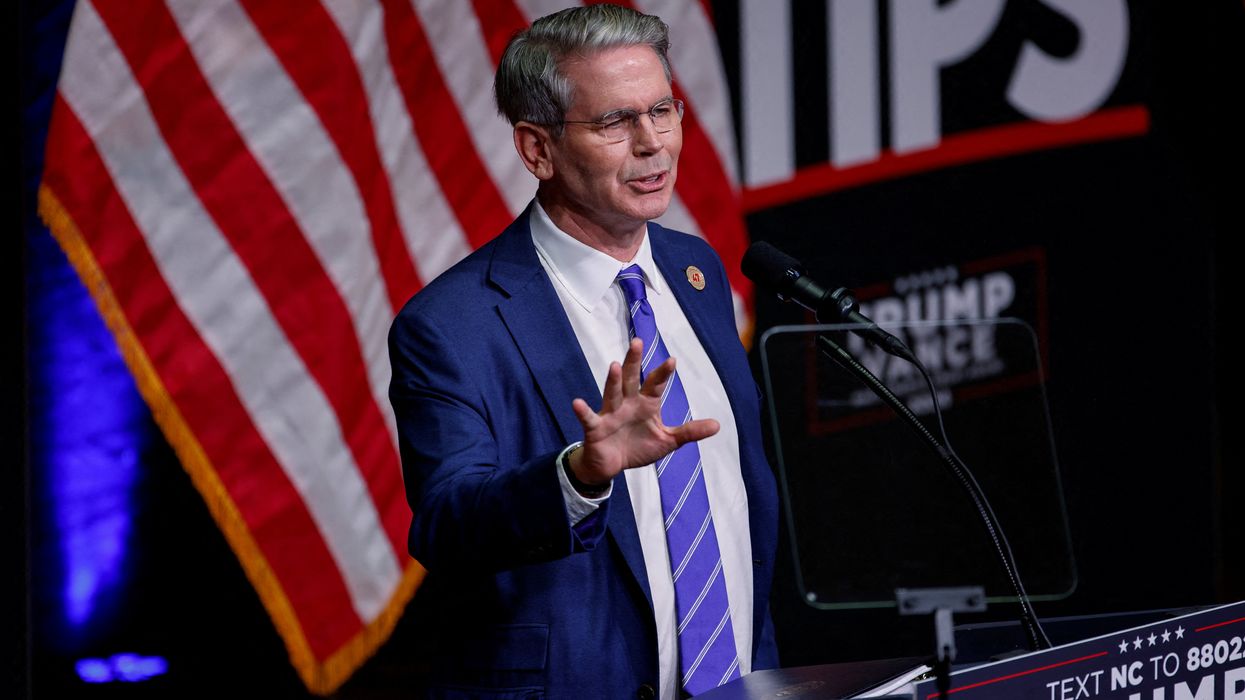
Key Square Group founder Scott Bessent speaks at a campaign event for Donald Trump in Asheville, North Carolina, U.S. August 14, 2024. REUTERS/Jonathan Drake/File Photo/File Photo
Key Square Group founder Scott Bessent speaks at a campaign event for Donald Trump in Asheville, North Carolina, U.S. August 14, 2024. REUTERS/Jonathan Drake/File Photo/File Photo
President Donald Trump's Treasury Secretary, Scott Bessent, appears to be throwing a fellow cabinet secretary under the bus, according to one economist.
Speaking to CNBC, Bessent said most Cabinet members believed Megaspeed should have been put on an "entity list," but that it was the Commerce Secretary, Howard Lutnick's job to do so, and he refused. The U.S. Trade Representative, the State Department and the Department of Defense all agreed the company should be on the "entity list for months, but Commerce has the pen."
Bessent added, "I am frustrated when President Trump made it very clear that China should not receive any Nvidia chips above H-100, and so any leakage is very frustrating because it hurts our great companies in the AI race and gives the Chinese an advantage."
The list, managed by the Bureau of Industry and Security (BIS), is essentially the list of companies believed to be associated with foreign individuals, businesses and other groups that could be a risk to national security. Lutnick is accused of repeatedly refusing to add Nvidia's customer, Megaspeed, to that list.
During a Sunday appearance on MS NOW, economist Justin Wolfers translated what Bessent said.
"That was brutal. That was Scott Bessent dropping a bomb," he explained. "What he's saying there is the president's policy, for better or worse, whether you agree with it or not, is [that] everything about AI is purely about China and security. We're not going to worry about anything else with AI. He's saying we've got a set of policies, but they don't live under [the] Treasury [Department]. That bloke over there at Commerce decided to let the Chinese get all the chips they wanted."
According to Wolfers, Bessent "is dropping the bomb on Howard Lutnick right there, saying, 'That bloke didn't do his job. That bloke's to blame.' You very, very rarely see one cabinet secretary do that to another."
New York Times reporter David Fahrenthold, also on the MS NOW panel, agreed that it appears there are many people in the Defense, State and Treasury Departments who are frustrated by the selective lack of enforcement "and the blindnessthat there was shown towardthis fairly obvious threat thatI think U.S. intelligencerecognized a long time ago."
Trump was still willing to back Nvidia CEO Jensen Huang, however. He's now dismissing any concerns about China having access to the top chips that Nvidia has, saying that they'll come up with another new chip that somehow also won't get to China.
"The guy at thetop isn't interested inenforcing any of these rulesagainst Jensen Huang. So, toblame Lutnick and not Trump isa little disingenuous," Fahrenthold said.
"I mean, that certainly was what it sounds like. I mean, I think that has to be kind of obvious to everyone, right?" asked Fahrenthold.
He explained that the huge company buying chips was nothing more than two people in an empty office in Singapore.
"And anybody who cared to look, I think a year ago when we did, anybody else who cared to look could have seen that these seem to be front companies and that the chips going to them were really going to parts unknown. So yeah, I mean, this is a really hard regime to enforce."
The way to stop that from happening, he explained, is "to havea really good control over whoyou sell them to, and be surethose people are trustworthy.It doesn't seem like thatsystem worked at all, or theTrump administration was thatinterested in enforcing it. Soyes, the idea that maybe somechips ended up in Chinese hands,I don't think would surpriseanybody right now."
As Yahoo Finance explained earlier this month, Howard Lutnick’s family firm cut its Nvidia stake nearly in half before it took a massive plunge, and it "raises questions about whether financial institutions with close ties to senior government officials have access to information that's not available to ordinary investors."
Before the scandal, Trump owned about $62 million in Nvidia at its top investment, said the Washington Post.
Lutnick is already in the crosshairs of Democratic members of Congress who will take over on Jan. 3 and begin investigations into whether or not there was either insider trading or selective enforcement
Megaspeed was finally added to the "entity list" on Nov. 23, the same day that Jensen Huang was reinstated as CEO by the board of Nvidia.