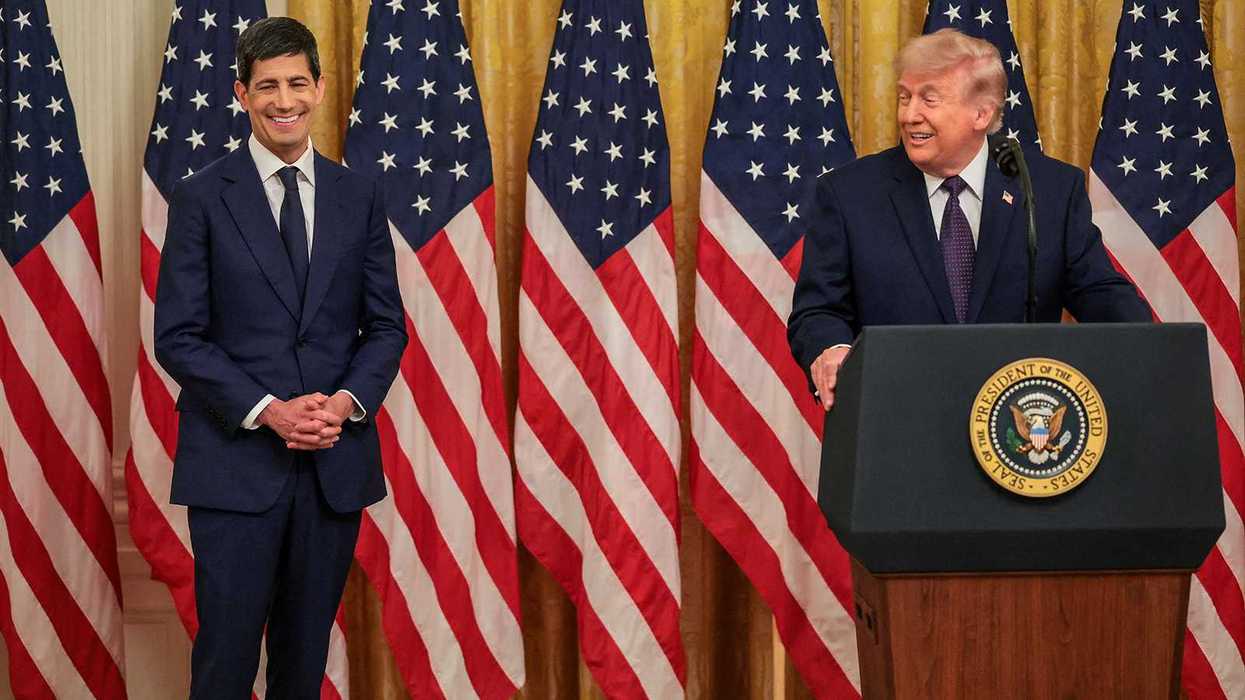
President Donald Trump's new Federal Reserve chairman is already losing credibility, and he's only been on the job for a few months.
Kevin Warsh announced last week that the Fed would not raise or lower interest rates, and now it appears at least one of the big banks is questioning his leadership.
Bloomberg's Joe Weisenthal reported that Bank of America thinks that Warsh seems too relaxed about inflation, and it's making investors nervous. Markets, it said, now expect more inflation risk and more uncertainty.
"Fed Chair Warsh's press conference on the back of a 9-3 decision to hold the policy rate unchanged came across as dovish, and didn't bring any good or bad news, and it just added uncertainty. The market immediately priced it with a bear steepening, high inflation breakevens, and higher risk premia. A steeper curve, lower equities and a weaker dollar is the typical price action associated with credibility shocks faced by EM central banks," the message said.
Employ America executive director Skanda Amarnath said that Warsh was hyping rate hikes for July and then backed out. "And now the committee will compensate with more hikes in 2026. Three hikes is the right base case for the rest of the year."
Warsh's credibility was also questioned by Tim Duy, chief U.S. economist for SGH Macro Advisors
Economics and public policy professor Justin Wolfers explained on his podcast, "Markets don't just listen to the Fed's actions. They listen to what the Fed says it believes. When that message gets unclear, uncertainty fills the gap."
Warsh's problem, Wolfers said, is that he appeared to believe saying less would be better. However, "Less clarity created more uncertainty. Markets don't just listen to the Fed's actions. They listen to what the Fed says it believes. When that message gets unclear, uncertainty fills the gap."
Meanwhile, Weisenthal also flagged from the Institute for Supply Management, "Two separate respondents in the ISM manufacturing report [say] that the current market environment is worse than COVID-19."
"No normalcy in sight in the world of metals," said the person for Primary Metals. "It makes me yearn for the coronavirus pandemic chaos, which was more manageable than whatever this is that we are in. At least business is better; however, the components of good business are not. Sharp pricing downturns in aluminum will make things more interesting, as supply levels will prevent those decreases from taking hold across the board. Getting customers to understand that is not always easy."
A rep from Electrical Equipment, Appliances and Components, agreed. "The pricing volatility and lead-time extensions in this market are arguably worse than the pandemic era. During COVID-19, we saw a surge of price hikes and inventory buy-ups, which caused constraints that eventually leveled out. We are seeing nothing but consistent upward trends for both pricing and lead times that show no signs of slowing down."