
A vulnerable group of local Republicans are quietly staging a rebellion
(Milwaukee legislative website)
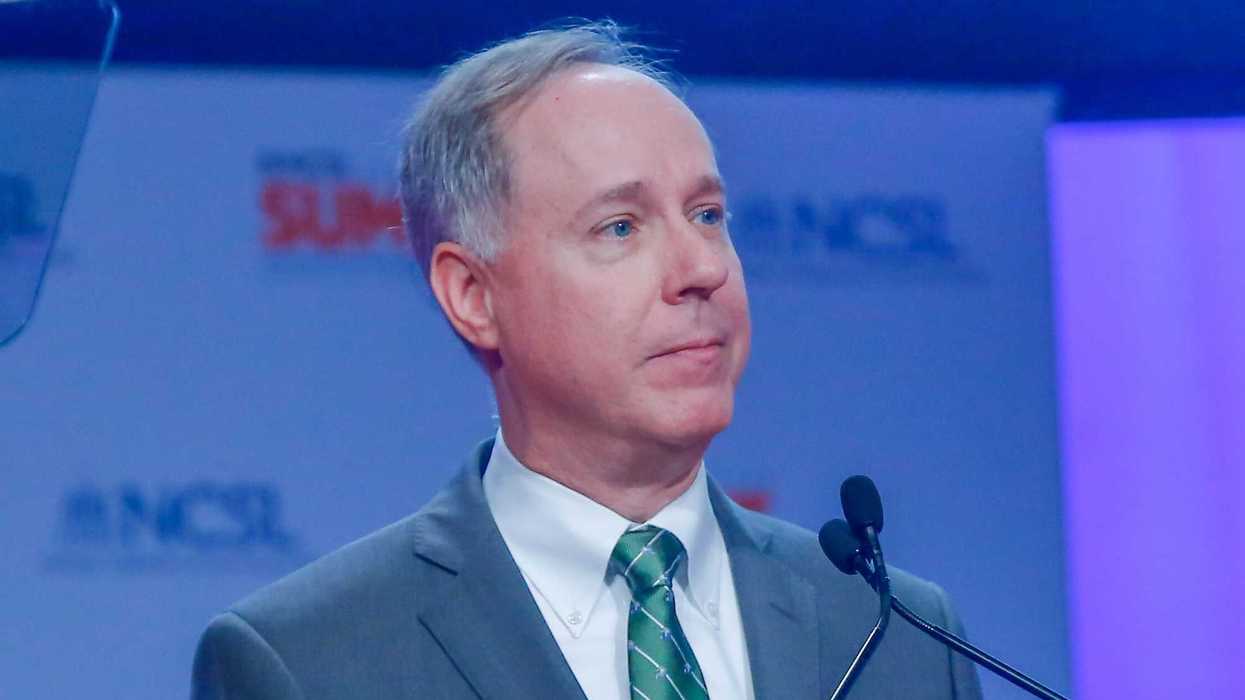
Wisconsin Republican Assembly Speaker Robin Vos

Wisconsin Republican Assembly Speaker Robin Vos
Republicans’ control of the Wisconsin Assembly is up in the air this November, and GOP candidates in competitive districts are taking steps to convince voters to allow them to extend their 16-year streak of leadership, including by distancing themselves from Republican leaders in Washington, D.C. and in Wisconsin.
Barry Burden, director of the University of Wisconsin-Madison Elections Research Center, told the Wisconsin Examiner in an email that the 2026 election environment is “more advantageous to Democrats than the 2024 environment was.”
Part of that environment can be seen in the approval ratings of President Donald Trump. A Marquette Law School poll released in September found that Trump’s approval has declined to 37% — down from 40% approval in July; 63% of respondents said they disapproved of the job Trump is doing.
A recent Marquette poll found that 46% of Wisconsin voters said they would vote for Democrats in legislative races, while 42% said they’d vote for Republicans. The survey did not deliver detailed information on specific districts.
“The party is all but certain to make additional gains,” Burden said of Wisconsin Democrats. “The question is whether the wave will be sufficient to put them over the top.”
Republicans hold a 54-seat majority in the 99-seat state Assembly. Democratic lawmakers need to hold all of their current seats in the Assembly and pick up five additional seats to flip the body, a steeper task than in the Senate where Democrats are looking to pick up at least two seats to take control.
Assembly Speaker Robin Vos (R-Rochester) and Rep. August Tyler (R-Walworth), who is heading up the Republican Assembly Campaign Committee, did not respond to requests for an interview from the Examiner. In an interview with the New York Times, Vos described Trump as a “drag” on the party and said Republicans have worked to recruit center-right candidates to run in competitive districts.
“There’s nobody in Wisconsin that I think is yearning for a hard turn left or right,” Vos told the New York Times.
Assembly GOP candidates are sending out mailers that claim that politicians in Washington — where Republicans currently control every branch of government — are “driving up costs and increasing inflation.”
Instead of embracing their party’s leadership in Wisconsin, Republican candidates are also highlighting the moments where they have disagreed with their leadership to position themselves as independent voices.
A law that expanded Medicaid coverage for postpartum mothers and another measure that expanded breast cancer screenings are major reference points for Republican Assembly candidates. The bills had been held up by Vos until at the end of the legislative session. In a late-night press conference a group of Republican Assembly lawmakers — each from the most purple districts in the state and most of whom are now running for reelection — said they had convinced Vos and other caucus members to let the bills through. They also blamed Democrats for the bills almost failing.
A mailer for Rep. Patrick Snyder (R-Weston) includes a photo of him standing at the podium in the state Capitol talking to reporters during the press conference. Snyder faces a challenge from John Kroll, a Democratic Marathon County Board supervisor.
The image is accompanied by text that says Snyder’s work “wasn’t about the spotlight” and he will “always challenge the political leadership of either party if it’s the right thing to do for Marathon County’s families.” The same mailer pitches Snyder as an “old-school public servant” who has had “no problems bucking his own party to extend postpartum care for new mothers.”
In a Facebook post Friday, Rep. Bob Donovan (R-Greenfield) said he would “stand up to anyone to get stuff done for my local community” including Republican leadership, adding that he “did it when I fought for postpartum Medicaid expansion & Gail’s law, and I’ll do it again.” Donovan faces a challenge from Democrat Ben Brist, an army veteran. Donovan won his 2024 election in with 51.6% of the vote compared with 48.4% for his challenger.
During a recent WisPolitics event, Joe Handrick, a former Republican Assembly member, said that Democrats can only flip the Legislature if Democratic gubernatorial candidate David Crowley has a “really, really big” win against Republican Tom Tiffany. His prediction was that it would have to be a win of more than 4 or 5 points.
“If Tom Tiffany ties in the state of Wisconsin or loses by a couple of votes, the Republicans will maintain the Assembly,” Handrick said. “These Assembly Republicans outperform the top of the ticket.”
Handrick said swing voters’ interaction with Republican incumbents can help swing them their way.
“They can vote for one person for governor or president and then they’ve been voting for Assembly Republicans. The incumbents — every day when you’re an incumbent you’re helping somebody. You’re helping them with a problem with the DNR or with the driveway or helping them get their Medicaid issue resolved,” Handrick said. “Those Assembly Republicans have always done better than the top of the ticket and there’s no reason to think they won’t this year.”
Assembly Minority Leader Greta Neubauer (D-Racine) told the Examiner in an interview that Republican candidates’ strategy to try to distance themselves from the rest of their party won’t work. She said that Democrats’ path to the majority is helped by Trump’s unpopularity.
“Trump is deeply unpopular across our battleground districts, and that’s more than the five that we need to flip in order to gain a majority,” Neubauer said. “We have a real opportunity here to put forward a new vision. We know that it is not easy to beat long-term incumbents, but we feel that we have the winning formula this year.”
Neubauer said Wisconsinites are “smart enough to see through these half-hearted attempts by Republicans to distance themselves from their own party.” She noted that Snyder, who has been in office for nearly a decade, has often voted in line with his party.
“He, of course, has not actually fought back against the Trump administration and Republicans in Washington who are doing nothing to address the cost increases that voters are experiencing,” she said. “Pat Snyder is an establishment Republican, and I think his voters understand that, and this strategy will not work.”
“Republicans understand that people are unhappy with their party, and they are not excited about showing up to vote Republican this fall,” Neubauer said. “Pat Snyder can try to tell his voters that he’s not a Republican, but at the end of the day, there’s going to be an R next to his name, and he went right along with his party in giving a tax break to data centers, in refusing to adequately fund our schools and thereby increase their property taxes,” Neubauer said. “Pat Snyder and his colleagues across the Republican battlegrounds have been with Robin Vos every step of the way, and I do think that their strategy is not going to work.”
The Republican Assembly Campaign Committee has raised $10.6 million this year to fuel the party’s efforts to keep control. The majority of the funds were donated by Diane Hendricks and Elizabeth Uihlein, billionaires who have contributed millions to help get Republicans elected up and down the ballot in Wisconsin. Hendricks and the Uihleins have also donated millions to the Republican Party of Wisconsin, which has, in turn, channeled millions to Republican gubernatorial candidate Tiffany.
The Assembly Democratic Campaign Committee has reported raising more than $3.3 million this year.
Neubauer said Assembly Democrats’ formula for winning is a combination of candidates who understand the challenges of their local communities having direct conversations with voters and a “robust” paid media program.
Neubauer said that Democrats just have a “different” fundraising model. She said she expects there to be spending similar to the last election cycle when $1 million or more was spent in the most competitive seats and that money for Democrats tends to come later in the cycle.
“Assembly Republicans have raised a lot of money from three billionaires whose financial interests are directly tied to whether Republicans control the state Assembly,” Neubauer said, adding that the ADCC has more than 2,500 donors from across every county in the state. “Our candidates and our members are on the phone every single day, calling donors to bring in the dollars that we need to get our message out. And often those dollars come in in more like $50 or $100 checks than several-million-dollar checks, so we are going to continue to work hard to make sure that we have the resources that we need to compete… I am confident that we will be able to bring in the resources that we need to communicate this year.”
Burden noted that individual Democratic candidates have in some cases outraised their opponents. He named Assembly District 88 where Brandy Tollefson, the Democratic candidate and a De Pere school board member, reported raising more than $80,000 over the year compared with her opponent, incumbent Rep. Benjamin Franklin (R-De Pere), who reported raising more than $27,000.
“Although the Republican Party has been outraising the Democrats, individual Democratic candidates have been doing well raising funds,” Burden said. “This pattern has also been happening nationally in that federal Republican Party committees have been raising more but Democratic candidates have mostly been outraising their Republican opponents within districts and states. Big donations from a few wealthy individuals are keeping Republicans more competitive this year in Wisconsin, but the money alone will not guarantee them victory.”
Here are the most competitive Assembly races to watch in the Nov. 3 election:

