Psychologist flags a tell that 'manic' Trump could be on stimulants
REUTERS/Nathan Howard
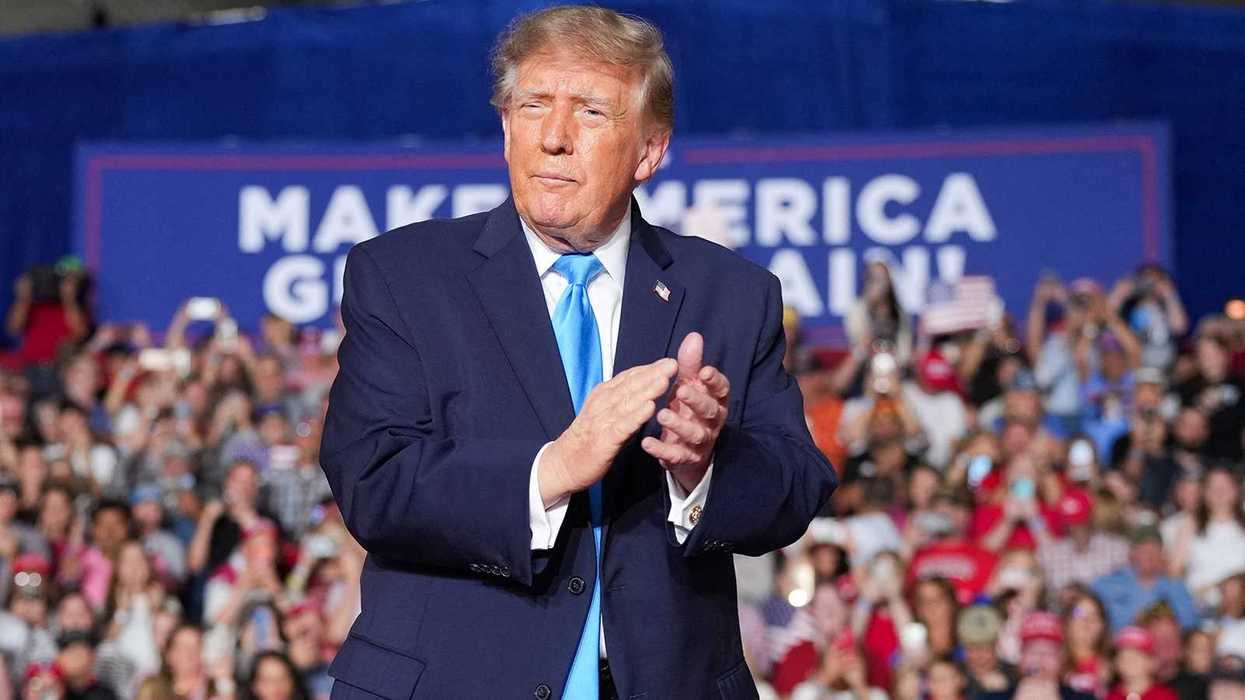
US President Donald Trump claps during a rally at Pinnacle Bank Expo Center in Grand Island, Nebraska, US, October 5, 2026.

US President Donald Trump claps during a rally at Pinnacle Bank Expo Center in Grand Island, Nebraska, US, October 5, 2026.
Clinical and forensic psychologist Dr. John Paul Garrison, known as "Dr. G.," who frequently analyzes nonverbal communication, like body language, analyzed President Donald Trump's recent rallies, where he's begun insulting his own audience.
While in Tennessee campaigning for Sen. Marsha Blackburn (R), Trump told his audience, "There's such love. I mean. It's amazing. When you stand up here, it's just like…the love. I could say the stupidest things and you'd clap. 'Oh, I love you so—' It's true."
The audience laughed and clapped behind him.
Garrison noted that was remarkably similar to a previous incident in which Trump claimed, "We have an extremely high IQ audience for a change. For a change. It's very nice."
Garrison noted that it was ironic that his audience was "clapping after a thinly veiled insult, basically saying that they would clap for anything."
He noted that "You notice how at the end he said it's true because he's emphasizing the fact there is unconditional loyalty no matter what he says. Not surprisingly, he goes on to say that he doesn't say stupid things, but what this does is this is using authority and dominance, and framing it as humor. Just a really wild thing to watch."
When Trump began speaking about his renaming of lakes and portions of the ocean, Garrison said that he noticed Trump's jaw shift to the left.
"Sometimes we see that when people are either on stimulant medication or taking stimulants of some kind. But there can also be a neurological implication as well," Garrison said. "Right after he said Lake America, you saw it again. When he gets excited, we're more likely to see this."
"So, aside from the fact that something like a stimulant could affect this type of behavior, this can also be an impairment and motor functioning," he continued after watching the clip a few more times. "As we've seen, there are a lot of impairments in functioning of the arms and the face can also be connected with that. So, it's very possible that this is just all part of the same dysfunctional pathway, but right now it's expressing itself with this lateral jaw movement."
He noted that it happens fairly regularly.
At the rally, he seemed "more excited" than at other rallies, and more unusual behaviors stood out, increasingly "ridiculous and over the top."
Garrison said that it's an example of what happens when people struggle to inhibit their behavior.
As Blackburn spoke and Trump loomed behind her, Garrison noticed Trump close his eyes, open his mouth and move it around while keeping it open. Garrison said it could come from either his lack of awareness that he's being watched or his inability to inhibit his behavior.
"There's a very complex system of muscles around the mouth," Garrison explained. "So, sometimes we see dysfunction around the mouth when people have these sort of neurodegenerative diseases or when people are in neurological decline. They have a harder time controlling their tongue, sometimes a harder time controlling their jaw. But this type of behavior certainly seemed like something he was having a hard time controlling. Either that or he was feeling euphoric at the time, and I think that's less likely."
The odd part is that he's not only doing the funny things with his mouth, but his eyes are closed, and he's leaned back while doing it. Garrison said these tics pop up on days when he seems more energized and "almost manic."
"So, on nights like this he seems more emotionally dysregulated," said Garrison. "He seems more excitable but also seems more agitated. So, he just seems to be feeling more in general. And once again, when we see people with various dysfunctions neurologically, that's something that we look at, their ability to regulate their emotion, their ability to inhibit behaviors. And he seems to be struggling more and more with all of these because what we've seen in the past, obviously, he's made some wild remarks during rallies and made wild remarks publicly, but now they're getting clustered together in much greater concentration."
Perseveration is the word for repeating the same stories or topics over and over, as if he's stuck on them. Trump does it frequently, with "wild remarks" that are "getting clustered together in much greater concentration." The clip he was focused on was early in the speech.
When the audience begins supporting these things, Garrison said that it's reinforcing the behavior.
"So, as you could hear, the clapping was followed up by him getting more grandiose. And what gets scary about something like this is when you have someone with poor judgment who's not able to regulate their emotions, and when you have people around them saying, 'Yes, you're doing a great thing,' it could potentially lead him to making even worse decisions. So, even though this exact situation is at a rally, you could see something similar to this behind closed doors or with other people that agree with ideas that he has," Garrison explained.
- YouTube www.youtube.com