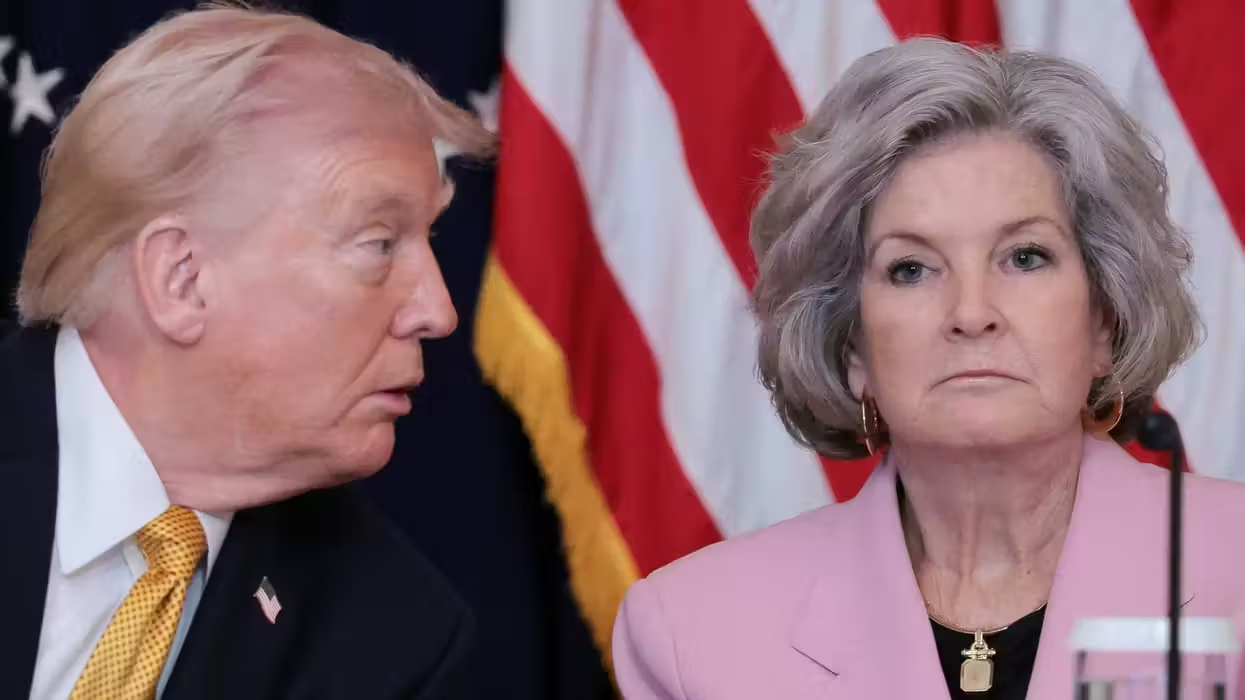
Natalie Harp has become one of the most influential figures in shaping President Trump's public messaging, yet few Americans know her name. The executive assistant operates largely behind the scenes, serving as the critical filter between the president's impulses and the millions of followers who consume his Truth Social feed each day.
Her role has expanded dramatically since Trump's return to the White House, according to a new, wide-ranging report in the Wall Street Journal, making her instrumental in the nearly 8,800 posts published to the president's account since the start of his second term. While Trump personally approves all content, Harp controls much of what reaches his desk for approval in the first place.
Each evening, Harp arrives with stacks of printed-out draft posts—material she and other advisers believe will appeal to the president. These proposed messages often recycle content from fringe social media accounts, partisan commentators, and anonymous users across X and other platforms. According to people familiar with the process, Harp scours the internet for videos, images, and text that align with Trump's grievances and worldview.
Once Trump approves the selections, Harp logs into the president's account—often during late-night and early-morning hours when most White House staff have gone home. She then posts batches of messages in rapid succession, contributing to the frenetic posting patterns that have characterized Trump's Truth Social presence.
On a single night in December, Trump's account posted nearly 160 times between 8:17 p.m. and midnight. Such bursts have occurred 44 times since Trump returned to office, with dozens or more posts frequently published between 8 p.m. and 6 a.m., according to the Journal's analysis.
Harp's influence extends to some of the most controversial content to appear on Trump's account. Earlier this year, at the president's direction, she posted a video containing racist imagery depicting former President Barack Obama and Michelle Obama as apes, as well as an AI-generated image portraying Trump as a Christ-like figure. Both posts were later deleted after bipartisan backlash.
Trump later told reporters he had not seen the offensive portion of the video before approving it, blaming an editing error. However, the episode raised questions about how thoroughly the president reviews content before it reaches his followers.
What distinguishes Harp's role is her apparent autonomy in the process. Unlike typical White House operations, she does not share draft posts with the chief of staff's office, communications aides, or national security officials before they are posted. When questioned about this lack of coordination, Harp has told colleagues she works directly for Trump and only answers to him.
This approach has frustrated some White House officials who worry about the absence of institutional checks on the content being published under the president's name.
The lack of broader review means that some of the most divisive presidential messaging bypasses traditional White House communication channels entirely. The posts often amplify conspiracy theories, including false claims about the 2020 election being stolen. They describe migrants as existential threats, call for the arrest of political opponents, and mock critics—all without input from seasoned communications professionals or policy experts.
Much of the content Harp selects comes from obscure or anonymous accounts. The Wall Street Journal found that significant portions of Trump's Truth Social feed consist of reposts from accounts like @TheSCIF, @WallStreetApes, and @NathanielSami—users whose identities and motivations are largely unknown to the general public.
White House Communications Director Steven Cheung defended the arrangement, stating that "Truth Social has never been hotter" because it allows Trump to offer "unfiltered and direct thoughts to the American people, without the biased media taking him out of context." He declined to discuss internal deliberations about how the posting process works.