


Adding insult to injury, he’s openly mocked European leaders by posting their private messages and sharing an AI-generated image of himself raising the American flag over Greenland.
But behind these headlines a different story is emerging.
Trump’s military threats have toxic polling numbers with the American public. His Republican allies have openly threatened to revolt. European countries are rapidly sending reinforcements, raising the costs of any invasion. And Europeans are starting to think about what economic retaliation might look like.
Far from being inevitable, Trump’s Greenland gambit appears to be on increasingly shaky ground.
No good options
Trump has three options to take control of Greenland: diplomacy, money and military force. The latest diplomatic talks collapsed as Greenland and Denmark’s foreign ministers left the White House in “fundamental disagreement” over the future of the territory.
Simply buying the territory is a non-starter. Greenlanders have already said the territory is not for sale, and U.S. Congress is unwilling to foot the bill. That’s left military force, the worst possible option.
It’s difficult to convey in words just how stunningly unpopular this option is with Americans. A recent Ipsos poll found that just four per cent of Americans believe using military force to take Greenland is a good idea.
To put that in perspective, here are some policies that are more popular:
- Billionaires should pay less tax (five per cent)
- Pardoning convicted drug trafficker and Honduran President Juan Orlando Hernandez (13 per cent)
- Government book bans (14 per cent)
- Stopping the release of all the Jeffrey Epstein files (seven per cent).
If your official foreign policy is less popular than pardoning drug traffickers, then your foreign policy might be in trouble.
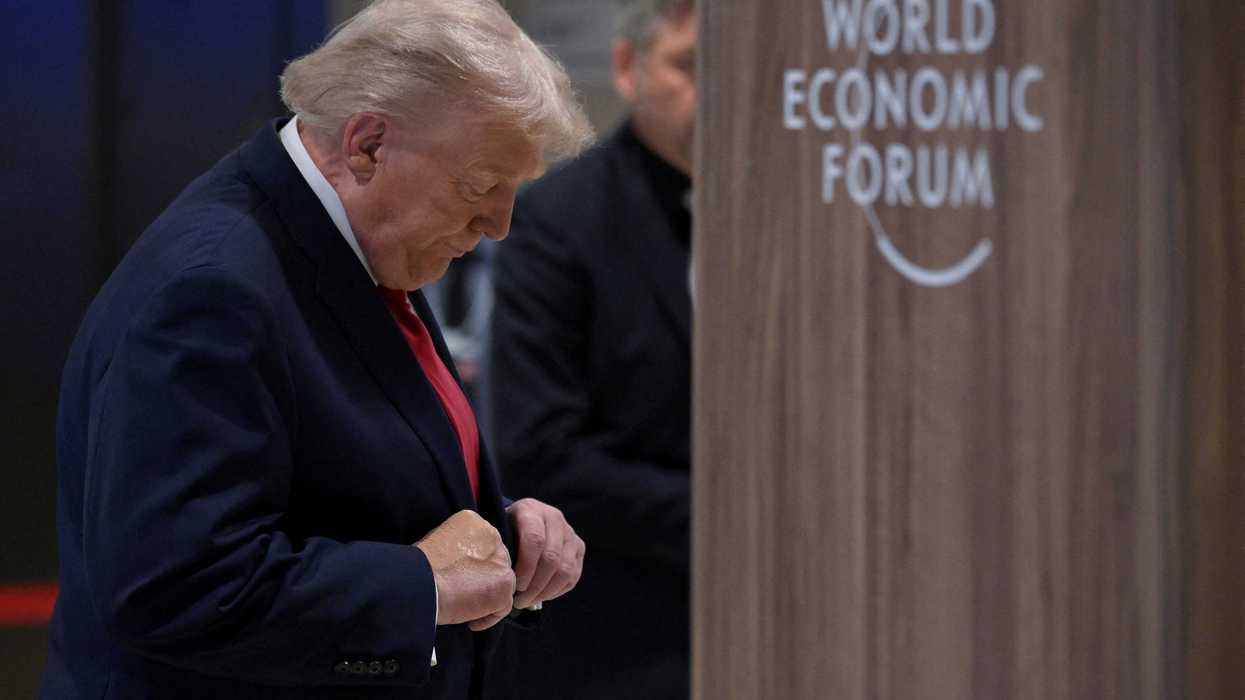
Sensing this unpopularity, Trump has already begun to walk back his military threats. Using his platform at Davos, he claimed “I don’t have to use force. I don’t want to use force. I won’t use force.”
It is too early to tell whether Trump’s claims are sincere. Not long after claiming to be the “president of peace,” he was invading Venezuela and bombing Iran.
The broader point is that if diplomacy has failed, money is a non-starter, and now military action is ostensibly being taken off the table, then Trump has no good options.
The danger of defections
Trump’s political coalition, in fact, is increasingly fragile and in danger of defections. The Republican House majority has shrunk to a razor-thin margin, and Republicans are already signalling a loud break with Trump over Greenland.
Nebraska congressman Don Bacon recently told USA Today: “There’s so many Republicans mad about this … If he went through with the threats, I think it would be the end of his presidency.”
The situation in the Senate looks even worse. Multiple Republican senators have pledged to oppose any annexation, with Thom Tillis and Lisa Murkowski visiting Copenhagen to reassure the Danish government. With enough defections, Congress could sharply curtail Trump’s plans and force a humiliating climb-down.
There’s yet another danger of defection. Senior military officers can resign, retire or object to the legality of orders to attack America’s NATO allies. Just last year, Adm. Alvin Holsey, the leader of U.S. Southern Command, abruptly retired less than year into what is typically a multi-year posting.
Holsey’s departure came amid reports that he was questioning the legality of U.S. boat strikes in the Caribbean. Americans still have a high level of confidence in the military, so when senior officers suddenly leave, it can set off alarm bells.
Creating a tripwire
In recent days, Denmark and its European allies have rushed to send military reinforcements to Greenland. These forces, however, have no hope of defeating a committed American invasion. So why are they there?
In strategic studies, we call this a “tripwire force.” The reasoning is that any attack on this force will create strong pressures at home for governments to respond. Once Danes and Swedes — and other Europeans for that matter — see their soldiers being captured or killed, this will force their governments to escalate the conflict and retaliate against the United States.
The Trump administration would like to seize Greenland, face no European forces and suffer no consequences. But the entire point of a tripwire force is to deny easy wins and to signal that any attack would be met with costly escalation. It creates a price to invading Greenland for an administration that rarely wants to pay for anything.
The B-word
Amid the Trump administration’s threats, people are forced to grapple with what comes next. European governments are already quietly debating retaliation, including diplomatic, military and economic responses.
Chief among these is the European Union’s Anti-Coercion Instrument, colloquially known as the “trade bazooka,” that could significantly curb America’s access to the EU market.
But for ordinary Europeans a different B-word will come to mind: boycott.
Some Europeans began boycotting U.S. goods last year amid Trump’s trade threats — but never to the same level as Canadians. That could quickly change if the U.S. engages in a stunning betrayal of its European allies. Fresh anger and outrage could see Europeans follow Canada’s lead.
Trump repeatedly threatened Canada with annexation, and it triggered a transformation of Canadian consumer habits. Canadians travel to the U.S. less, buy less American food and alcohol and look for more home-grown alternatives. Despite Canada’s small population, these boycotts have caused pain for U.S. industries.
Now imagine a similar scenario with the EU. In 2024, the U.S. exported almost US$665 billion in goods and services to the EU. It’s one of the largest export markets for the U.S., fuelling thousands of jobs and businesses.
The real danger for American companies, however, is when consumer pressure moves upwards to governments and corporations. European governments and corporations who buy from American giants like Microsoft, Google and Boeing will start to see public pressure to buy European — or at least not American. America’s most valuable corporate brands risk being contaminated by the stigma of the U.S. government.
Will he, won’t he?
None of this will stop the Trump administration from trying. Trump’s own words — that there is “no going back” on his plans for Greenland — ensure he’s backed himself into corner.
The more likely scenario seems to be starting to play out — Trump will try and then fail. His threats to annex Greenland will likely be remembered next to “90 trade deals in 90 days” and “repeal and place” in the pantheon of failed Trump policies.
The tragedy here is not simply a Trump administration with desires that consistently exceeds its grasp. It’s that the stain of betraying America’s closest allies will linger long after this administration is gone.
Eric Van Rythoven, Instructor in Political Science, Carleton University
This article is republished from The Conversation under a Creative Commons license. Read the original article.
