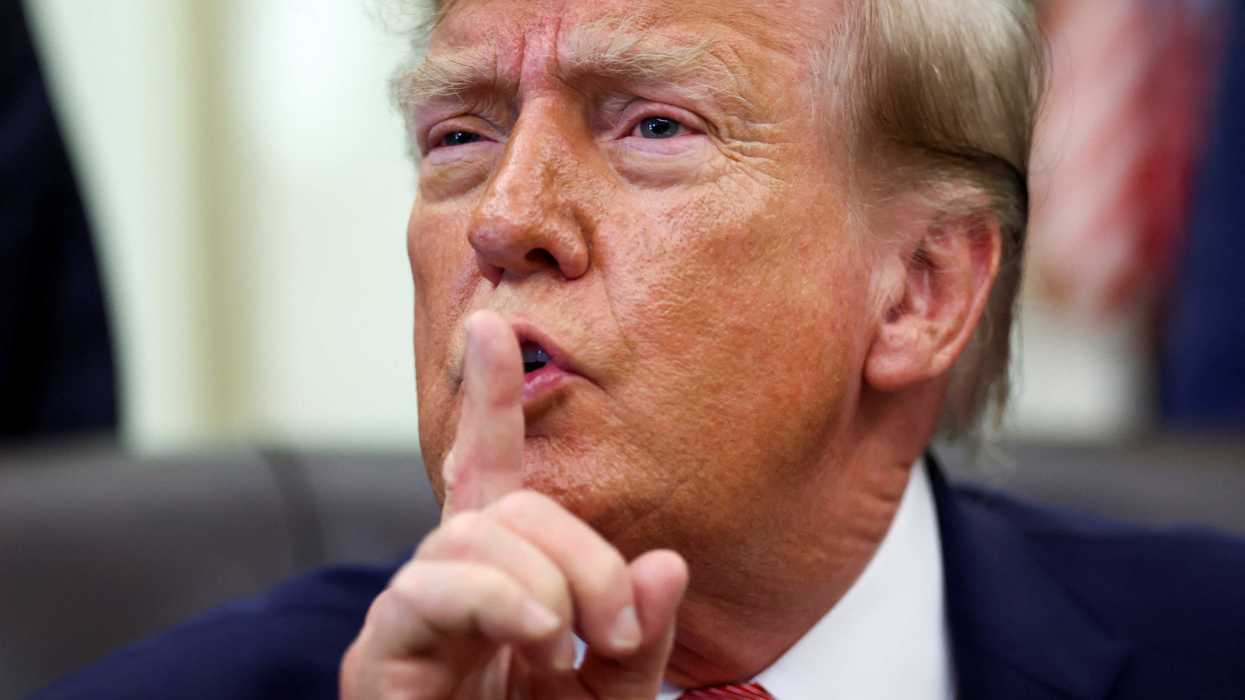
After targeting and taking down multiple crime rings, former Assistant US attorney Andrew Weissman knows how to build a case against a suspect — and Trump’s FBI remnants aren’t cutting it.
Weissman said Trump’s politicized FBI appears to have violated grand jury secrecy in hopes of snagging a nice trophy photo against Columbia professor Dan Richman.
“Dan Richman, a … longtime friend of [former FBI director] James Comey [and himself a federal prosecutor], voluntarily gave the FBI his computer in 2018–19 for a very limited purpose. In 2025, prosecutors searched through it and a court had already found that DOJ search was unconstitutional,” said Weissman.
But Richman is now trying to get his stuff back, and he’s taken his argument to court with a recent filing.
“The FBI wanted to serve Richman with a grand jury subpoena. His lawyer accepted service, confirmed by email with the FBI. Then the FBI higher-ups decided it had to be served in person (which makes zero legitimate sense, as Richman had accepted service already).”
So, Richman said agents went to his New York apartment building, but the doormen would not let them in. However, the FBI argued that anyone who refused them entry to serve a subpoena was committing obstruction.
“In response, one of the agents said that they were ‘under instructions that if people don’t let us up, they’re going to be charged with obstruction,’” the filing states. “After further discussion between the agents and a building staff member, the agents eventually agreed to have the staff member confirm that Professor Richman was not in his apartment, which he did, whereupon the agents departed.”
But claims of obstruction are “simply not true: A subpoena is not a search warrant,” said Weissman, explaining that this did not stop Trump’s FBI from hauling the doormen before a Florida grand jury — “for the non-crime of refusing entry to agents with no legal authority to enter.”
“The conduct of the government in repeatedly and aggressively attempting to directly contact Professor Richman — purportedly to ‘serve’ a subpoena that had already been served — and threatening building employees with obstruction of justice for refusing to permit them to access to non-public spaces in a residential building to which they, in these circumstances, had no right of access, raises significant questions regarding the true purpose of this activity,” argued Richman’s lawyers.
And of course, Richman appeared to testify before the Fort Pierce grand jury on the date specified in the subpoena, which deep sixed any theory that he “obstructed” the grand jury’s investigation.
But aside from not knowing the difference between a subpoena and a search warrant, Weissman said the Trump’s FBI added “to the shenanigans” by not getting their facts together and telling Richman’s lawyers, “that he is a target, is not a target, and that the grand jury does not think he is a target — which Richman points out is either illegally revealing information protected by grand jury secrecy or is factually not true.”
“Professor Richman appeared, as ordered, but, after waiting for hours, exercised his Fifth Amendment privilege,” according to documents. “His appearance was a waste of time and taxpayer dollars.”
“It is Keystone Cops stuff — the gang that couldn’t shoot straight — except it is vindictive, and it comes from the top,” said Weissman. “Saying ‘no’ to the FBI when they have no legal authority is not obstruction. It is upholding the law.”
Other critics have blasted the Trumpified DOJ and it's enforcement, which they say is rife with "turmoil and incompetence" that is "jeopardizing thousands of criminal cases."