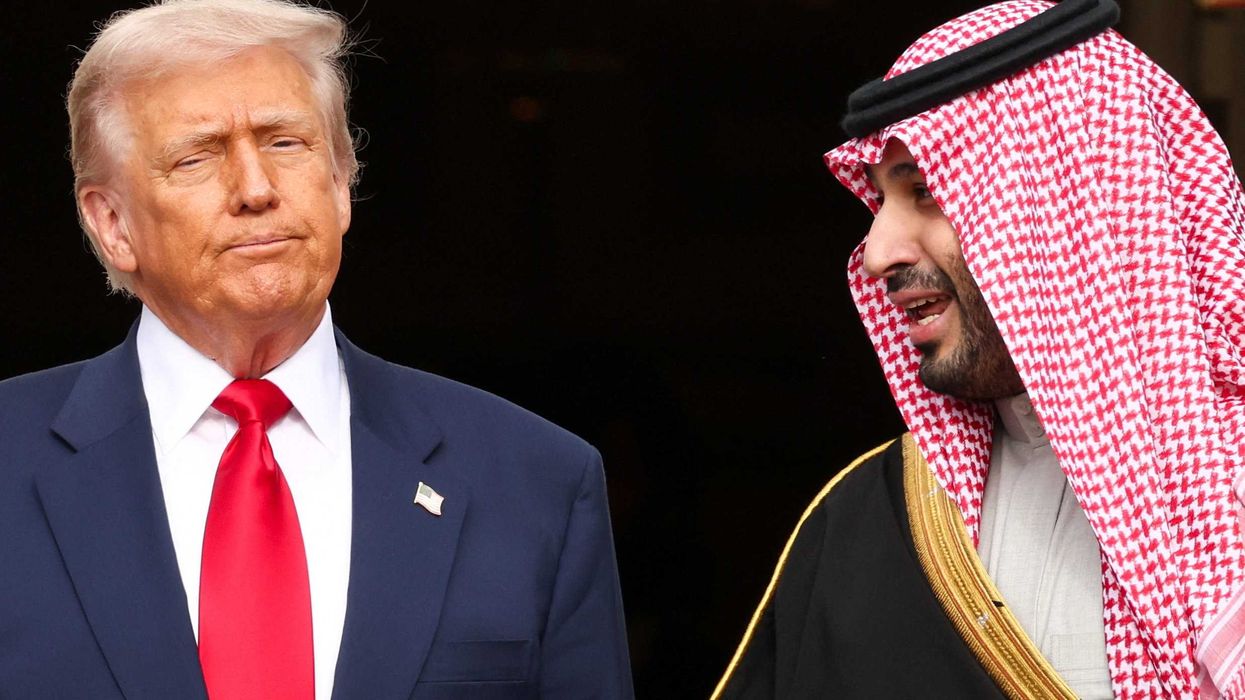
Saudi Arabia has long been a key U.S. ally in the Gulf region, and its Crown Prince Mohammed bin Salman has appeared to forge a strong personal alliance with President Donald Trump over the course of his presidencies. But now, both of those alliances have been badly strained by Trump’s “unreliable” behavior in the Middle East. In fact, after Trump’s disastrous war with Iran, the Saudis have begun to see the U.S. as an outright “risk to Arab nations.”
This is according to a new report by the New York Times, which detailed how Trump’s war has pushed Saudi Arabia to grow increasingly skeptical of its U.S. alliance and reprioritize its own security interests.
Perhaps the clearest example of this came when Trump attempted to launch a mission that would provide military air cover to ships trying to pass through the then-closed Strait of Hormuz during the tenuous ceasefire. But when U.S. Central Command approached Saudi Arabia about using its airspace for the plan, it was surprised to receive a rejection: “The Americans had not consulted the Saudis,” and the latter were not happy about it. What’s more, after a flurry of phone calls between the White House and Riyadh, “the crown prince stood his ground, fearing that the American plan could reignite war,” and Trump was forced to abandon the effort before it even began.
“They had lost confidence in the administration, and they thought if they let the U.S. use their airspace, they would get hit even harder by Iran,” said Hussein Ibish, a scholar at the Arab Gulf States Institute in Washington.
This incident, explains the Times, highlights how American and Saudi officials are “becoming increasingly at odds over how to approach security in the region, particularly with regard to Iran and Israel. And more and more, the Saudis see the U.S. government as unreliable and even on occasion a risk to Gulf Arab nations.”
According to the Times, “Since the United States and Israel attacked Iran on Feb. 28, Saudi Arabia has tried to chart a middle course to protect its interests. It gave military and diplomatic support to the United States, and was attacked by Iran. But the kingdom has also opposed Mr. Trump at critical moments, flexing its muscles when it sensed greater dangers resulting from American and Israeli aggression.”
Now, rather than collaborating with its counterparts in Washington, “Saudi officials are speaking directly to their Iranian counterparts about Iran’s control of the strait, missile arsenal and support for regional militias — all of which the Saudi leadership considers to be a bigger threat than the nuclear issue.” And as the Trump administration struggles to achieve a lasting peace deal, “Saudi Arabia and other Gulf Arab nations are pressing for an outcome that would shield them from fallout if Iran, Israel or the United States restart broad hostilities.” Based on Trump’s bungling during the war, explains the Times, “the Saudis question whether the Americans would offer any protection or exercise sound judgment in a future conflict.”
What’s more, while Trump has attempted to strengthen his alliance with the Saudis, making the country his first major overseas trip during both terms, he publicly mocked bin Salman during the war. During an investment forum in Miami that was organized by Saudi Arabia, Trump shocked the audience by saying, “He didn’t think he’d be kissing my ass,” and other disparaging remarks.
Now, as the Trump administration flails at finalizing a peace plan, “Saudi officials are adopting a wait-and-see approach on outcomes of the agreement. For one thing, they have not committed any funds to rebuilding Iran, which the agreement calls for from America and its regional partners.”