

No one can save Trump from himself this time
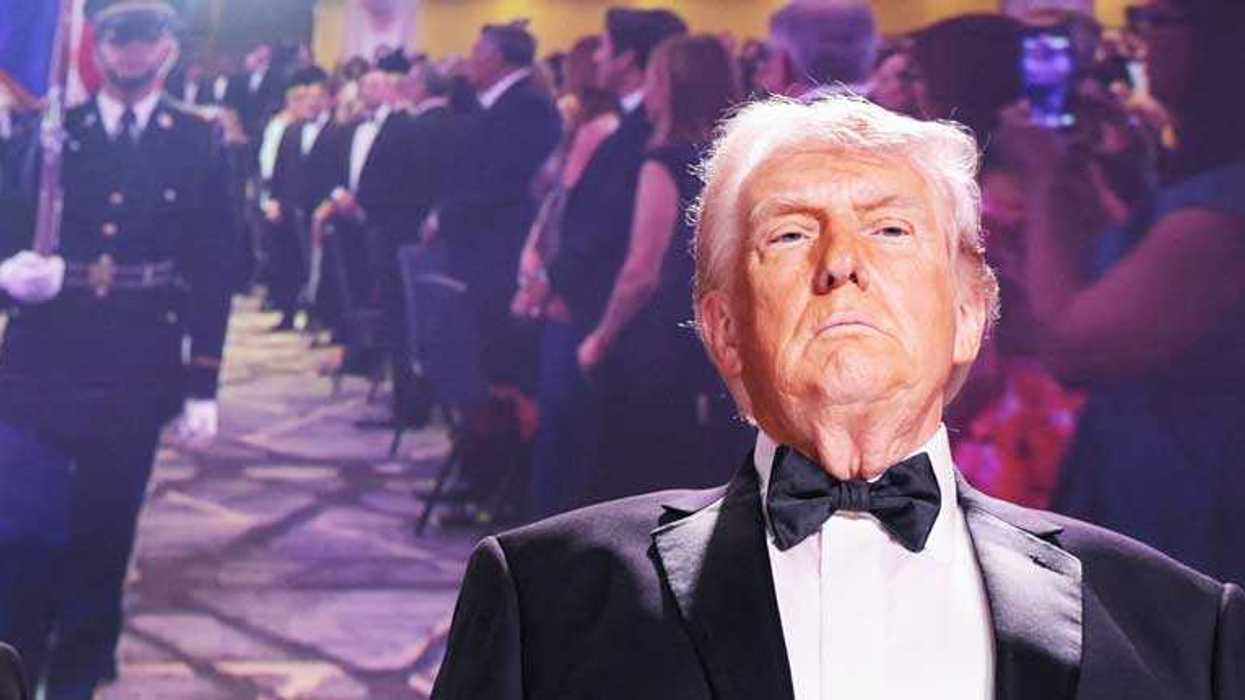
U.S. President Donald Trump attend the annual White House Correspondents' Association dinner in Washington, D.C., U.S., April 25, 2026. REUTERS/Jonathan Ernst
When Donald Trump was about to miss an interest payment for his dying Trump Castle casino in 1990, his father Fred bought nearly $5 million worth of poker chips to save him from default. When Trump was indicted for inciting the January 6 insurrection, the Supreme Court ruled that he could not be charged because an auto golpe is a core duty of the president. Judge Aileen Cannon used a technicality to dismiss the criminal case against Trump for hoarding stolen classified documents in the bathroom of his spy-riddled golf club. As inflation spikes, gas prices surge, and the world teeters on the brink of a recession, congressional Republicans are demanding a billion dollars to build the gilded ballroom after Trump bulldozed the East Wing of the White House without collecting enough corporate bribes to cover the project.
For nearly 80 years, someone has always saved Trump from himself. With the Strait of Hormuz, the president has finally created a mess so big that no one can save him. No one is coming to the rescue. NATO can’t and China won’t.
Last week, Times columnist Tom Friedman begged NATO to help Trump unblock the strait, which carried 20 percent of the world’s oil and liquified natural gas before Trump attacked Iran. Friedman urged the NATO nations to look past the fact that Trump keeps threatening to destroy NATO and seize the territory of member states Canada and Denmark. Friedman urged America’s closest allies to “get over” all that and join a great armada to liberate Hormuz. “I know this is a big ask,” he wrote. It’s worth it, Friedman argued, because it’s simply too awful to imagine a Middle East with Iran controlling 20 percent of the world’s oil and lording that power over its Gulf State neighbors.
NATO can’t join an operation to liberate the Strait of Hormuz, because there isn’t one. There’s only the US naval blockade of Iranian oil exports. The blockade puts economic pressure on Iran, but it doesn’t force them to stop attacking ships.
Commercial ships are soft targets with risk-averse owners. If they don’t feel completely safe, they won’t go. Any effort to liberate the strait by force would have to get the risk down to practically zero before shipping would resume. And then we'd have to keep it up forever. The Strait of Hormuz had never been closed before Trump attacked. There was always a question of whether Iran could get away with closing it. Now we know.
US Secretary of Defense Pete Hegseth insisted before the Senate Armed Services Committee that the US could open up the strait militarily Trump if wanted.
“If that's true – and that's not what has been testified to us in private briefings – why haven’t you done that already?” asked Senator Chris Murphy.
“Ultimately a preferred long-term approach would be a deal where they open it up,” Hegseth replied.
“[A]s we talk about trillion dollar plus budgets for our military, it appears that a very small budget is holding us hostage in the straits of Hormuz,” Senator Dick Durbin observed.
Durbin is right. It has become a thought-terminating cliché for Trump that Iran’s navy is at the bottom of the sea. But Iran doesn’t need warships in order to freeze shipping through the strait. It just needs enough fast boats, mines, drones, and missiles to scare off unarmored commercial ships and their insurers.
Last week, Trump was expected to seek China’s help in resolving the Hormuz crisis during his summit with Xi Jinping. China has leverage because it buys 90 percent of Iran’s crude oil. If China wanted to pressure Iran to resolve the crisis, it could. However, we learned Thursday that, while China conceded that Iran shouldn’t charge tolls in the Strait of Hormuz in theory, it’s not going to do anything to stop it.
China has little incentive to intervene. When the war began, China’s emergency oil supply was triple that of the United States. China is an ally of Iran and an adversary of the US. While Trump was in Beijing, Iran made a big show of letting Chinese ships out of the Strait of Hormuz, just to drive home that point. The blockade is hurting China, but it’s hurting the US more. If Iran ends up charging tolls on the Strait of Hormuz, much of that cash will flow to Chinese arms makers and ship-builders. Iran’s probably going to buy a whole new navy from China.
Meanwhile, a series of devastating leaks has shattered Trump’s rosy picture of Iran’s remaining defenses, and its economic resilience. Iran has retained about 70 percent of its pre-war missile stocks and mobile missile launchers. Critically, it retains access to 30 of 33 missile-launching sites along the strait.
It’s not just the US intelligence community saying so. “Everybody knows that Trump and Hegseth are talking nonsense when they make claims to have destroyed Iran militarily,” a senior NATO source told the Telegraph.
Another leaked CIA assessment estimated that Iran can hold out for at least three or four more months before facing more severe economic hardship. Not everyone is so optimistic. “The leadership has gotten more radical, determined and increasingly confident they can outlast US political will and sustain domestic repression to check any resistance” inside Iran, an anonymous official told the Post, “Comparatively, you see similar regimes lasting years under sustained embargoes and airpower-only wars.”
The blockade is causing Iran major economic pain, but this is an existential fight for the regime. They know that if they can just outlast Trump, they can come out of this conflict with a huge influx of cash and strategic preeminence in the Middle East.
Trump has spent a lifetime rebelling against reality. In the Strait of Hormuz, he has finally run up against a reality too stark to spin or ignore. The strait was free and open before Trump attacked. Now it is closed and Iran has set up a permanent mechanism to extract rents from passersby. It’s tempting to think that all of Trump’s terrible policies can be reversed, but some blunders are unfixable. In all likelihood, this conflict will end with Iran charging tolls on the Strait of Hormuz and reaping billions of dollars in windfall profits that will be plowed back into its military and its nuclear program.

