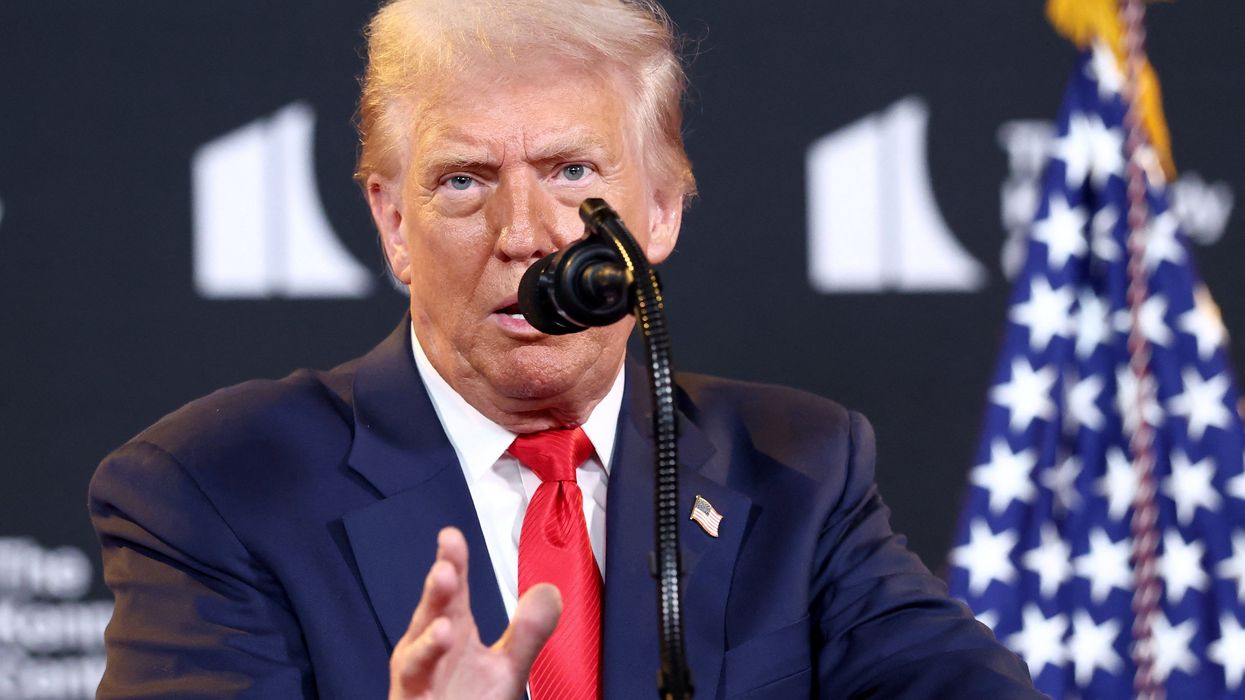
President Donald Trump's attempt to add his name to the Kennedy Center for the Performing Arts is not yet complete, as it requires an act of Congress for the name change to become official. Trump may have to wait a little longer, according to legislation to fund the federal agency that oversees the facility.
On Monday, House Appropriations Committee chairman Tom Cole (R-Okla.) announced the release of finalized legislation to fund various government agencies through Fiscal Year 2026. The bills fund the Departments of Commerce, Interior, and Justice, and also agencies overseeing federal investments in science, energy and water development.
A provision in the Appropriations Committee's legislation to fund the Interior Department specifically refers to the "John F. Kennedy Center for the Performing Arts," and New York Sun correspondent Matt Rice observed on X that Trump's name is conspicuously absent from that section. The bill allocates $32.34 million "for necessary expenses for the operation, maintenance and security of the John F. Kennedy Center for the Performing Arts" through September of 2027.
"Congressional Republicans decline to officially change the name of the Kennedy Center in the Interior appropriations bill," Rice wrote.
The Appropriations Committee's legislation has been through the conference process, meaning lawmakers from both the House and Senate Appropriations Committees have contributed to the three-bill package. All that remains is for the House and Senate to vote on whether to send the package to Trump's desk.
Early last year, Trump named himself chairman of the Kennedy Center and replaced the institution's board with a hand-picked cadre of political loyalists. That board voted last month to change the name to put Trump's first, though the name change was criticized as "illegal" as Congress has to officially vote on the name change. Should the Interior Department funding bill become law, it would mean that Congress has officially refused to recognize Trump's attempted name change throughout the remainder of the 2026 fiscal year.
If that legislation doesn't pass and become law by January 30, it could risk another government shutdown. Last year's 43-day shutdown ended with a temporary détente between Democrats and Republicans that kept government agencies funded at existing levels through the end of this month.