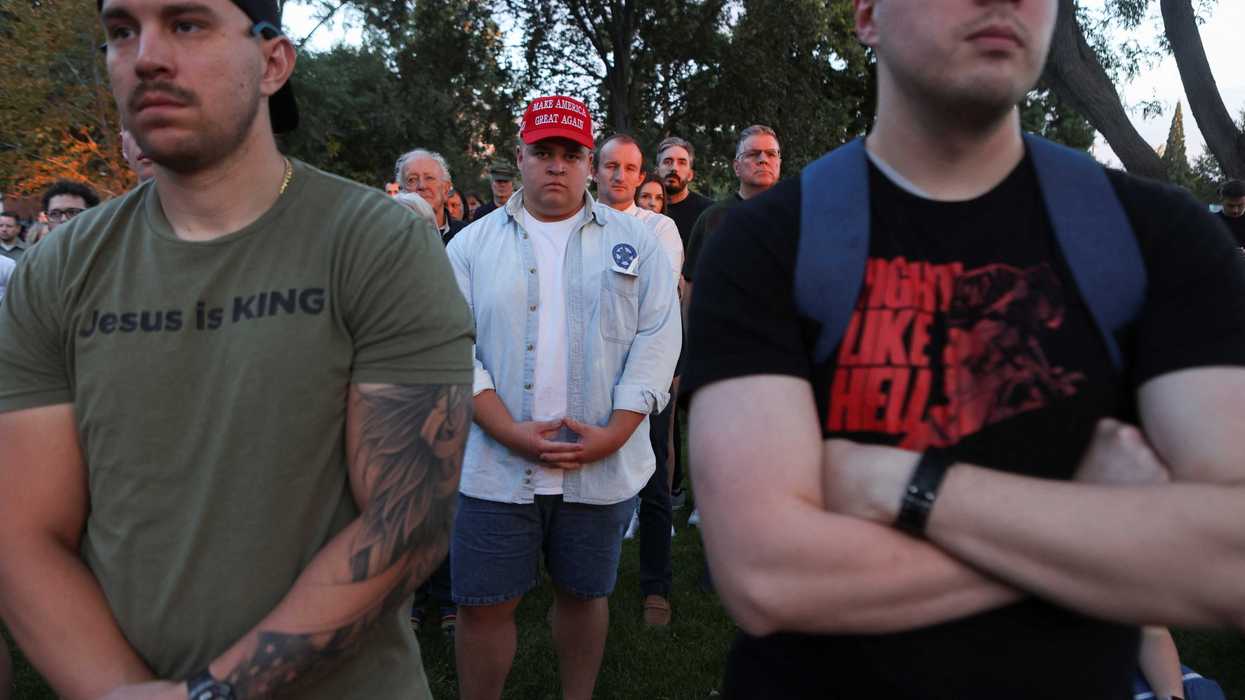
President Donald Trump successfully gained the approval of young men during his 2024 campaign. As columnist Paul Waldman notes, Trump was able to convince them due to their unhappiness with the economy and fears about the future. It was the same unhappiness and anxiety, Waldman writes in his new Substack piece, that turned those same young men against Trump in the 2026 midterm elections. And the men within the Trump administration, Waldman writes, are the biggest example of MAGA failures.
In the post, titled “Now is the time to attack the loser men of MAGA,” Waldman asserts that many young men who endorsed Trump also did so because they viewed Trump’s “toxic” masculinity as aspirational. By many accounts, Trump evades responsibility, despite what he does or says being viewed as problematic or, in the case of his politics, deemed corrupt. Waldman argues that Trump and his Republican allies model “a particular kind of belligerent, violent, misogynistic, lunkheaded masculinity.”
But despite the Party’s defeat, Waldman says Trump’s aides are afraid to stand up to him, which weakens their alpha male identity. “Trump surrounds himself with a collection of pathetic sycophants with zero self-respect, men who will wear the wrong size shoes if Trump tells them to,” Waldman writes.
He believes that MAGA's definition of manhood is centered around bullying, he says, using Trump and his administration leaders, such as Stephen Miller, Pete Hegseth, Markwayne Mullin, RFK Jr., Marco Rubio, Sean Duffy, and Kash Patel, as examples. Waldman asserts that despite their failures, especially in the wake of the recent election wipeout, they continue to brag “about things they haven’t managed to accomplish, valorizing violence, and never taking responsibility for anything.”
“Trump and his bad men are none of these things. That’s why, when Duffy and fake tough guy Markwayne Mullin are floundering around, Democrats should be saying not just that they have to be held accountable for their failures, but that they’re losers who are failing as men,” Waldman writes.
With this information in mind, Waldman says the Democrats have a unique opportunity to attack that specific group within the MAGA community and push back against the messaging. He writes that the Democrats and liberals have to be cognizant of their language and ensure it steers clear of certain rhetoric, even when criticizing Republican men, as it is counterproductive to the messages they are trying to send. If not, Walden says, Democrats and liberals embrace the same toxic definition of masculinity that MAGA promotes.
When discussing Abdul El-Sayed calling his opponent Mike Rogers a “beta,” Waldman argues that Democrats shouldn't define masculinity by dominance or portray men as either strong or weak. “That reinforces the reactionary idea that men are either alphas (strong) or betas (weak), arrayed in a permanent status hierarchy,” he writes.
For Waldman, Trump and his MAGA cohort have built their political identities around dominance, toughness, and alpha-male masculinity, but are increasingly being exposed as insecure, ineffective, and unsuccessful.