
Americans are fighting rapid technological change — with violence
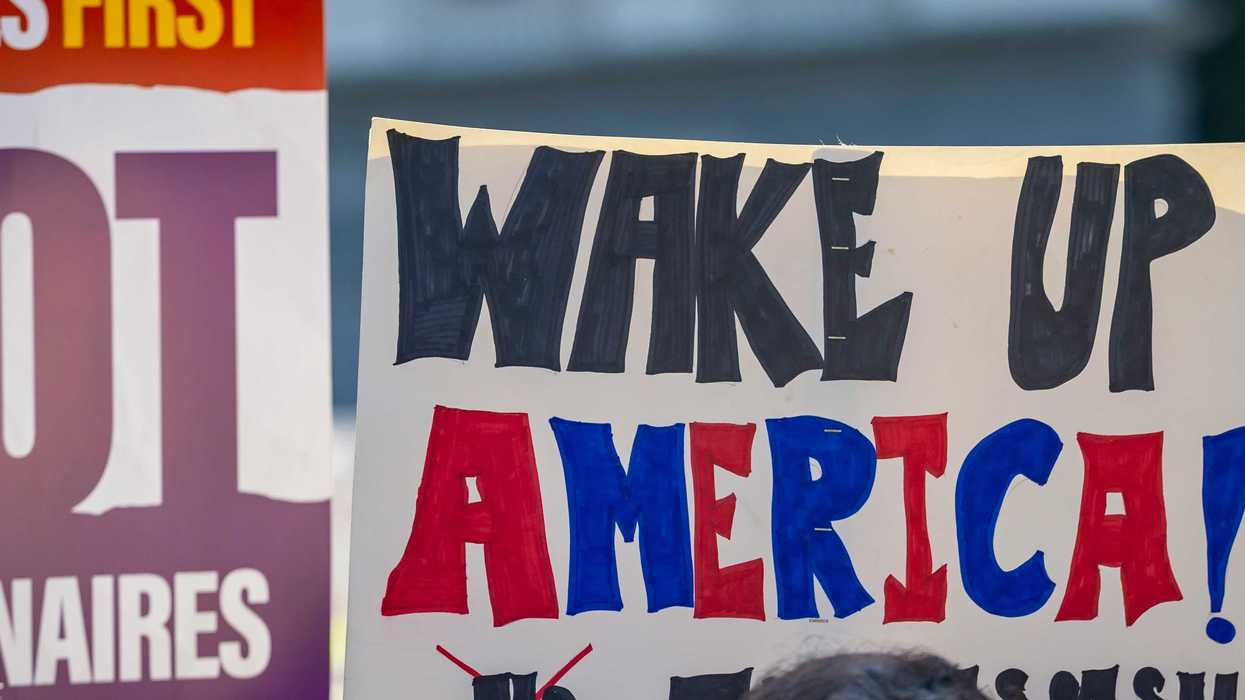
Photo by Leo_Visions on Unsplash
Protesters hold signs saying "wake up america!"
June 07, 2026 | 06:55AM ETBank
The rapid deployment of artificial intelligence across society is causing a dangerous new form of extremism that is radicalizing individuals across the ideological spectrum, according to a new report from The Guardian.
A pattern of alarming incidents suggests the threat is accelerating. A Texas man was arrested earlier this year with kerosene and a lighter near OpenAI's headquarters and Sam Altman's house, along with an anti-AI manifesto. An Italian Instagram influencer was arrested for plotting anti-tech attacks inspired by Ted Kaczynski, the Unabomber. Two self-described "ecofascists" who attacked a San Diego mosque cited "AI slop" as motivation. An Indianapolis city council member found gunshots fired through his home with a note reading "NO DATA CENTERS."
"AI is becoming this driver of political violence, and that's a very new phenomenon," said Jordyn Abrams, a researcher at George Washington University's Program on Extremism, according to The Guardian's reporting.
The irony is stark: tech industry executives may be inadvertently radicalizing people through their own apocalyptic warnings about AI's potential to transform — or destroy — civilization.
Yannick Veilleux-Lepage, an associate professor at the Royal Military College of Canada, told The Guardian: "To radicalize people, you don't actually need to have theorists or ideologues that are calling people to violence against AI, because the tech CEOs are doing a pretty good case."
What distinguishes anti-AI extremism from previous waves of tech backlash is the sheer velocity of change. "Not only are these whole-of-society changes, and not only are they really disruptive, they're happening really quickly," Veilleux-Lepage explained. "There isn't time for people to build resilience or to inoculate themselves from these changes."
The tech industry's resistance to regulation is intensifying the problem. Donald Trump's executive order blocking state-level AI restrictions, combined with tech billionaires' massive lobbying spending to prevent oversight, has created what researchers call a critical accountability gap.
"When authorities are too busy, or just don't care enough, to regulate and take action, then people affected are going to take action," said Mauro Lubrano, author of Stop the Machines: The Rise of Anti-Technology Extremism, according to The Guardian.
The industry is taking the threat seriously. SpaceX revealed in its IPO filing that it paid $4 million annually to Elon Musk's private security firm last year — double what it spent two years prior. The FBI has vowed to prosecute violent attacks aggressively, and major AI firms are now hiring national security and counter-terrorism experts.
Researchers caution that law enforcement faces a major challenge: distinguishing between legitimate anti-AI activism and violent extremism. Mass surveillance of peaceful protesters and silencing of reasonable regulatory concerns could backfire, potentially pushing more people toward violence."We have this opportunity to be proactive in this while avoiding mistakes that we've made in the past when responding to other forms of extremism," Lubrano warned. "Something tells me that we're not off to a great start."

