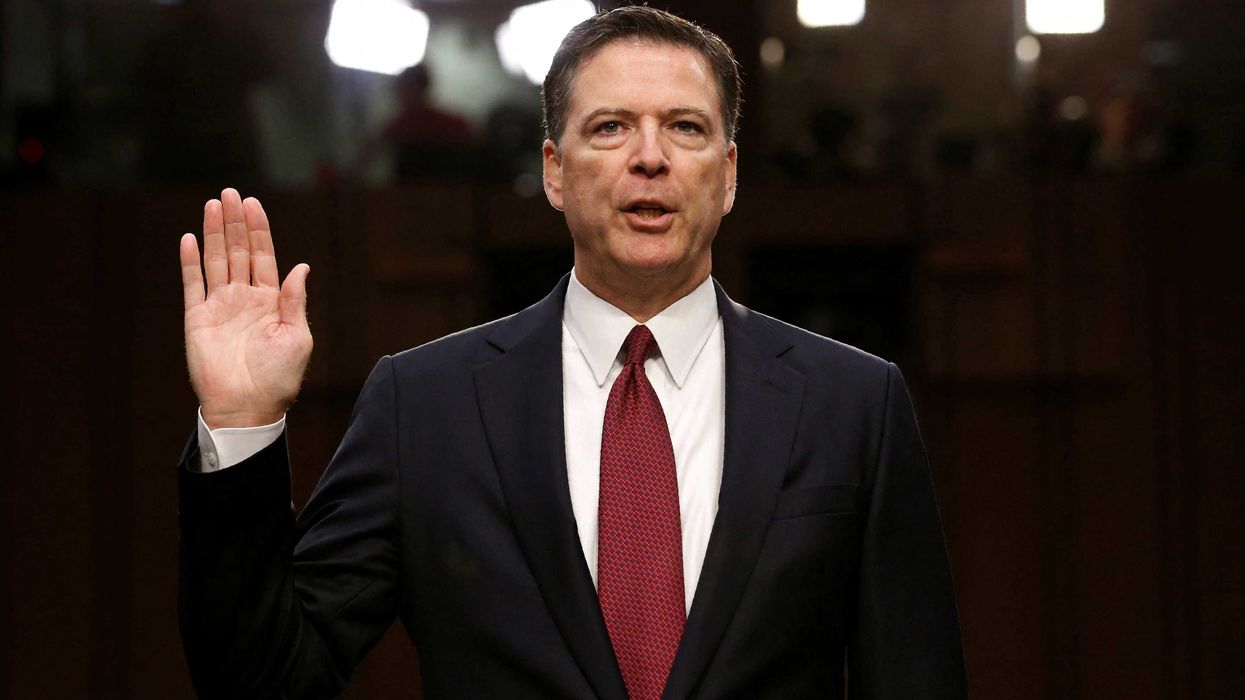
The three separate attempts to criminally charge former FBI Director James Comey were just a prelude to President Donald Trump’s Department of Justice.
Hearings and court filings over the past week have revealed the extent of the department’s efforts to go after Comey. He and those around him are very much in the crosshairs, reports CNN.
In a court filing last week, Daniel Richman, a law professor and former lawyer for Comey, said he has also been a target of the “harassment campaign” against Comey, which included a potential criminal indictment in Florida this fall.
Richman’s lawyers said they were told by prosecutors in September that Richman was a target and could be charged with obstruction for not speaking to FBI agents himself. Richman was not home when FBI agents came to his apartment building on Aug. 30. At that time, an FBI agent suggested that employees of Richman’s building might be charged with obstruction for not allowing FBI agents to go upstairs, according to the filing.
The filing also noted that Joe diGenova, the man who led the “grand conspiracy” investigation before abruptly leaving the job, told Richman’s attorneys that Richman could be charged with obstruction for allegedly avoiding a grand jury subpoena. Richman invoked his Fifth Amendment rights when he appeared before the Florida grand jury in September.
Comey’s lawyers made a similar argument in the Washington D.C., leaks case last month.
“The Government has not disavowed possibly using this [charging document] to arrest Mr. Comey,” said Comey’s defense lawyer Ephraim McDowell, noting that there were FBI agents outside Comey’s home. The Justice Department had twice considered the leak accusation before, years ago, and elected not to charge Comey, McDowell added.
Comey is preparing for a potential felony indictment by a grand jury in Washington, DC, under the Espionage Act for allegedly passing information to the New York Times in 2016, people around Comey said.
“It would almost be funny if it weren’t such an appalling abuse of the Department of Justice,” Comey, who has denied wrongdoing, said.
Two of Trump’s judicial nominees came under scrutiny by the Senate Judiciary Committee this week for their roles in the North Carolina case against Comey, which accuses him of threatening Trump with an Instagram photo of seashells arranged to spell out “86 47” in 2025.
Federal prosecutor Philip Aubart tried to make the case that the photo was the type of violent language used by mobsters, even going so far as to interview Salvatore “Sammy the Bull” Gravano. “What did he have to do with seashells?” asked Sen. Dick Durbin (D-Ill.).
Aubart signed a warrant application to obtain Comey’s electronic data in March, and Republican senators’ offices began discussions with him about a judgeship about a week later.
The second nominee, Magistrate Judge Brian Meyers, signed off on warrants to search the email accounts of both Comey and his wife. There is no public record indicating that either man was nominated as a reward for his role in the case.
The indictment against Comey over the seashell post is still pending, and a court has not found that Comey was targeted unfairly or vindictively.