

History repeating: What Nixon's secret tapes reveal about Trump
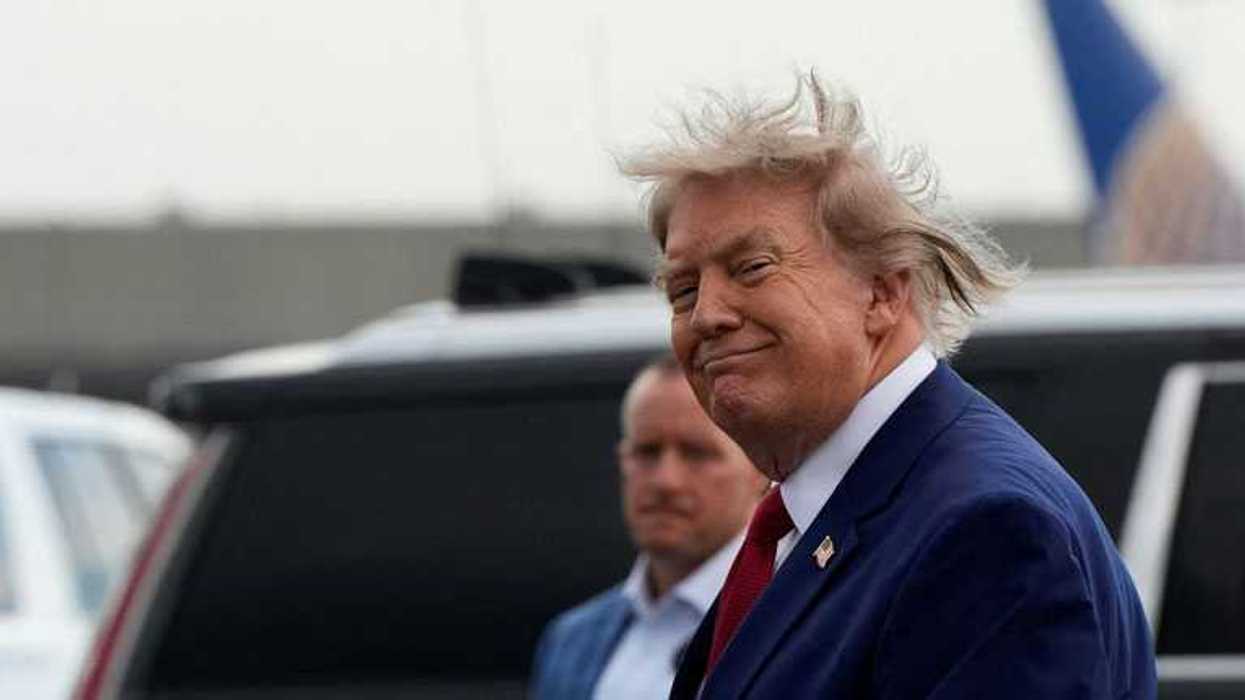
People have long debated whether President Richard Nixon (1969-1974) — who won the Republican presidential nomination three times and the presidency twice — was crazy. Experts today have the same fear about President Donald Trump (2017-2021, 2025-present), who like Nixon was the GOP nominee thrice and the president twice.
Whether it's his incoherent rambling to threats he might follow through his threats to use nuclear weapons to commit genocide, the 80-year-old president is giving many who follow politics reason to stay awake when they should be sleeping.
Yet is this anxiety justified? America once had another president that was widely rumored to be mad, a literal drunken wife-beating brute. None of those rumors about Nixon have ever been verified, but they persist nonetheless, and for all of the rumors about his unfitness to serve it is objectively true that both America and the world survived 1969 to 1974 intact — and, in some ways, better off for it (like the existence of the Environmental Protection Agency, for which we can thank Nixon).
To further explore what the Nixon era can teach inhabitants of the Trump era, I reached out to Luke Nichter, a Nixonologist and professor of history at Chapman University. He also edited two volumes of Nixon's White House tapes.
Is Trump crazy — and was Nixon?
Matthew Rozsa: Now I want to talk about Trump’s seeming decline in mental health. It is difficult to do this because of the Goldwater Rule, although technically that only applies to psychiatrists, and in general it is considered best practice not to diagnose people from afar. At the same time, we now know, to bring this back to your earlier point, half a century later, that Nixon was succumbing to severe alcoholism and would fly into rages. Seymour Hersh claims that Nixon may have even beaten Pat. Even if that isn’t true, he certainly behaved in a way that could fairly be described as mentally incompetent. And I would argue that if all of that is true, the American public should have known immediately, so that they didn’t have a man who was unfit as president. Do you think people with examples like Nixon in mind should be similarly concerned about Trump?
Luke Nichter: It’s a fascinating question, for two reasons. One, to the extent this kind of behavior is documented by medical or other professionals, those records are often exempt from disclosure. When I did my last book, on the 1968 election, I finally located the LBJ health records in the Johnson Library. They asked me not to pursue that, because as long as the daughters are alive, they really didn’t want to open up this personal material, since it wasn’t considered political. After all, the president is also a private person. They’re a father, they’re a spouse. We like to think of politicians as belonging to us, with everything on the record, but they do have private lives, even if the realm of their private life seems to be getting smaller all the time.
So it’s very difficult to get records of this type opened for any president. I’m talking about Lyndon Johnson, more than 60 years ago. With JFK, in some cases the records about the true nature of his health, beyond what was at the Warren Commission, are not open. So it’s not unusual at all that there’s a lack of transparency in this area. My second point, on Nixon: There’s almost no evidence that Nixon behaved in the way you describe or that Seymour Hersh described. And I’ll say that with a caveat. We have 3,400 hours of Nixon recorded. We have a lot of complete days. We don’t have him after he goes to sleep, but as soon as he wakes up, he works pretty much all the time. So we have from breakfast until night on a lot of days from 1971 to ‘73.
Unless there are tapes on this subject that have not been released, there’s no evidence that he was an alcoholic. I can probably count on one hand the times I hear ice cubes in what sounds like a tumbler glass. I don’t know what’s in that tumbler glass; these are audio files, not video files. But it’s very rare. It’s possible that the behavior you described occurred before or after the ‘71 to ‘73 tapes, or in a location that wasn’t taped. But we have more audio of Richard Nixon than, I think, of any other human being in history. That’s a big statement. So if he was out of control, we’d be able to hear it, right? Lots of times. There’s very little evidence to support that.
But again, my disclaimer is that the taping ends in July of ‘73, so perhaps in his final 13 or 14 months in office, that description is accurate.
Rozsa: I didn’t know there were people who challenged the veracity of Seymour Hersh’s allegations to such a degree. I knew they were controversial.
Nichter: I should be clear: I’m not challenging anyone. The tapes are what they are. I don’t manipulate the tapes, obviously.
Rozsa: Obviously, the tapes were all in his working quarters. Those events, if they had transpired, would not likely have occurred there.
Nichter: But also personal quarters, because there’s one location in the White House residence itself that was taped. Nixon would take work home in the evening, and he would make phone calls from a little room adjacent to the Lincoln Bedroom, which he called the Lincoln Sitting Room. He usually worked late into the evening there. He made a lot of phone calls from that space, especially to the West Coast, to take advantage of the time difference. So even there, on his personal time, away from the West Wing and the formality of the Oval Office, we get a glimpse into his personal life. I don’t know that he really had a personal life. He worked all the time. He enjoyed work. But even in the residence itself, those recordings back up what I’m saying.
What can the Nixon story teach us about Trump?
Rozsa: Then I have to ask, to bring this back to the modern situation: What do we know for sure about how Nixon’s people and the public handled his seeming issues, whatever they may have been, and how should we handle what we observe with Trump today
Nichter: It’s a great question, and it’s difficult to fully explore, because I don’t know the truth of Trump any more than I really know the truth of Nixon. I expect political people to do political things. That’s not a very bold statement, but they cover things up. They build a narrative, they defend that narrative, they fight counterattacks, they look for gaps or weak spots in their narrative. The taping system ended in July of ‘73, when Nixon came down with viral pneumonia. That’s one of the only times on the tapes you can hear discussions of his health, and I think those were released because it became a public matter. Since it was already disclosed publicly, there was no problem making the tapes that pair with what was disclosed available.
And you can see the management of how Nixon was going to go to the hospital. You have to make it sufficiently urgent, otherwise it looks like there’s a cover-up, or he’s trying to get away from the press. But you can’t make it seem like he’s too sick. There’s actually collusion on the tapes between Ron Ziegler, the White House press secretary, and the doctors over what temperature they can say Nixon has. They’re saying, “How about 99?” Well, that doesn’t sound serious enough. “How about 104?” No, because now people will worry the other way, that he’s going to die. I forget the exact number they settled on. It might have been 101 point something or 102. It sounded important and severe, but you don’t want the stock market to crash over fears the president’s going to die.
At the end of the day, these are politicians. They do political things. So it wouldn’t surprise me if what I just described about Nixon is being done for Trump. It was done for LBJ, and it’s done for every occupant of the White House.
Rozsa: Thank you for taking the time to speak with me. Before we part ways, is there anything else you’d like to say about this subject?
Nichter: No, you’re terrific. I’ve been asked a lot of questions about the tapes, and you dug out some goodies I’ve never been asked. That’s a testament to your legwork before we spoke.

