

George W. Bush official tears Trump apart: 'It's obscene'
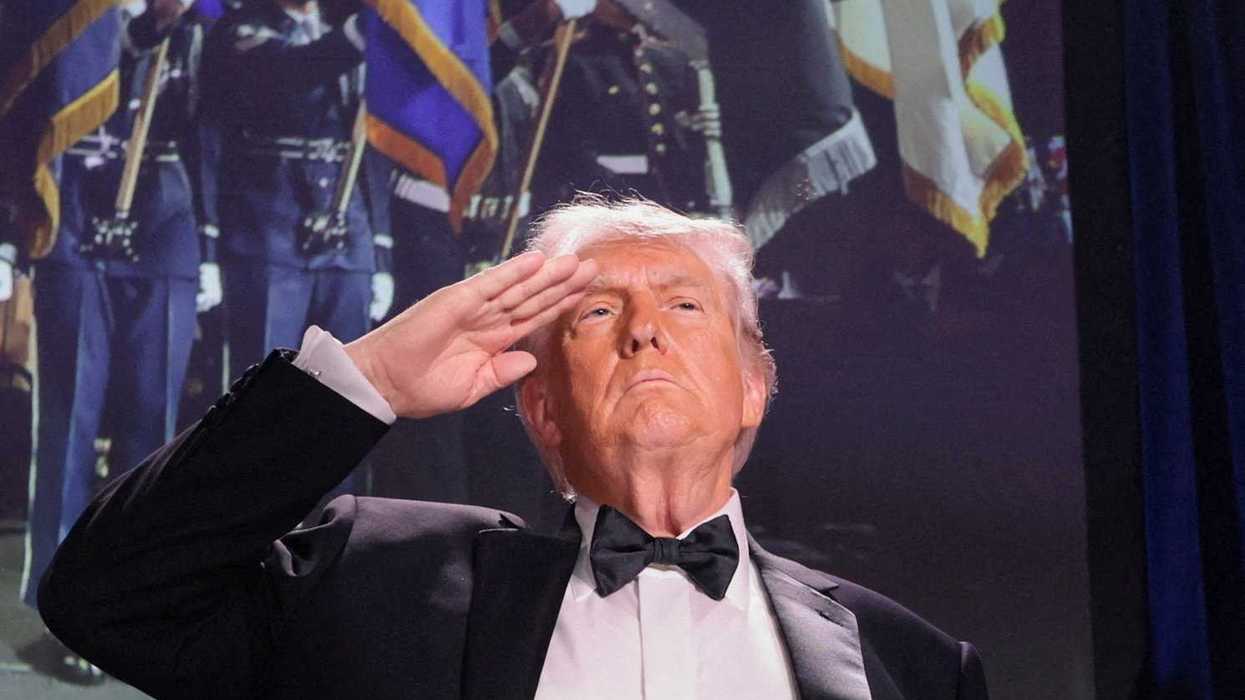
After the second assassination attempt against Donald Trump, I wrote an article for Salon comparing the once-and-future president to another authoritarian right-winger, Adolf Hitler. In response, Trump's press secretary Karoline Leavitt told me that "it's been less [than] 72 hours since the second assassination attempt on President Trump's life and the media is already back to comparing President Trump to Hitler."
She added, "It's disgusting. This is why Americans have zero trust in the liberal mainstream media."
It isn't just the liberal media that compares Trump to Hitler. In my 2024 article, I quoted Federico Finchelstein, chair of the history department at the New School for Social Research and author of "A Brief History of Fascist Lies," who explained that the criticisms by Trump and his supporters reflect a "kind of dissonance between what Trump is saying and what is going on. And this has been the case with totalitarians and fascists for decades, that they say stuff that doesn't connect to reality." To illustrate his point, Finchelstein cited as an example "the idea that the person that has promoted violence through rhetoric, and even sometimes the glorification of that violence, the idea that that person can complain about the 'rhetorical violence' of his enemies. It's shocking."
Even prominent Republicans are shocked. Speaking exclusively to AlterNet, former New Jersey Gov. Christine Todd Whitman (1994-2001) — who also served as head of the Environmental Protection Agency (EPA) under President George W. Bush (2001-2003) — expressed deep disappointment with the state of the Republican Party that she once considered to be her political home. Whether one agrees or disagrees with the ideas of Whitman, Bush and other old-school Republicans, they never encouraged violence against their opponents.
Trump, by contrast, encouraged a coup on Jan. 6, 2021, then pardoned 1,500 of the insurrectionists upon resuming office. Supporters citing his rhetoric have done things like mail explosive packages to prominent Democrats and critics of Trump; that is just one of 54 cases that ABC News found in which violence, threats and alleged assaults were reported to have been directly inspired by Trump's oratory. Whitman alluded to these incidents during our conversation, as well as Trump's ongoing hints that he may use brute force to steal the 2026 midterm elections.
This is why Whitman no longer calls herself a Republican. Instead she co-founded the Forward Party, a centrist organization, with 2021 New York City mayoral candidate Andrew Yang to represent Americans who are disgusted with the Republican status quo. While I'm personally to the left of the Forward Party on many issues, I'm glad it exists because I do not want an America in which only my views are represented. For our democracy to be healthy, we need a robust ongoing debate between all points of view — with the caveat, of course, that all perspectives must respect the Constitution.
Stealing elections and inflicting violence on your political critics are unconstitutional and un-American, a point that I fear needs to be explicitly stated even though it should be obvious. For these reasons, I urge everyone to listen to what Whitman has to say about why she is one erstwhile Republican who will likely never rejoin that party.
This interview has been lightly edited for clarity, context and length. For Part One of the interview series with Gov. Whitman, please click here.
Can a Never Trumper rejoin the Republican Party?
WHITMAN: Back in 1997, after my reelection, when I was asked to run for the Senate — and I didn't particularly want to, but I went down and said, "Okay, I'll meet with them" — I was told then, if I said one word about campaign finance reform, I wouldn't see a penny out of them and they'd do everything they could to make sure I didn't get the nomination. I mean, that's the way they have been behaving over time, because again, as our Founding Fathers said, if you only have two parties, they don't care about the public. They don't worry about anything except holding on to their offices. And right now, 90% of the states are single-party states — I mean, where one party controls — and that really doesn't work to the public's benefit. They have no interest in serving the public, only in making sure their base is happy and supportive.
ROZSA: It's interesting that you say that they're only interested in making sure their base is happy and supportive, because part of the irony is that a lot of Trump's policies are hurting his base. For instance, $40 trillion in debt, massive tariffs, a war in Iran that wasn't authorized by Congress. None of these things are good for his own base. I guess my question is, when you were a Republican and you were governor of New Jersey, you knew that you had to be responsive to your constituents and help them. What has changed? How do we bring the Republican Party back to that ethos?
WHITMAN: I don't know that we do. I really, honestly don't. And that's why I'm so involved with the Forward Party, because I think, frankly, even if the parties, either one of them, started to move more toward the center, to be more sensitive to what the public really wants, if there isn't a third party to hold their feet to the fire, they'll go right back to the way they are now, because it's all about keeping power, staying in office. And so, you know, I suspect I'm going to be a firm independent — or Forwardist, when we get to that place, that ability — for the rest of my life.
ROZSA: I want to return to another quote that you said in our 2017 interview. It just came up on my screen and I think it's quite elegant. You said that parties used to be like umbrellas, where you had a central handle, which was the shared core beliefs, and then you had all the spokes that held up the canopy, and those were different ways of interpreting those beliefs, but you could still have that central core. You were talking earlier in our conversation about how Republicans used to coalesce around a set of core principles like fiscal responsibility, helping people on an individual level, but also maintaining a smaller government. What are the core principles of the Forward Party, and then what are the spokes of the umbrella which allow people to have some degree of deviation from those principles?
WHITMAN: The principles are decency, democracy and diversity. And within that, you can decide what issues are the ones — how you decide on those issues should be based on that, should be based on fact and data. It's another thing that we say that they need to understand and need to follow: They should be based on fact, not on politics. And we then leave them to decide on the issues of importance to their constituents.
We have identified a series of issues. What we did early on is we brought in experts in various fields and in areas that we thought were of importance, such as climate change, economic policy, reform of the electoral system. And we had experts in those fields tease out the major issues within them and then identify places where those had been solved, or action had been taken that was relatively strong. In redistricting, there are a number of ways of doing it. Opening the political process — I mean, if you open the voting, you can have open primaries across the ballot. You can have ranked-choice voting. There are a lot of ways of solving that issue of opening the process. They're not all going to work in every state.
So what we're saying is: Here are the issues, here are some ways that they have been addressed in places, and successfully. You decide: Is this an issue? Immigration — it's not an issue for everybody, but it's a huge issue for many of the states. Here are ways that this has been addressed. You decide: Is this what you want to focus on, how you want to focus, and how you want to get things done? So we leave them with that ability to ensure that they are responding to the needs of the people who elected them.
Can the Republican Party be saved?
ROZSA: I want to go to the only Republican president of modern history who we haven't discussed yet [we had already covered Dwight Eisenhower, Ronald Reagan, George H. W. Bush, George W. Bush and Trump] — or pair of presidents, I should say — Richard Nixon and Gerald Ford. Both of them were center-right, but they also supported environmental protection, such as Nixon creating the EPA, Ford signing other environmental laws into effect. As a former EPA head, I'm curious, how specifically do you feel about what Trump is doing by not only gutting regulations, but firing scientists en masse?
WHITMAN: I'm horrified. I'm horrified by what he's doing, because these are not things that you can reverse easily. When you stop enforcing regulation — which they did right from the beginning, because the first fired under DOGE were the enforcement officers — you have an impact on the environment that you don't overcome overnight. You damage Mother Nature to such a degree. But the real thing for me, that I don't understand why more people aren't up in arms about, is to have the administrator of the Environmental Protection Agency say that they were no longer going to consider the impact on human health — it was no longer going to have a prominent place. Not that they weren't going to consider it; he was careful about that. But it was no longer going to have a prominent place in decision-making on regulations. What was going to be more important was the economic impact on the industry affected.
That's the job of the Department of Commerce. That is not the job of the EPA. EPA, as you said, with Richard Nixon being the president who sponsored and pushed it, was to protect human health and the environment. Those are the two things it's supposed to be about, and now we've just walked away from that.
ROZSA: I agree. I think it's because, on some level, Trump is a transactional president, and he views policymaking not in terms of the public interest, but in terms of what he can personally gain from it and then providing his sponsors with what they want in return. First of all, do you agree with that analysis?
WHITMAN: Yes, I do. I mean, he is definitely a transactional president — all well and good — but he does not care about anything other than the bottom line. I mean, frankly, the emoluments clause has gone out the window with this presidency. I always chuckle when they talk about Hunter Biden. Hunter Biden was a complete piker compared to Trump's family. [laughs] They're making so much money. Poor old Hunter Biden — what did he make, a million, over his father being the president? And Trump's family is making money hand over fist. I mean, it's obscene, what's going on. And yet, again, people don't seem to — "That's just Trump." Well, that's not acceptable. And we need to start really making people understand why that's not acceptable, why they put the emoluments clause in, why it's not acceptable to have a president who is just focusing on his bottom line rather than the good of the country in making decisions.
How does Trump compare to Bush Jr.?
ROZSA: And the second part of my question is, when you worked for George W. Bush's administration, I know that you disagreed with them on many issues, but do you believe that at least there was more of a sincere concern for the public interest in the Bush White House?
WHITMAN: Oh, yes. I think definitely. I mean, we wouldn't necessarily always agree with the way they did it, but there was certainly that concern. And it was very different than what you see today.
ROZSA: And I feel like that's one of the reasons I enjoy talking to you, because it reminds me of a Republican Party that, though not perfect by any stretch, at least contained that core of conviction, which is now gone. And it sounds like, to bring our interview full circle, you could never see yourself becoming a Republican again, because it seems like you think it's permanently gone. Is that correct?
WHITMAN: Yeah, that's correct. I just don't see it. I don't see it coming back to where it was. It's gone too far. This man has had too great an impact.
I look at the world my grandchildren are going to inherit, and two of them are 21 — 21-year-old twins. The job market is not great. They're going to have a hard time when they graduate. Finding jobs is going to be a challenge unlike what we've seen in other generations. And the rest of them are growing up with a president who is saying it's okay to denigrate people because they might not look like them or have a disability. It's okay to be rude. It's okay to be violent if you want to make a change. These are just not the morals of our country. And I know my grandkids understand very clearly that this is not acceptable behavior. Well, maybe one of them I need to work on a little bit more, [laughs] but for the most part, they understand that. But there's so many who are growing up who don't.
And this is what they see their leaders doing and saying and the way they're acting. And that damage is going to be long-term, not to mention what's happening overseas. I mean, we are moving away from our allies. We're moving closer to countries that are never going to be supportive of us. They are never going to be our true allies, but they're dictators, and those are the kinds of people that this president seems to like and with whom he wants to associate. And it's very dangerous. And we're doing away with all our soft power, as if it's only us, when we do away with USAID and — I'm on the board of World Food Program USA, and I've always believed that what happens in other countries has a very real impact on this country. And that's one of the things with climate change.
I keep telling people, when you have droughts in sub-Saharan Africa, where you have a large population of migrants who have herds that they just move from one place to the other, and all of a sudden that doesn't work anymore because there's no grass to feed their herds, where do they go? They go to the cities. What's happening in the cities? There's no housing for them, there are no jobs for them. That's where al-Qaida and the other terrorist organizations go to recruit people. They destabilize already tenuous governments in countries that aren't the most stable. And it's a problem for us all across the globe. We have to understand this. We're not all by ourselves.
Why is Canada the leader of the free world today instead of the United States?
ROZSA: We shouldn't be. I think of how we've alienated Canada. And to go back to what you said about people changing their views just because of Trump: Before Trump started this trade war with Canada, I didn't know a single person who regarded Canada as an enemy. Now I know people who joke that Canada should be our 51st state. And it's upsetting to me, because I can't think of a single country that is more innocuous than Canada. There is no basis whatsoever for disliking Canada.
WHITMAN: And what we've done — because I have a house in Arizona where I escape from the winters, and there were a lot of Canadians there, and I know of several — I won't say many, but several — who have sold their homes, and they were there, one of them, for 15 years. And they said, "Nope, not staying in this country anymore. They treat us like this, we're out."
ROZSA: I don't blame them.
WHITMAN: No, I don't either. Not for a second.
ROZSA: I think Mark Carney, the Canadian prime minister, is doing more to stand up for American ideals than our own president. What do you think?
WHITMAN: I agree with you. I think he absolutely has, and he's making us — we should be ashamed.
ROZSA: I am ashamed.
WHITMAN: He's really calling us out the way we are. And I'm ashamed. I mean, you go overseas and you want to have a — my favorite baseball cap is "Make Orwell Fiction Again." [laughs]
ROZSA: I like that. Make Orwell fiction again. Make our president a believer in democracy again. That won't fit on a baseball cap, but that's how I feel.
WHITMAN: Again? He's never believed in democracy. I mean, it was laughable when he took President Xi to look at the Constitution, which he's trying to dismantle anyway. And you want to say to him, "How about you just stop and read it for a change, maybe?"
ROZSA: Trump doesn't like to read, and I'm not saying that as a burn. He, by a number of reports, gets very upset if you give him anything of length to read.
WHITMAN: Right. And we need to worry about freedom of the press. It's essential to our democracy, and yet he's doing everything he can to curtail freedom of the press.
Is Trump responsible for violence — including that inflicted against him?
ROZSA: It reminds me of our first president, George Washington, how he used to take a walk through Philadelphia, when that was our nation's capital, every day. And people would sometimes insult him. They would even occasionally yell profanities at him, and he made a point of listening, because he argued that the key to being a democratic leader is to accept criticism. I'm sure he didn't like it, but he understood that that's not the point. The point is to show a respect for the people and the idea that you as the president are answerable to every citizen. And I know that as governor of New Jersey and as EPA head, I'm sure you received criticisms that you didn't like. I'm sure the press wrote things about you that you didn't like. But do you understand that Washingtonian philosophy of, "Yeah, I can disagree, but I still respect their right to say it"?
WHITMAN: Oh, absolutely. You have to protect their right to say it. You don't have to like it always, but that goes with the job. And you need to listen to them to see why they are saying what they're saying. You might learn something, and that would be helpful. There could be a good reason why they're saying what they're saying, even though you might not have thought of it. So it's part of the process. You have to have that freedom of the press.
And now with this mega-merger [Trump ally, billionaire David Ellison, purchased Warner Bros. after reportedly promising Trump he'd make its news network CNN more pro-Trump] and the way Trump is threatening people — I mean, just on a totally separate thing, to give out a sitting senator's cell number because you want him to vote a certain way on a bill is just unconscionable, because so many people take these things to heart and say, "If you're not doing this, you're against our democracy. Now you're our enemy, and so we're going to get you." I mean, we've seen this. We've had elected officials murdered. We have had attempts to abduct elected officials because they don't agree and they won't do exactly what the president says, and he sics his wolves on them.
ROZSA: Incidentally, some of that violence has blown back against him. There have been several attempts on his life. And I want to be very clear: I do not wish any physical harm on the president. I do not want him to die. I want him to go to jail. And I mean that, because in my opinion, the best outcome for a democracy is for a lawless president to be held accountable before the law. But do you share my observation that some of the reason this violence has blown back against him is because he stirred up the tempest himself?
WHITMAN: Oh, yes. He's made this acceptable behavior. And so people respond that way. And it has come back on him. I mean, I'm with you. I don't want to make him a martyr. I don't want to see him assassinated. I want to see him held accountable. As I say to people, you know, I don't hate Donald Trump. I deplore what he's doing to our country. But I'm not going to waste time hating him. He's not worth it. I do deplore what he's doing to our country.
ROZSA: I think the best thing that could happen is for him to go to jail, because I think we need presidents to be treated like any other citizen. If you or I did the things that he has done, we would ultimately go to jail. So shouldn't he?
WHITMAN: We would've gone to jail a long time ago. Yes, I absolutely agree. There can't be this double standard. There has to be an understanding, because there are times, as a public figure, when you have to do things that people aren't going to like, but it doesn't excuse you from the rule of law. When you have a constitutional prohibition against a president making money the way he is and his family is, that's the rule of law. You have to adhere to that. There may be times when you have to do something that people really get exercised over. I'm thinking of Lincoln and the suspension of civil liberties. When you have existential circumstances, it's understandable. But the kind of thing we're seeing today, which is a conscious, deliberate disrespect for the Constitution and the rule of law, that's something entirely different.
ROZSA: I'm actually concerned that Trump is going to try to impose Lincolnian policies in terms of suspending civil liberties during the midterm elections in order to make sure Republicans don't lose control of Congress.
WHITMAN: Yeah. I'm on the board of the States United Democracy Center, and they're all lawyers. I'm not. But we're heavily focused on that, working closely with governors and secretaries of state and state attorneys general to help them understand what they can and can't do. We work with chiefs of police and police officers around the country to help them understand what the role of a real observer is, and what an observer can or can't do, and what to expect, not just before the election or during it, but also afterwards. There's a lot that can happen after the election that can disrupt — the refusal to seat the duly elected. And I don't fully understand all of this from the perspective of the House, the rules of the House, where they could fire the clerk of the House at the last minute and throw everything wide open to attack and second-guessing. There are a lot of ways they can mess up things. And I think they'll use every tool they have. At least, I'm afraid they might.
ROZSA: If that happens and Trump does try to steal the midterms, do you think something like a general strike, where basically people stop going to their jobs and cause the economy to crater — something drastic like that — would be justified as a way of protecting our democracy?
WHITMAN: Well, I think there are going to be a lot of efforts to stand up. I think that would be a bridge too far. I really do. I think when we see the number of people, again, who are independents, when we see Trump's poll numbers, which are really in the tank, you get an understanding that people are saying, "Enough. This is just not acceptable." And I suspect you're going to see an enormous pushback. What shape it takes, I'm just not sure. You never want to see violence in the streets, no matter what. But I do think you'll see people doing everything they can to push back on what's happening.
ROZSA: Thank you. And my last question is, is there anything else about the subjects I've broached so far that you would like to say that I haven't yet given you the chance to say?
WHITMAN: No, I don't think so, actually. You've covered all the ground. I'm just keeping my fingers crossed that we can elect enough of the independents who are truly independent, like our people, to give the public an understanding that there is another way, that they can have a voice and it can matter.
ROZSA: I appreciate that. Also, before you go: Right before this interview, I saw my parents. Now, my family lived in New Jersey from '92 to '94, and I asked them, "Do you remember the '93 election between Whitman and [Democrat and incumbent New Jersey Gov. James] Florio?" And my mom said, "Yes, I voted for Whitman." And then my dad said, "Yeah, I voted for Florio." So they went to the polls and they canceled out each other's vote.
WHITMAN: Oh, well, you can't get them all!

