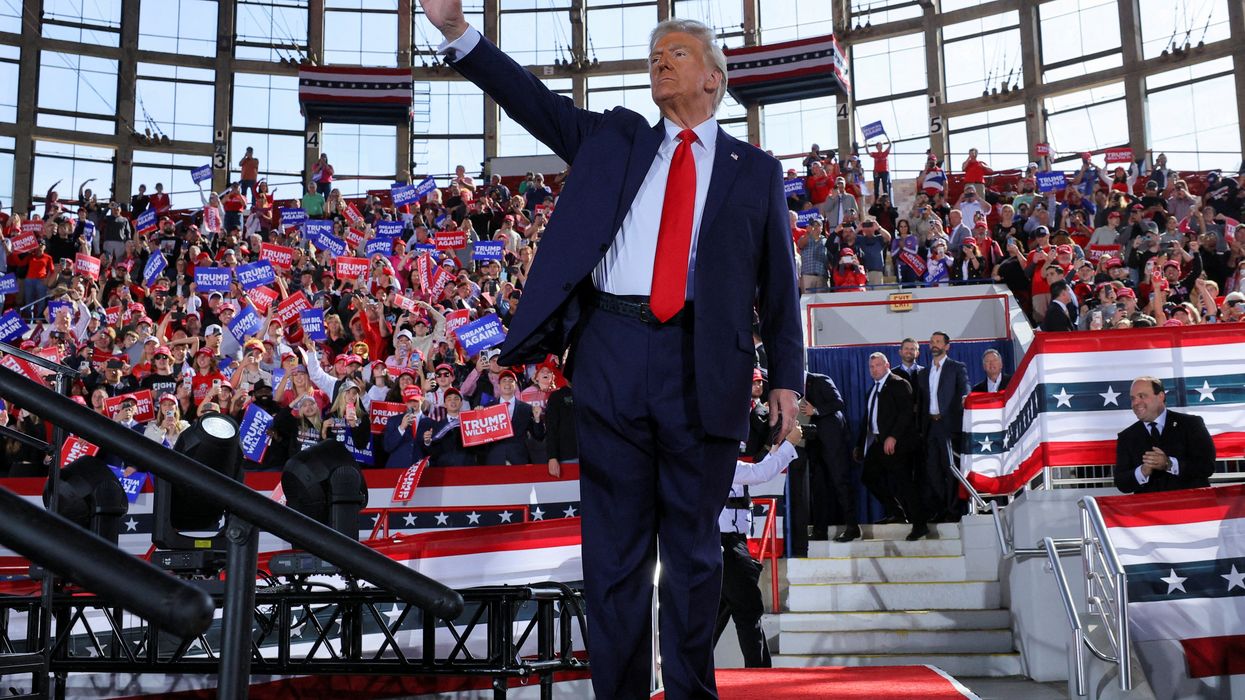
President Donald Trump may have promised to lower health insurance premiums, but residents of a deep red state are experiencing higher costs as a result of his signature economic law, the so-called One Big Beautiful Bill.
"A new round of Medicaid changes tied to the 'One Big Beautiful Bill' went into effect Oct. 1, impacting around 1,000 people in Nebraska, including refugees and asylum-seekers, according to the state Department of Health and Human Services," reported News Channel (KOLN)'s Darsha Dodge on Thursday."
Dodge quoted Kelsey Arends, a senior staff attorney for health care access at Nebraska Appleseed.
“That means higher insurance costs for all of us, higher costs at the hospital, at the doctor, longer wait times in the emergency room for everyone because folks aren’t able to access the preventive care they need,” Arends told the Nebraska outlet.
She added that people will be forced to choose between health care and other essentials, such as food and rent, once their insurance vanishes.
“When your neighbor doesn’t have access to health care, when your neighbor is forced to choose between paying for food and going to the doctor, paying for rent, it destabilizes our communities as a whole,” Arends told Dodge.
Despite the ongoing health insurance crisis in America, Republicans like Texas attorney general and Senate nominee Ken Paxton argue for slashing more services that people rely on, such as Medicaid and Medicare, while giving more tax cuts to the rich.
“There’s no doubt we have to cut some of the mandatory spending,” Paxton said in a secret recording that was leaked on Thursday.
He added, “Making some reasonable cuts to mandatory spending — you’re gonna have to do it. Or there is no solution. That’s just the reality. We have to suck it up.”
In September, Axios reported that UnitedHealthcare “has dropped around 13 percent of plans offered across 18 states.” Healthcare Dive reported that the company “expects to end 2026 with up to 1.1 million fewer MA members than it had last year.”
“UnitedHealthcare — the largest MA insurer in the US — offered plans in one fewer state and 109 fewer counties this year, cut allowances for certain over-the-counter health and wellness items, and prioritized plan designs with more limited provider networks,” Axios reported, basing its article on a study by Healthcare Dive. “The company also shifted commissions to brokers to incentivize enrollment in more profitable plans.”