
Congressional dysfunction is entirely of the GOP's own making
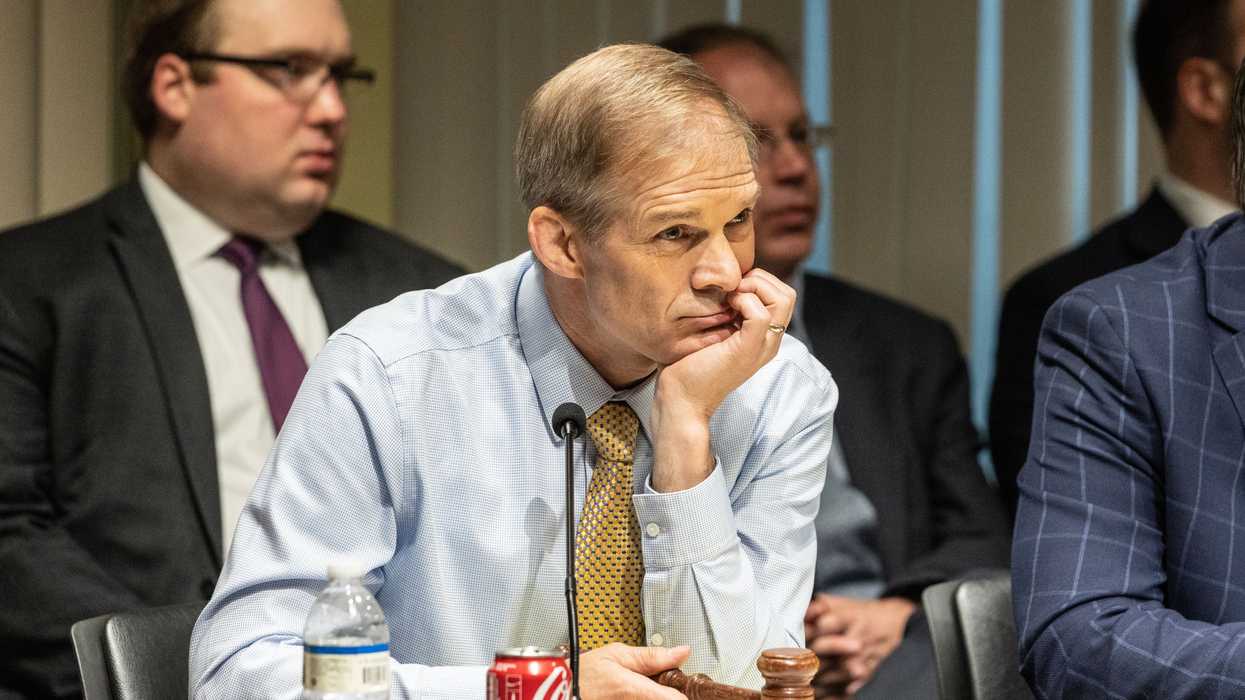
Rep. Jim Jordan (R-Ohio) Image via lev radin/Shutterstock.
Rep. Jim Jordan (R-Ohio) Image via lev radin/Shutterstock.

Rep. Jim Jordan (R-Ohio) Image via lev radin/Shutterstock.
Republicans have held power in the House, Senate and White House for over a year but have failed to pass any meaningful legislation other than its budget. House Republicans are breaking the old rules of Congress in ways that are increasingly grinding the chamber to a halt. In a striking sign of how badly norms have frayed, establishment members and hard-right lawmakers alike have been bucking the GOP leadership, turning routine votes into battlegrounds and making it harder to pass even basic legislation.
NOTUS reported on Friday that for centuries, a certain behavior has been standard in Congress, even though it was never written into law. Members were expected to back their party’s speaker, support procedural rules that allowed debate to proceed, and avoid undermining leadership unless a situation was truly extraordinary. Tactics like using discharge petitions were rarely successful, and failed rules votes were once so unusual that they almost never happened.
Speaker Mike Johnson's (R-La.) leadership has changed everything. The House has now seen repeated rules-vote failures and a growing number of discharge petitions clearing the necessary threshold to bypass leadership, something that was once nearly unheard of.
“There are no rules anymore,” Rep. Ryan Zinke (R-Mont.) told NOTUS. He spent two terms in office after briefly serving as Trump's first Secretary of the Interior in 2017.
Zinke's complaint refers not to House procedure itself, "but instead the disappearing norms of the institution," NOTUS said. It's something that former lawmakers and congressional scholars agree informal standards are essential because they help get results even in a deeply divided legislature. Without them, even routine business becomes a fight.
“The rules Congress adopts for itself cannot force effective processes. Rather, constructive norms are required to set boundaries around excesses,” Olympia Snowe told NOTUS. She was once a moderate Republican and spent 36 years in the House and Senate. Snowe wrote the passage in a new book, a collection of essays by experts on Congress about the "unwritten rules."
There are several examples, like the reauthorization of the Foreign Intelligence Surveillance Act (FISA). Most House Republicans were willing to accept a leadership-negotiated compromise, and the speaker likely could have counted on enough Democratic support to move it forward. But a hard-right faction refused, and the speaker refuses to reach across the aisle for bipartisan support. So, it failed, and leadership was forced to scramble for a short-term extension instead.
In the old days, as recently as the early 2000s, rebellion like that would have consequences. Today, bucking the leadership often brings more attention, more clicks and more influence within the GOP.
To a lesser extent, the same breakdown has affected the Senate. Its norms remain stronger overall, but partisan warfare over judicial and executive nominations has steadily worsened. Both parties have escalated the fight, and the chamber now spends far more time on nominations than it once did. It means less time for solutions and legislation. Basic governing has become challenging.
The result has been a Congress not divided on party lines, but broken into smaller factions and increasingly hollowed out by the loss of trust.
“Negative norms have also developed and taken hold. The further evolution of norms in the years to come remains to be seen. We may indeed be on a precipice: If norms of conflict continue to expand, dysfunction will only grow worse,” argued former Rep. Dan Lipinski (D-Ill.), who wrote in his essay for the book.

