
Left behind: Here's what happens to rural and small-town ‘resentful’ Trump voters after Trump is gone
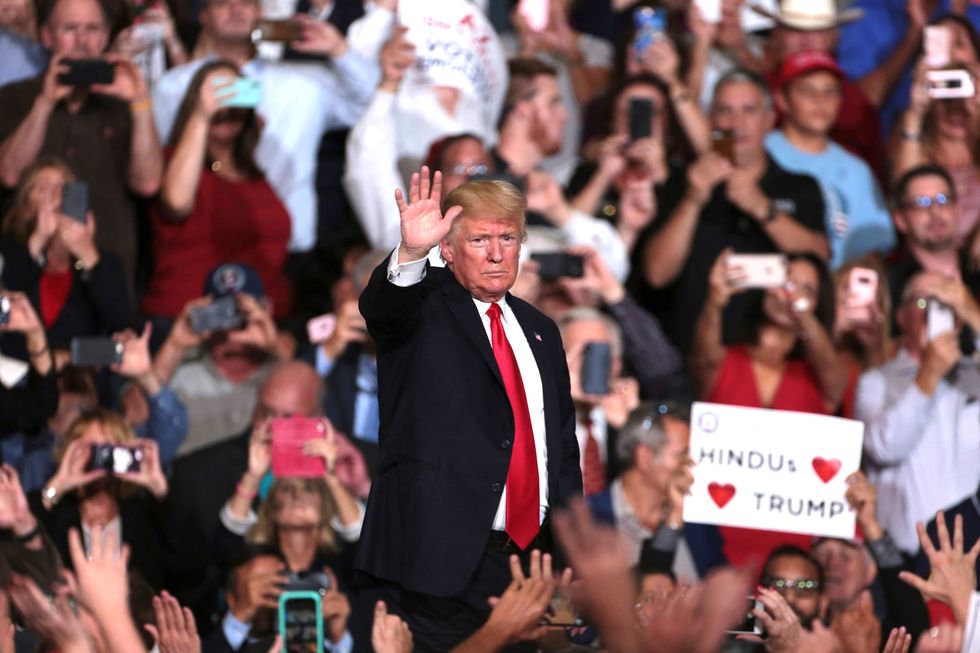

If one word can capture the sentiment of rural and small-town dwellers in recent years, it is “resentment.”
I am a scholar who studies politics at the state and local level. Residents of rural and small-town communities believe they are not getting their fair share of government attention and vital resources compared to urban dwellers. They believe that America is moving away from them.
As the 2020 presidential campaign gears up, these resentful Americans will play a key role. How strong supporters of Donald Trump in the 2016 election vote in 2020 will depend on whether the president has delivered on the promises he made to help them out.
Will this growing divide affect American politics beyond Trump?
Left behind
Political scientist Katherine Cramer has spent over a decade doing field work in 27 small Wisconsin towns to understand how people use social class identity to interpret politics. Cramer found that people in these rural areas feel as though they are being ignored by urban elites and urban institutions like government and the media at a time when they are struggling to make ends meet.
They believe their communities are dying, the economy is leaving them behind, and that young people, money and their livelihoods are going somewhere else.
They think that major decisions affecting their lives are being made far away in big cities. And perhaps most importantly, they feel that no one is listening to them or their ideas about things that are important to them.
Most distressing to those living in this situation is the belief that no one, and especially no one in government, really cares.
From resentment to division and deadlock
To date, the phenomenon of “resentment” has been responsible for adding another layer of heightened division among Americans, including an increase in political polarization.
That makes it much more difficult for federal government officials, as well as those at the state and local level, to reach consensus on important issues of the day.
University of California, Berkeley sociologist Arlie Hochschild’s book, “Strangers in Their Own Land: Anger and Mourning on the American Right” helps in explaining how this frustration and anger of small-town and rural area dwellers has resulted in increasing political support for Republican candidates, generally, and for Trump, specifically.
Hochschild contends that the changing and turbulent politics of Wisconsin, a so-called purple state with a stark urban-rural divide, mirror the national rage that swept Trump into the White House.
Given their intensifying feelings of resentment for being ignored and left behind, rural and small-town dwellers were particularly receptive to the slogan touted by Trump in his campaign – “Make America Great Again!”
Trump won the country’s small town and non-metropolitan areas by 63.2 percent to 31.3 percent, with his largest vote shares coming from the most rural areas.
Like other Republican presidential candidates over the last 10 years, Trump garnered a large majority of the vote in traditional rural areas like Appalachia, the Great Plains and parts of the South.
Surprisingly, however, Trump also won a substantial proportion of the traditionally Democratic small town and rural vote in several key Midwestern industrial areas. He won 57 percent of that vote in Michigan, 63 percent in Wisconsin and 71 percent in Pennsylvania.
Why Trump triumphed
Trump implied or clearly promised to repeal Obamacare, build a wall on the U.S.-Mexico border and deport around 11 million undocumented immigrants already in the U.S.
Other appealing policies were tax cuts for both businesses and individuals; significant reductions in the regulation of business and industry; and import tariffs on foreign goods that compete unfairly with American-made products.
Data collected by the Cooperative Congressional Election Study (from a national survey of more than 54,000 respondents) clearly show that people living in small towns and rural areas who supported these kinds of policies were decisively more likely to vote for Trump rather than Clinton in 2016.
Above all, Trump promised a shift in the focus of the national government so that much more attention would be directed to rural areas and small towns and the challenges they faced.
This evidently buoyed the hope of Trump supporters in these areas that they would be getting something closer to their fair share of government attention and resources.
Voters' party breakdown by community, November 2018 election
Residents of small-towns and rural areas are more supportive of the Republican Party and its candidates than people in urban and suburban areas.

Voting implications
There is ample evidence of voting patterns in recent years – even before the 2016 election – that suggest that voters in rural areas and small towns were increasingly voting for Republican candidates in national and state elections. This trend was quite visible from Republican and Democratic vote proportions in the 2000, 2004, 2008 and 2012 elections.
In 2008, 53 percent of rural voters cast ballots for the Republican presidential candidate; 59 percent did in 2012; and 62 percent did in 2016.
This was most clear in the 2016 election in the 2,332 counties that make up small-town and rural America, where Trump swamped Hillary Clinton by winning 60 percent as opposed to 34 percent of the vote.
Trump’s 26-point advantage over Clinton in rural America was much greater than had been the case for Republican presidential nominees in the four previous elections.
The Trump appeal and the growing urban-rural division in the country is also evident from the fact that Trump’s vote percentage in rural America was 29 points higher than he received in the nation’s urban counties and far larger than for Republican presidential nominees between 2000 and 2012.
Moreover, responses to a 2017 Washington Post-Kaiser Family Foundation survey of rural and small-town voters in the 2016 election indicate that they were more likely to vote for Trump and also agree with him on a variety of issues.
Those included immigration, tax cuts, eliminating regulations on businesses, making better trade deals, targeting more infrastructure projects and federal government services to rural areas and small towns, and appointing more conservative judges to the federal courts.
But, did this trend of strong support from rural voters for Republican candidates, including Trump, continue into the 2018 midterm election?
About half of Trump’s ideas and policy proposals have been accomplished, with the others yet to gain traction in Congress, two years after his election. So his record of delivering for these rural voters is mixed.
Nevertheless, they stuck with Trump in the 2018 election.
“Rural voters stormed to the polls in virtually unprecedented numbers in 2018 and once again delivered for the president they voted for in 2016,” The Hill reported. They delivered Trump “a handful of critical Senate and gubernatorial elections in ruby red states.”
While not totally surprising, the Trump camp did not know what to expect going into the midterm election, given the numerous investigations of the president and his low public approval rating.
Somewhat more surprising is what has been happening in a purple state like Florida, where Republicans have improved on both their turnout and overall performance in rural areas for several elections in a row.
Newly elected Republican Gov. Ron DeSantis ran ahead of Trump’s 2016 performance and former Republican Gov. Rick Scott’s 2014 vote share in 13 of 16 counties in the Florida Panhandle. Rick Scott unseated longtime Democratic Sen. Bill Nelson by piling up large margins in the small towns and rural areas of the state. Similar scenarios in U.S. Senate races took place in key states like Missouri, Indiana, Texas and Tennessee, where Republicans won huge victories in rural counties.
Survey data collected from over 90,000 people by the National Opinion Research Center at the University of Chicago in November 2018 paint a vivid picture of the continuing urban-rural/small-town divide.
Results show that residents of small towns and rural areas are much more supportive of the Republican Party and its candidates than people in urban and suburban areas.
In addition, the most ardent supporters of Republicans are among those small-town and rural dwellers who are white and male, have less than a college education and vote on a regular basis.
I believe that the urban-rural/small-town divide will continue to act as a major force in politics for the remainder of the Trump era – and probably longer.
J. Edwin Benton, Professor of Political Science and Public Administration, University of South Florida

