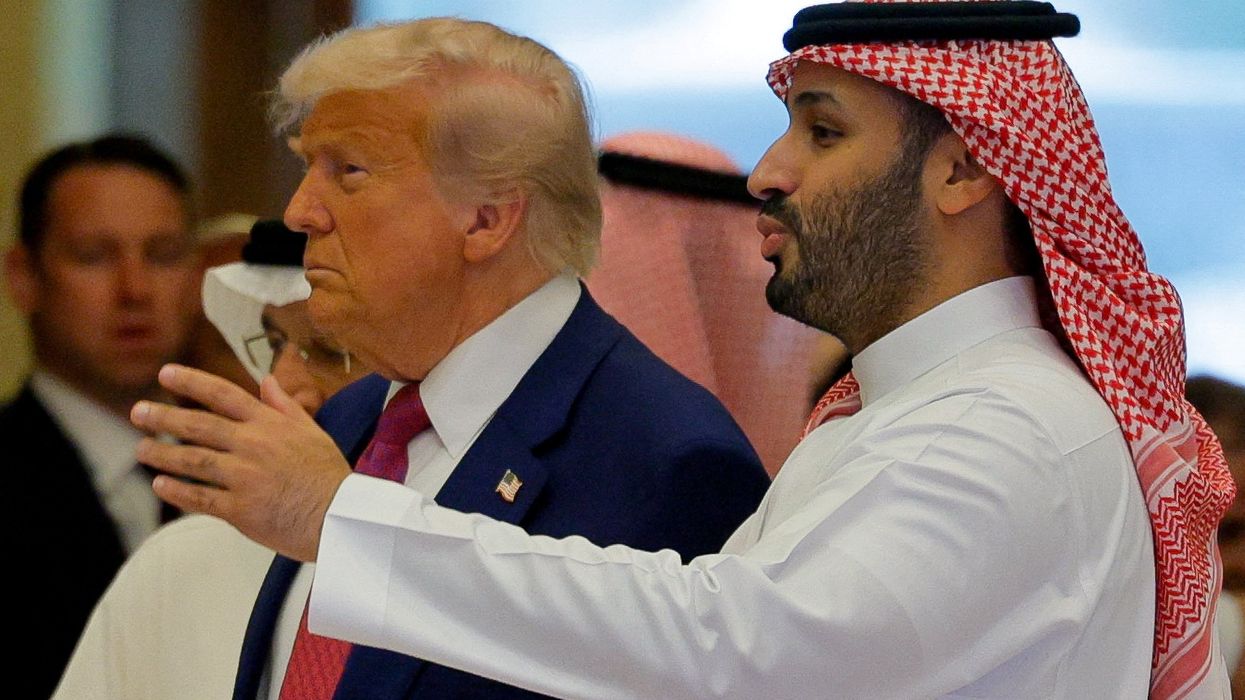
Simply put, does Donald Trump know what Donald Trump is doing?
There was no good explanation offered for Trump to decide only after the signing of a major agreement to allow Saudi Arabia to use American nuclear technology and be in the position of enriching its own uranium fuel for Trump to decide 24 hours later to add Saudi recognition of Israel as a precondition.
Recognition and entering the Abraham Accords are preconditions that the Saudis have long rejected without Israelis agreeing to a pathway for Palestinian statehood. In any case, not a word of these preconditions is in the agreement signed and announced on Wednesday, and Trump announced the new prerequisites on a social media post.
Either Trump screwed up what he had intended to have signed as a formal agreement, or he and his administration were inept at understanding what was in their own agreement. What kind of master dealmaker changes the rules after they have a written agreement in place? As we are seeing with the war in Iran, changing the rules every other day about what a “memo of understanding” supposedly had laid out is just creating chaos and combat.
This late change in Saudi conditions forces us to revisit whether Trump had been ignorant of the idea that Iran would retaliate with closing the Strait of Hormuz and sending missiles into U.S. bases and Gulf neighbors’ territory, or did he just choose to ignore that long-predicted outcome? How does constant after-the-fact sidestepping lead to any resolution?
As things stood yesterday, Trump may have ameliorated Israeli panic about the Saudi agreement, but there was no word from the Saudis that the deal would continue. The many critics domestically and internationally argued that Saudi ability to enrich fuel, allowed under a side “safeguard” document that waived scrutiny applied in other nations, would lead to a Saudi nuclear weapon and to a Middle East nuclear arms race.
How is anyone – the Saudis, Israelis, and Iranians, the Congress, the NATO allies, even rivals and foes – supposed to honor a deal that was never made?
Terry H. Schwadron retired as a senior editor at The New York Times, Deputy Managing Editor at The Los Angeles Times and leadership jobs at The Providence (RI) Journal-Bulletin. He was part of a Pulitzer Gold Medal team in Los Angeles, and his team part of several Pulitzers in New York. As an editor, Terry created new approaches in newsrooms, built technological tools and digital media. He pursued efforts to recruit and train minority journalists and in scholarship programs. A resident of Harlem, he volunteers in community storytelling, arts in education programs, tutoring and is an active freelance trombone player.