
Washington Post ignores facts to side with Trump over Jack Smith
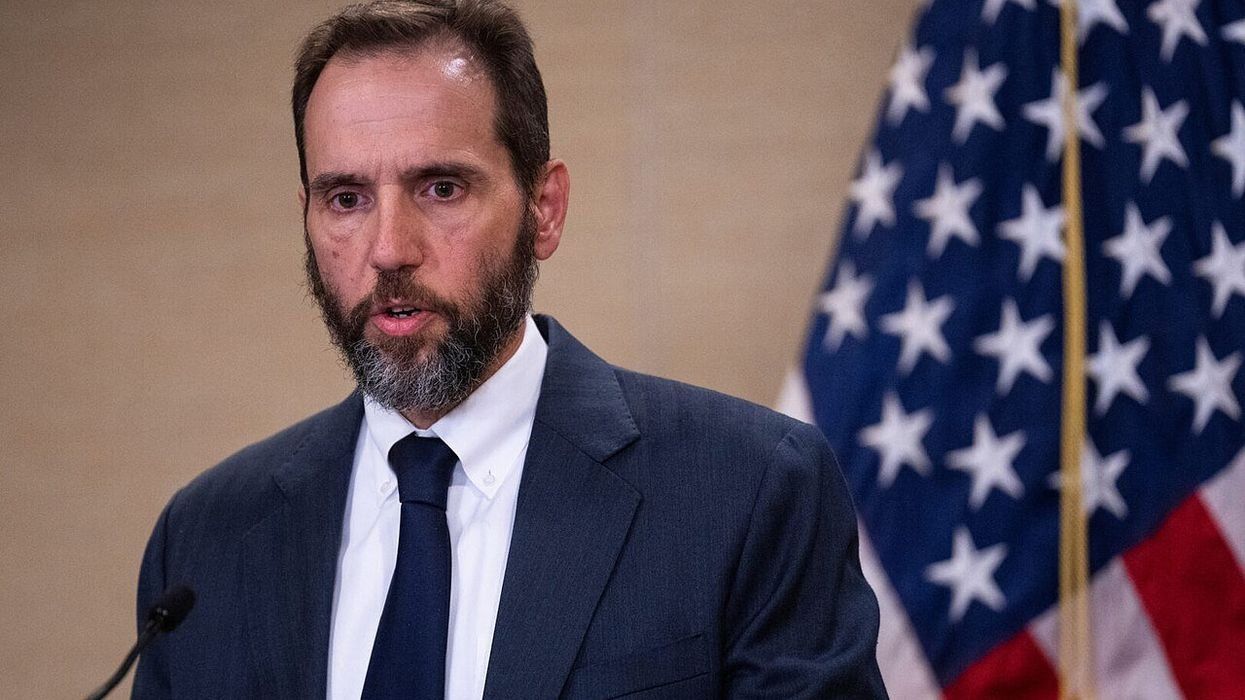
Special counsel Jack Smith in June 2023 (Creative Commons)
Special counsel Jack Smith in June 2023 (Creative Commons)

Special counsel Jack Smith in June 2023 (Creative Commons)
The Washington Post Editorial Board is standing up for President Donald Trump, arguing that the Jan. 6, 2021 riot at the U.S. Capitol falls under his First Amendment rights. And the board, in its argument, adopted many of Trump's own talking points.
Writing on Friday, the Post walks through questions from far-right Rep. Jim Jordan (R-Ohio), who probed Smith for specifics of Trump's case.
Smith told Jordan that Trump's First Amendment doesn't protect him when the purpose of the statements is something illegal: “Absolutely not. If they are made to target a lawful government function and they are made with knowing falsity, no, they are not. That was my point about fraud not being protected by the First Amendment.”
What the Post didn't include was Smith's full comments.
“There is no historical analog for what President Trump did in this case. As we said in the indictment, he was free to say that he thought he won the election,” Smith said. "He was even free to say falsely that he won the election. But what he was not free to do was violate federal law and use knowing — knowingly false statements about election fraud to target a lawful government function.”
The Post rejected the Harvard Law School graduate's assessment.
The Board claims, "Political speech — including speech about elections, no matter how odious — is strongly protected by the First Amendment. It’s not unusual for politicians to take factual liberties. The main check on such misdirection is public scrutiny, not criminal prosecution."
Smith's comments focused on using those words to "target a lawful government function" as the key piece.
The board argues that the exception in his case with Trump applies only to that case. The Post, however, thinks that if one exception is made, it will be "exploited by prosecutors."
The editors then pivoted to complain about Smith trying to impose a gag order on Trump. It claimed that Smith was pressing to broadly limit Trump's First Amendment rights during a 2024 presidential campaign. It's a claim that was similar to the argument that Trump's own lawyers made in court.
The facts are that the gag order was narrow. October 17, 2023, the court issued a gag order saying Trump couldn't make “any public statements, or directing others to make any public statements, that target (1) the Special Counsel prosecuting this case or his staff; (2) defense counsel or their staff; (3) any of this court’s staff or other supporting personnel; or (4) any reasonably foreseeable witness or the substance of their testimony.”
The Editorial Board say Trump won his cases to eliminate the gag order, but neglected to mention the specifics of what the court said when it did rule.
The ACLU was part of the suit opposing the law suit, saying the gag order was too broad, and the court "agree[d] with the district court that some aspects of Mr. Trump’s public statements pose a significant and imminent threat to the fair and orderly adjudication of the ongoing criminal proceeding, warranting a speech-constraining protective order" but held that the district court's "sweeps in more protected speech than is necessary" and therefore must be narrowed to comport with the First Amendment.
The appeals court accordingly vacated the order except insofar as it "prohibits all parties and their counsel from making or directing others to make public statements about known or reasonably foreseeable witnesses concerning their potential participation in the investigation or in this criminal proceeding" and "to the extent it prohibits all parties and their counsel from making or directing others to make public statements about — (1) counsel in the case other than the Special Counsel, (2) members of the court’s staff and counsel’s staffs, or (3) the family members of any counsel or staff member — if those statements are made with the intent to materially interfere with, or to cause others to materially interfere with, counsel’s or staff’s work in this criminal case, or with the knowledge that such interference is highly likely to result."
At the time, the concern was Trump's constant social media posts attacking key people involved in the case from lawyers to even staff. Smth argued it was creating a security risk for DOJ lawyers on the case.
Trump could talk about himself, his innocence, and he could tell his story. He could not target specific people, including witnesses. The Editorial Board ignores these details, only saying in passing, "some restrictions were appropriate." The Board concluded that Trump had a right to attack Smith personally
The Post closes by saying that Smith lost the cases, which isn't accurate either. After Trump was elected in Nov. 2024, Smith withdrew the case, knowing that a valid prosecution would never happen while Trump was in office.
Smith, who previously worked for the U.S. Department of Justice's public integrity section, made it clear in his testimony that they had proof beyond a reasonable doubt that would have convicted Trump.

