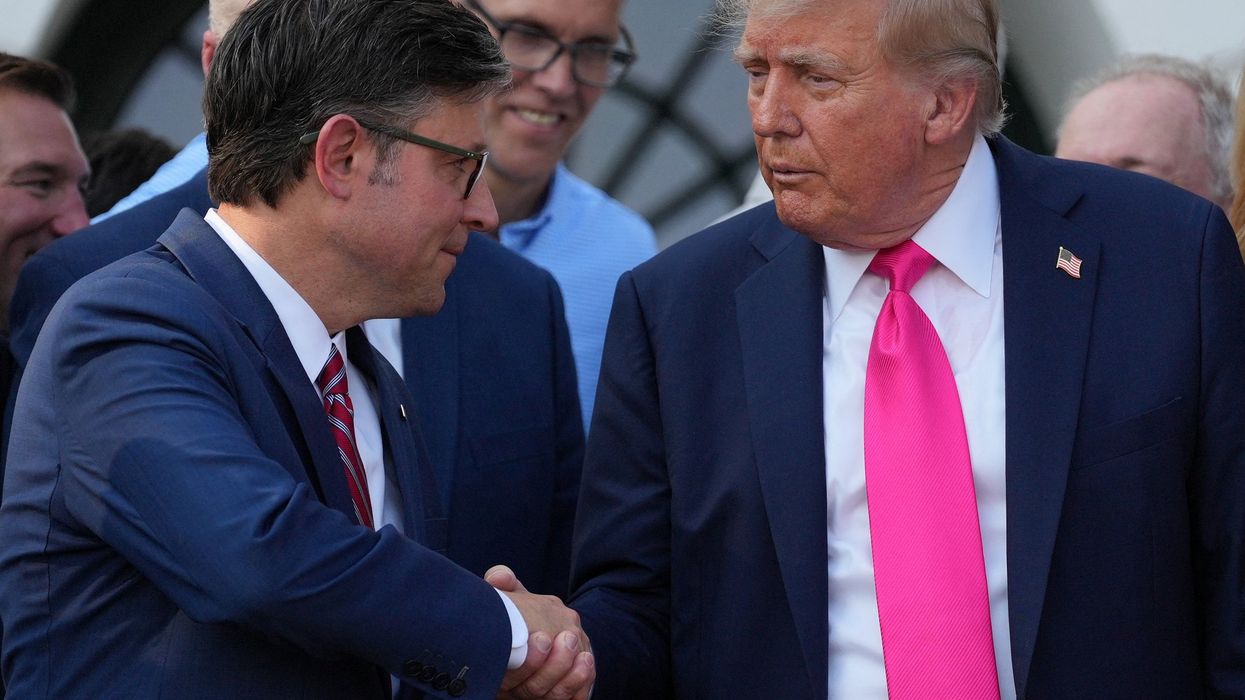
As Democrats warned, Project 2025 would undo decades of progress. The 920-page proposal became the blueprint for transforming the federal government and has become reality under President Donald Trump’s second administration. But the agenda appears to be backfiring, as former supporters across the country increasingly turn against Trump. Kamala Harris warned during her 2024 campaign that the agenda was designed to "weaken the middle class,” and as unemployment rates skyrocket, inflation continues. As DEI efforts are washed away, many agree with Harris’ sentiments.
Although Trump initially tried to distance himself from Project 2025 amid public opposition to the plan, he ultimately brought its key architects into his administration to help carry it out. In the first 21 months of his second term, a USA Today report examines how much of the controversial blueprint has been implemented.
Project 2025 proposed that FEMA, the Federal Emergency Management Agency, hand off responsibility for disaster response to the states. Trump countered that by using FEMA funding as political leverage in blue states. FEMA’s Administrator Cameron Hamilton recently gave state officials the order that it’s not up to them to begin building up their emergency funds and resources to handle most disasters.
"One of the most surprising features of this administration has been the outright, unabashed politicization of emergency aid," notes William Galston, a senior fellow at The Brookings Institution, a nonpartisan research think tank. "That used to be one of the few remaining areas of genuine neutrality."
However, there is still some hope: many of Trump’s Project 2025 policies were enacted through executive orders, which a future president could reverse or rescind. The damage can still take time to recover from, but these policies and their effects have not fared well with the American public.
Another major area of concern has been significant job loss. Under Project 2025’s then-Elon Musk-run Department of Government Efficiency (DODGE), hundreds of thousands of positions were cut from the federal workforce, many of them with voluntary incentives for employees to quit, such as large payouts. Many of those positions are in the process of being restored, so the immediate effect cannot be measured.
As the report notes, DOGE is now widely viewed as a “sad joke.” Initially, the initiative claimed to have saved $215 billion in federal spending through job cuts and other measures. However, the Government Accountability Office reported this summer that those savings claims were largely unsubstantiated.
Trump’s biggest target was seemingly anything related to diversity, equity, and inclusion (DEI), which Elaine Kamarck, another Brookings Institute senior fellow, says has been largely effective. But Galston says businesses across the country have found a loophole: changing the way they identify the roles to keep their staff, thus questioning whether Trump’s implemented practices have long-standing power. Overall, the idea is that conservatives want control, but in their quest, what they’ve done may be counterproductive in the long term.