


Democrats have a large advantage among young voters in Michigan across the different races coming to the ballot in November, according to a new poll from the Alliance for Youth Power PAC and YouGov released Monday, which showed “pretty unambiguously good news for Democrats,” as John Ray, a senior political analyst at YouGov Blue, described in a press call on Friday.
Democratic candidates held large margins in each of the statewide elections surveyed. 61% of respondents said that they plan to vote for Democrat Jocelyn Benson for governor, while 26% said they plan to vote for Republican John James. The margin was even wider in the U.S. Senate race, where 66% of participants said that they plan to vote for Democrat Abdul El-Sayed and 24% said that they plan to vote for Republican Mike Rogers.
Benson and El-Sayed also had higher approval ratings than the Republicans in their respective races, according to the survey.
“The easy read here is that young voters are with Democrats, and the job is done just less than five weeks away. But across all these eight states, we see Republicans top out with not even getting 30 percent, and this generation is hungry for something new,” Dakota Hall, executive director of the Alliance for Youth Action, said. “Young people are looking at who’s making their rent, their groceries, their future harder, and they’ve made a judgment in this moment about who is actually really doing that, and they’ve also made a judgment on who is actually running government corruption and taking a stand against that.”
Even in the Secretary of State race — an election in which around a fifth of voters said that they were undecided, and more than 60% of voters said that for each candidate they had “no opinion” — 55% said that they plan to vote for Democrat Garlin Gilchrist and 25% said that they plan to vote for Republican Anthony Forlini. The race for attorney general, Michigan’s other statewide election, was not included in the survey.
Across all U.S. House races in the state, gaps by gender and education persist, though across demographics, young voters still skew heavily towards Democratic candidates. In Michigan, men had a 25-point differential between Democrats and Republicans, while women had a 43-point gap. College-educated voters had a 41-point gap in favor of Democrats, while for voters without college degrees, that gap shrank to 34 points.
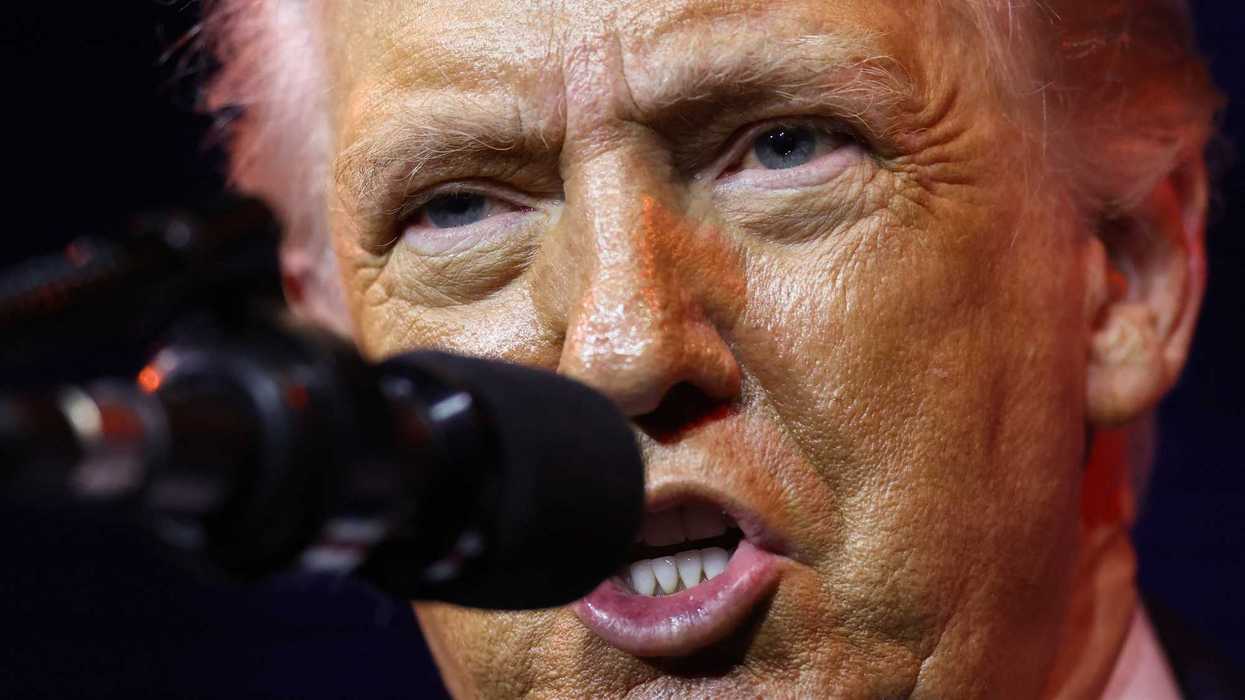
One key issue where young voters seem to be coalescing is disapproval of President Donald Trump. In Michigan, 78% of voters had an unfavorable opinion of the president while just 19% had a favorable opinion, similar to those in most other battleground states.
Even among previous Trump voters, the president only has about a 65% approval rating nationally for young voters in that camp.
“By really any measure available in the data, Trump’s reputation among young people is very bad,” Ray said.
The poll covered eight battleground states with about 400 respondents in each, with a margin of error of about five percentage points, and surveyed voters ages 18-29. It included voters in Arizona, Georgia, Michigan, North Carolina, Nevada, Ohio, Pennsylvania and Wisconsin.
Most of those voters in Michigan are first-time voters who did not cast ballots in 2024 or earlier — 42% are eligible to vote for the first time, while an additional 32% are voting for the first time in 2026 despite being eligible to vote in a previous election.
Only 37% of Michigan’s young voters said that they feel “very prepared” to vote, but another 48% said that they feel “somewhat prepared.” Only 21% said that they feel either “somewhat unprepared” or “very unprepared” to vote in November.
Across the battleground states surveyed, economic issues were the most important to young voters, a finding that also held true in Michigan. Almost half of voters listed inflation or the cost of living as one of their top three priorities in the election, and over 20% of voters said that housing cost and rent, economy and jobs, or corruption in the political system were among their top three priorities.
“Something we are tracking here is that young people, to a unique degree, are also reporting being concerned about corruption in our political system,” Ray said. “Corruption as an issue is rising in many different segments of the electorate. It kind of began to creep up early, a few months into Trump’s second term. Now, actually, it is a top concern for several pieces of the electorate, particularly high currently for young voters.”
Other issues such as climate change and the conflict in Israel and Gaza were among the top three priorities for a smaller share of voters, around 10% each.
Ray also described “broad-based economic pessimism” among young voters about the state of their own personal finances compared with the previous year.
Report typos and corrections to:
feedback@alternet.org.

#story_page_sidebar
MOST POPULAR
{{ post.roar_specific_data.api_data.analytics }}
MOST POPULAR
ContactAdvertise with AlterNetPrivacy PolicyWriter GuidelinesPress InformationAbout AlterNetMeet the AlterNet StaffDebug Logs
@2026 - AlterNet Media Inc. All Rights Reserved. - "Poynter" fonts provided by fontsempire.com.