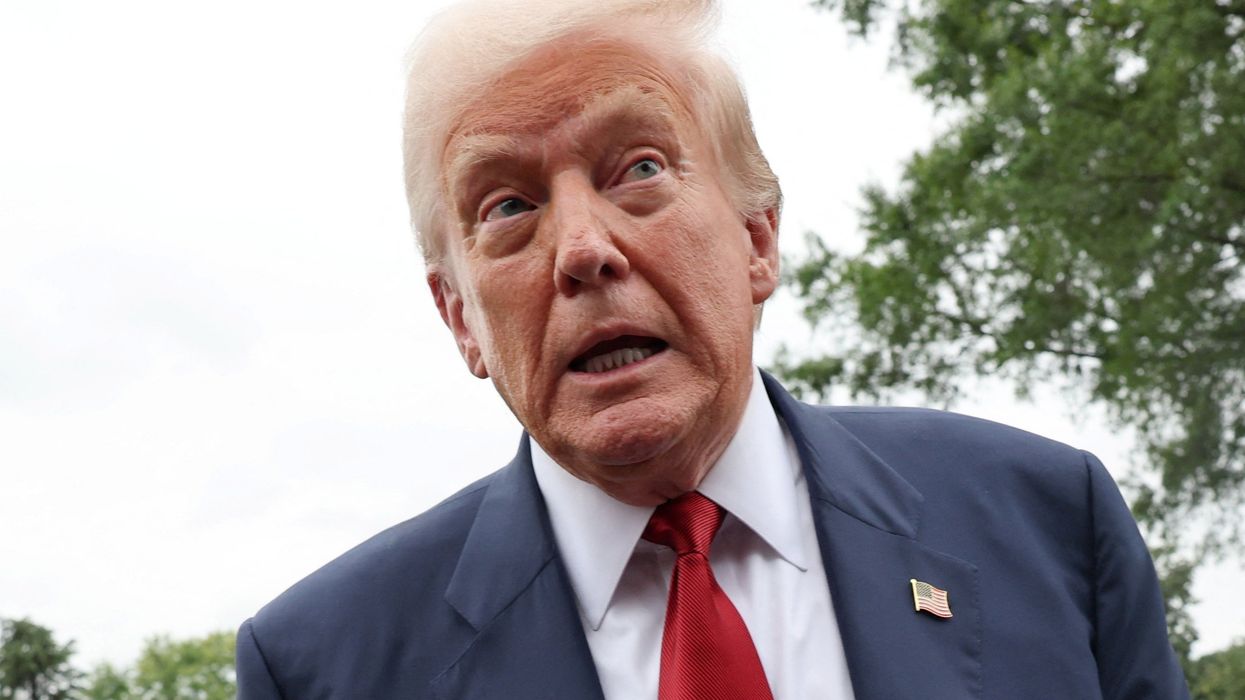
Bloomberg reports analysts and investors alike are finally wising up to President Donald Trump’s up-and-down roller coaster of oil prices, and they’re finally settling in for a long-term slog with Trump in the White House.
“The conflict in the Middle East and the implications for forward inflation remain the primary macro narrative and are likely to dictate price action in US rates for the foreseeable future,” BMO Capital Markets’ Ian Lyngen told Bloomberg as a Tuesday drop in oil prices failed to keep stocks and bonds from sliding into an ugly drop.
Previously, Wall Street investors had rallied whenever Trump announced progress in ending his unilateral war on Iran — which has bottlenecked global oil supplies and driven up prices on the international market. But Tuesday drop in oil prices “did little to allay Wall Street’s concerns that still-elevated energy costs could fuel inflation and spur Federal Reserve rate hikes,” according to Bloomberg.
This means Trump’s magic button for temporarily manipulating stock markets with unreliable claims of peace now appears to be failing. Bloomberg reports the dollar rose and Brent crude dropped below $103 a barrel as the Trump administration ordered another release of oil from emergency reserves amid a stalemate in US-Iran talks — but to no avail with investors.
“In economic news, US job openings fell to a five-month low, suggesting employers grew more cautious about expanding their workforces toward the end of the summer, while layoffs remained subdued,” reported Bloomberg. “Consumer confidence dropped to the lowest level since 2014,”
eToro’s Bret Kenwell told Bloomberg that the latest labor-market data reinforces the “low-hire, low-fire” backdrop that has taken hold of the nation, and he added that lagging consumer-confidence “should not come as a surprise.”
“Sentiment now sits at multi-year lows as persistent inflation and higher costs weigh on households,” Kenwell said. “The question becomes whether we’ll see this materialize into weaker consumer spending — a question that earnings season will help answer.”
But in the meantime, Bloomberg reports market worries sent Treasury 30-year yields to the highest level since 2002. Most companies in the S&P 500 fell, with the gauge posting back-to-back losses.
The year 2002, notably, was marked as a terrible time for the U.S. economy with former President George W. Bush’s onerous tax cuts raiding federal coffers and Bush’s disastrous war in Iraq devastating budgets and consumer confidence.