
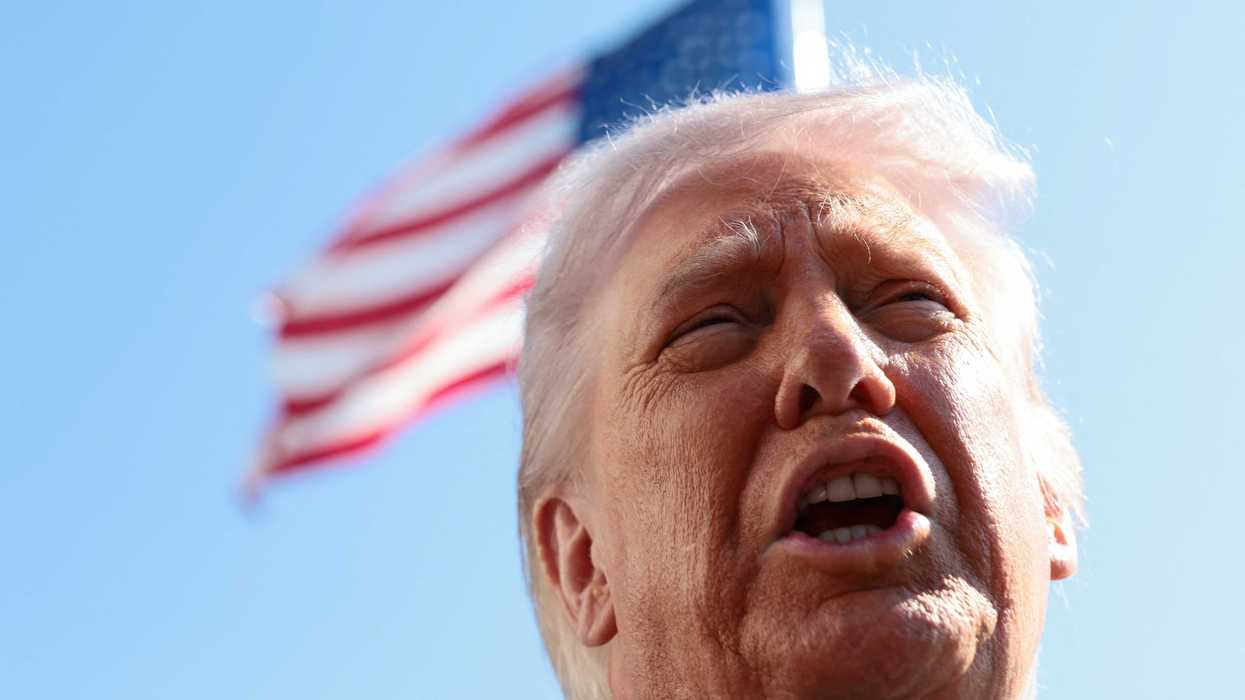


Speaking with the New York Times this week, two legal scholars explained why Donald Trump's presidency appears to be "trending in the worst direction" and warned that the midterms might not stop him.
Jedediah Britton-Purdy and David Pozen are law professors at Duke and Columbia, respectively. In October, the pair published a piece for the Boston Review, "What Are We Living Through?," which broke down how Trump's chaotic presidency was specifically affecting the state of the U.S. government. In it, they concluded that one of three things was happening: "more of the same," a "constitutional regime change" or, in the worst case, a full-on "authoritarian crisis."
In a piece published by the Times on Friday, the two legal scholars followed up on their original analysis, taking into account everything that has happened since. Citing the indictment of John Bolton and the violent immigration crackdown in Minnesota, among other incidents, Pozen concluded that Trump was showing signs of heading in the worst direction, towards authoritarianism.
"All of these episodes have arguable precedents in modern U.S. history, especially the use of military force abroad without congressional authorization," Pozen said. "But the degree of lawlessness and the scale of violence are meaningfully, alarmingly different today. Which is to say, things have been trending in the worst direction — authoritarian — in some ways that are hard to miss. And the more unpopular Trump gets, the more difficult it becomes to sustain the narrative that this is the constitutional change Americans signed up for."
Pozen further explained that there are major concerns, especially among "liberals and centrists," that Trump is directly pulling from the "authoritarian playbook" to guide his presidency: "attacking civil society institutions, persecuting political opponents, sidelining the legislature, declaring endless emergencies, demonizing immigrants, preparing to rig elections and consolidating power wherever he can." He noted that, in this way, Trump is less comparable to past GOP presidents like Ronald Reagan or George W. Bush, and more like Hungary's Viktor Orban, an authoritarian leader who has become increasingly revered by the global far-right.
Britton-Purdy added that there is now a major worry that Trump's authoritarian streak will not be hemmed in by the expected "Blue Wave" in the 2026 midterms.
"The worry about authoritarianism isn’t going anywhere, even if the midterms go forward more or less normally," he warned.
"We are about to run that experiment with the midterms," Pozen added, referring to fears that Trump will work to rig all future elections in his favor. "And we have plenty of reasons to worry. Trump has already called on Republicans to 'nationalize' elections, railed against a nonexistent epidemic of voter fraud, pardoned people involved in his attempt to overturn the 2020 election, pressured senators to force through a SAVE America Act that would effectively disenfranchise millions, and more."
Report typos and corrections to: feedback@alternet.org.

#story_page_sidebar
MOST POPULAR
{{ post.roar_specific_data.api_data.analytics }}
MOST POPULAR
ContactAdvertise with AlterNetPrivacy PolicyWriter GuidelinesPress InformationAbout AlterNetMeet the AlterNet StaffDebug Logs
@2026 - AlterNet Media Inc. All Rights Reserved. - "Poynter" fonts provided by fontsempire.com.