


It’s long been so that whatever Joe Biden did as president needs to be reversed by the Donald Trump administration – particularly about issues that touch on climate change.
Trump simply doesn’t believe that there is such a thing as human-caused climate change and calls the whole area of science a “hoax.” Part of it is ideological for Trump, of course, but a lot of it is just plain rejection of whatever was done under the name of his predecessor.
Over the weekend, Trump said that he has weakened fuel economy standards for passenger vehicles. It leaves questions about pollution in the hands of carmakers rather than the government.
Given the rising cost of gas and oil, it seems a move that is more likely to cause problems for consumers, carmakers, and, eventually Trump, than keeping aspirational high fuel economy standards. Yes, the standards were set high to incent purchase of electric vehicles, but also to reduce the biggest single source of pollution on the planet.
Here’s Trump’s explanation, naturally offered via a Truth Social post rather than as the result of some fuel- or economic study: He “just approved new Fuel Economy Standards that TERMINATE Sleepy Joe Biden and Pete Boot-EDGE-EDGE’s ridiculous EV Mandate. The Dumocrats cost our Great Auto Manufacturers $Billions, forced Americans into cars they never wanted, and wasted Billions on Chargers that were never built.”
Under Trump’s view of news, a one-sided, no questions asked assertion seems to pass as “positive” news. But even those of us who are not politics experts can see that while gas is hovering around $4.50 a gallon on average in the U.S., maybe the ability to travel further on the same tank of gas is not such a bad idea.
Trump claims that carmakers want to return their emphasis to gas-driven cars rather than electric cars, though they just have been spending much of the last several years altering manufacturing procedures and supply lines. Changing back is more than a wave of a magic wand, and it involves reconsideration of the origin of parts and assemblies that cross all those tariff lines that Trump has set.
Final Rules Still Await
The final rules slash fuel economy standards by a third through model year 2031. The National Highway Traffic Safety Administration’s proposed redo of so-called Corporate Average Fuel Economy standards for cars and light-duty trucks would require the sector to average about 34.9 miles per gallon through model year 2031. The rule replaces Biden-era standards, which demanded fleetwide averages of 50.4 mpg.
Clearly, the emissions weakening is one more nail in the coffin for Biden administration electric vehicle incentives. Last February, the Environmental Protection Agency moved to scuttle all climate rules for motor vehicles, including the scientific findings that had underpinned them. Last year, the Congressional Big Beautiful Bill removed penalties for carmakers who did not meet fleetwide fuel economy standards.
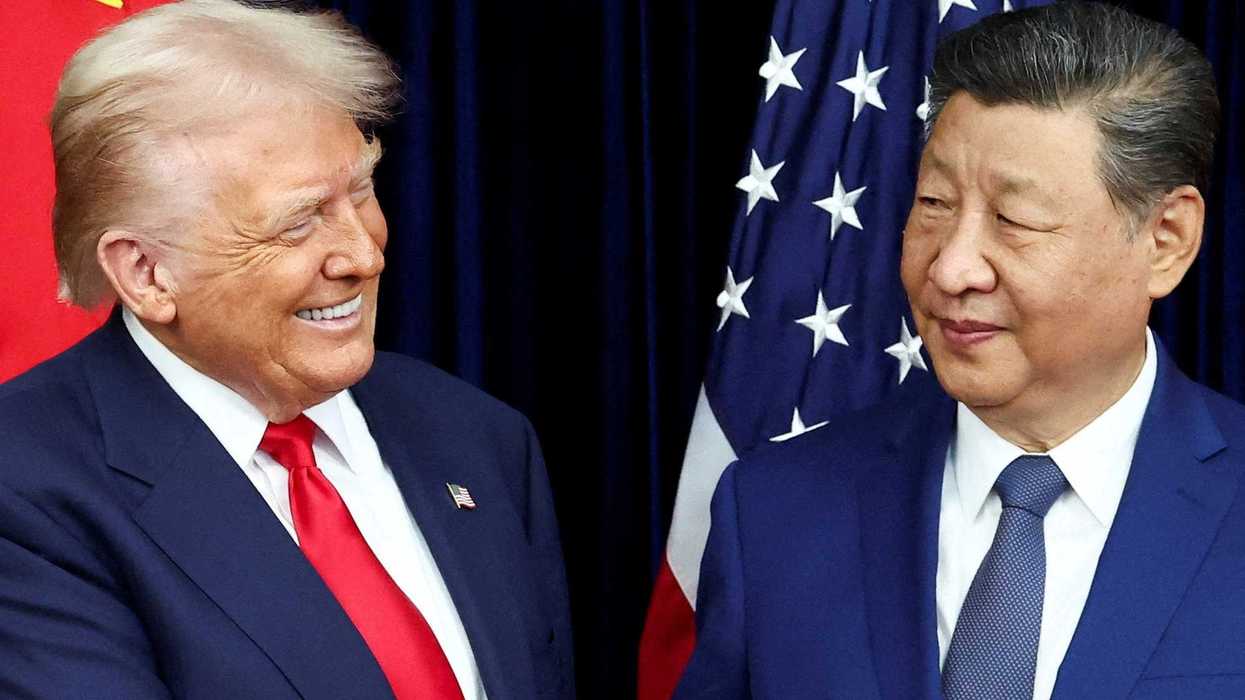
Meanwhile, the biggest selling cars in the world right now are electric vehicles built in China – at a much-discounted price from sales of electric cars in this country. Of course, pollution and car sales hardly emerged among topics at last week’s Trump-Xi Jinping summit since the meeting was kept to imagery rather than most areas of substance.
These rule changes no doubt will end up in court, just as the EPA’s repeal of vehicle emissions rules and the endangerment finding for greenhouse gases have spawned lawsuits. The courts will decide whether the government can or must require carmakers to improve their fuel economy or invest in electrification. But the rollbacks and Congress’ move last year to gut consumer tax incentives for electric vehicles has widened the gap between U.S. transportation policy and global trends favoring EVs.
From the cheap seats, it certainly looks as if Trump is giving carmakers a chance to spend years avoiding pollution rules while the Chinese are moving ahead on electric vehicles.
Apart from the failure of the government to address emissions as a serious source of pollution to global warming, it is hard to see the business leadership involved here.
Terry H. Schwadron retired as a senior editor at The New York Times, Deputy Managing Editor at The Los Angeles Times and leadership jobs at The Providence (RI) Journal-Bulletin. He was part of a Pulitzer Gold Medal team in Los Angeles, and his team part of several Pulitzers in New York.
Report typos and corrections to:
feedback@alternet.org.

#story_page_sidebar
MOST POPULAR
{{ post.roar_specific_data.api_data.analytics }}
MOST POPULAR
ContactAdvertise with AlterNetPrivacy PolicyWriter GuidelinesPress InformationAbout AlterNetMeet the AlterNet StaffDebug Logs
@2026 - AlterNet Media Inc. All Rights Reserved. - "Poynter" fonts provided by fontsempire.com.