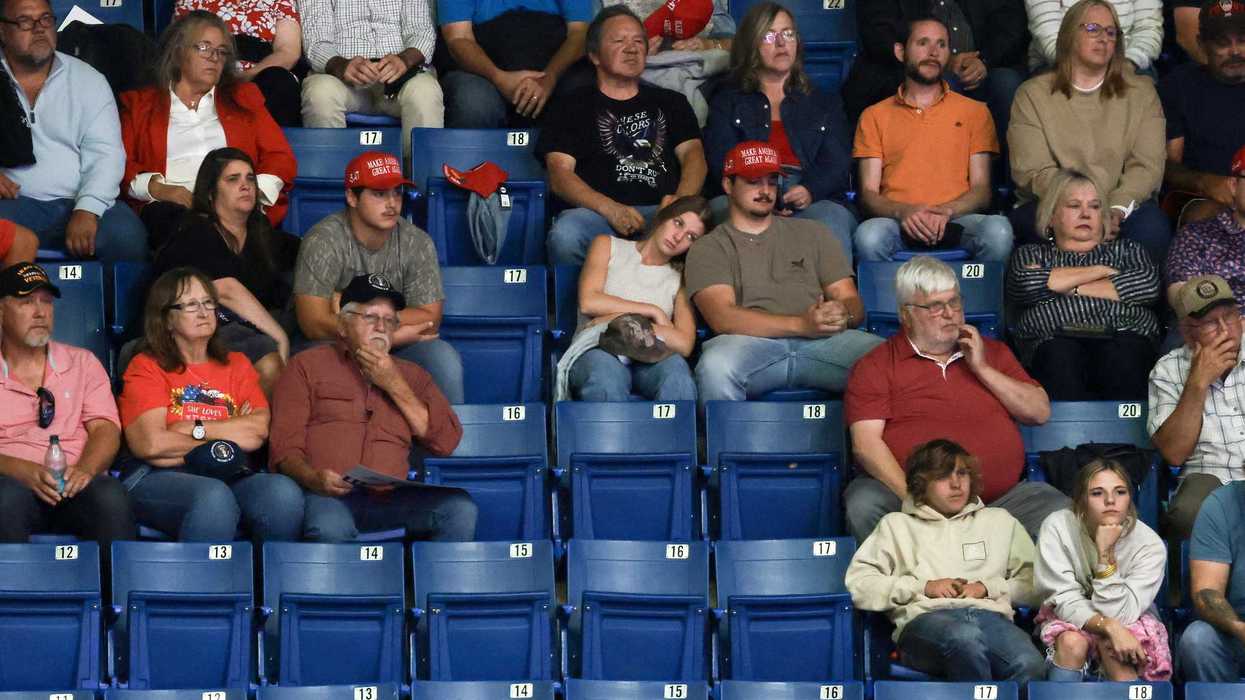
President Donald Trump and many economists claim the U.S. economy is pumping along on all cylinders — but if you take that claim to Americans, you’re probably in for a fight.
“Unemployment and layoffs are historically low. Consumer spending data suggest that Americans are splurging on things like live entertainment, travel and eating out. The economy is growing at its fastest pace in a year,” reports Bloomberg. “[but] by many measures, people are miserable.”
A significant percentage of Americans say the economy feels “stacked against them” and polls show they are stressed over about the cost of living, they’re anxious about job security, and most certainly pessimistic about their economic future.
“And don’t even get them started on gasoline prices,” said Bloomberg reporter Jeffrey Sparshott.
Americans are still struggling with sticker shock as prices continue to rise, even as Republican strategists try to make the case that at least the rate of inflation is slower than it has been in the past. But consumers don’t care about the rate of the rise, if the numbers are already too high to match their comparably stagnant paychecks.
“Americans’ hourly earnings are, on average, up about one-third since the end of 2019. But adjusted for inflation, pay has barely kept up with rising prices,” said Sparshott. “And even the marginal gains Americans have made are beginning to evaporate. Inflation-adjusted pay was down from a year earlier for six straight months as of September.”
Worse, Sparshott said many consumers “are simply locked out” of the economy.
“Entry-level college graduates have had an especially tough time cracking the job market, and the ranks of long-term unemployed are growing,” he argued, despite sector-specific strength and a low unemployment rate masking a sluggish job market.
“Employers aren’t laying off many workers, but overall they aren’t hiring many workers, either. That’s left some people feeling stuck in place,” he said. In fact, Glassdoor’s employee confidence index, which measures worker optimism, says that confidence fell in September to the lowest level in the survey’s 10-year history.
And consumer savings? Forget it, said Sparshott. Wages are the main contributor to income for most Americans up until retirement, but sluggish wage growth alongside ballooning prices have “forced many to save less — or not save at all.”
Another weird characteristic of the Trump economy is how Republicans themselves feel about it, said Sparshott.
People generally feel better about their economy when their party is in the White House. After Trump was reelected president in 2024, consumer sentiment surged among Republicans and dropped among Democrats even before his inauguration.
“But since the start of 2026, measures of sentiment have slumped across political affiliation, geography and income, suggesting a wide swath of Americans harbor concerns about the economy,” Sparshott said.