
Dems face a minefield as Trump's culture wars dare them to take the bait
REUTERS/Leah Millis
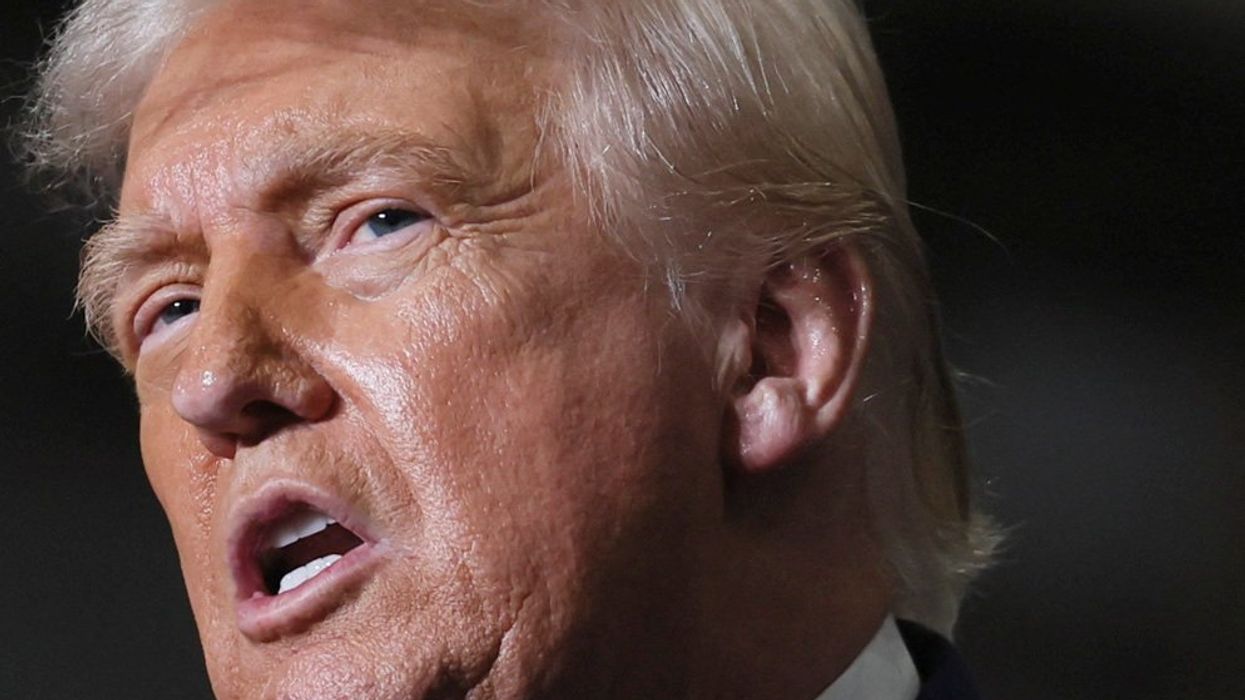
U.S. President Donald Trump delivers remarks at U.S. Steel Corporation–Irvin Works in West Mifflin, Pennsylvania, U.S., May 30, 2025.

U.S. President Donald Trump delivers remarks at U.S. Steel Corporation–Irvin Works in West Mifflin, Pennsylvania, U.S., May 30, 2025.
A zillion political pundits and endless rehash of the midterm elections have persuaded everyone but Donald Trump that issues of cost, corruption and chaos, including the war with Iran, accounted for a massive, directional shift in U.S. politics.
We’re awaiting the seating of Democratic majorities in the House and Senate to determine if elected lawmakers can overcome Trump’s resistance towards a fistful of programmatic resets in health care, food stamps, minimum wage, housing construction, tariffs and war. It’s a full agenda, along with overnight hearings demanding accountability for the variety of Trump pay-to-play payments and special treatments for some.
For Republicans, the midterms were largely focused on cultural issues. From the stump speeches, posts and various debates, the key issues involved a transgender takeover of the U.S., the evils of diversity and inclusion in public and private hiring and education, and a desired goal of clearing out all but White, Christian, patriotic and loyal Trump fans as citizens.
There was no way to read the midterm results other than a blanket rejection of all that Trump has come to represent, focus on self-glorifying monuments and gilded ballrooms included.
So, the natural question is where in the pecking order will we find congressional responses to the Trump culture wars against museums, universities, Science, and the role of Black, female and transgender soldiers and sailors in our military past and present?
The answer seems to be that Democrats will get to it, but these items are not first on anyone’s list. Since it is impossible to separate, say, the culture wars being waged by War/Defense Secretary Pete Hegseth from what are widely perceived to be badly run operations at the Pentagon, some of these issues are bound to emerge on the way to restored funding or a change in government outlook.
Culture Remains Under Attack
Even this week, ProPublica was outlining Trump administration plans to remake the Smithsonian American history museums to match presidential expectations with ouster of museum directors and replacement of slavery exhibits with outsized statues of George Washington. The Kennedy Center for the Performing Arts remains under threat of demolition because courts won’t allow Trump’s name on the building without congressional authority.
Trump wants to eliminate funds for national endowments for the humanities and arts, for cultural institutions, to threaten the education offered at leading universities, to allow the banning of books at the local library.
From various statements and promises, Democrats including Sen. Jeff Merkley, D-Ore., and Sen. Sheldon Whitehouse, D-RI, plan to restore money to the endowments and to halt the monuments. It is unlikely that this Congress ever will approve Trump’s name on the Kennedy Center unless it is in trade for, say, health care or immigration goals.
Still, the culture fights will trail efforts more recognizable as answers to high prices and cessation of health care benefits.
In addition, there is less than full agreement about where Democrats want to end up politically about some cultural fronts. There is disagreement, for example, about loud and proud support for transgender life in America, something that still serves as a divisive issue in some parts of that coalition that showed up in the midterms.
More liberal Democrats, including Sen. Ed Markey, D-Mass., and Rep. Pramila Jayapal, D-Wash., want a transgender bill of rights. Others support access to gender-affirming care but may balk at anything touching sports participation. Most lawmakers say the focus should remain on cost-of-living and economic issues to avoid fracturing the caucus.
The DEI and Immigration Issues
Diversity issues abound in proposals to revisit the Trump efforts to remove DEI from government, universities, research grantees and contractors. However, Trump maintains a veto power that may well withstand the need for two-thirds votes in each house to overcome.
Still, there are efforts to roll back executive orders ending federal DEI programs, to use congressional hearings to exert leverage over hiring and promotion issues involving DEI, to review what has happened in the military. There is a separate effort to revisit the Equal Rights Amendment over women’s rights.
Overall, however, the repeated message is to balance DEI concerns with affordability, an unclear link.
The clearest agreed cultural goals may be in the fights over immigration. Trump has made clear what he wants – roundup, arrest and deportation of millions. Democrats have not yet coalesced on a singular program, but undoubtedly will be introducing bills that separately seek to trim the powers of Homeland Security agents or to protect populations including those children born in the United States still subject to Deferred Action for Childhood Arrivals (DACA) rules of registration and check-in.
Expect legislation that will seek to claw back ICE funds or to impose restrictions and rules on ICE agents. Incoming Speaker Hakeem Jeffries is seeking legislation to narrow the targets of enforcement to violent felons identifiable through court hearings.
Other Democrats are pushing to reinstate deportation protections for groups whose temporary statuses were eliminated by the Trump administration, including recipients Temporary Protected Status, Afghan allies, and to provide avenues to naturalization. One vocal Republican has been Rep. María Elvira Salazar, R-Fla., who pairs legalization for long-term undocumented residents with stricter border security.
Many of these specific issues could emerge through oversight hearings with Homeland Security officials.
Terry H. Schwadron retired as a senior editor at The New York Times, Deputy Managing Editor at The Los Angeles Times and leadership jobs at The Providence (RI) Journal-Bulletin. He was part of a Pulitzer Gold Medal team in Los Angeles, and his team part of several Pulitzers in New York.