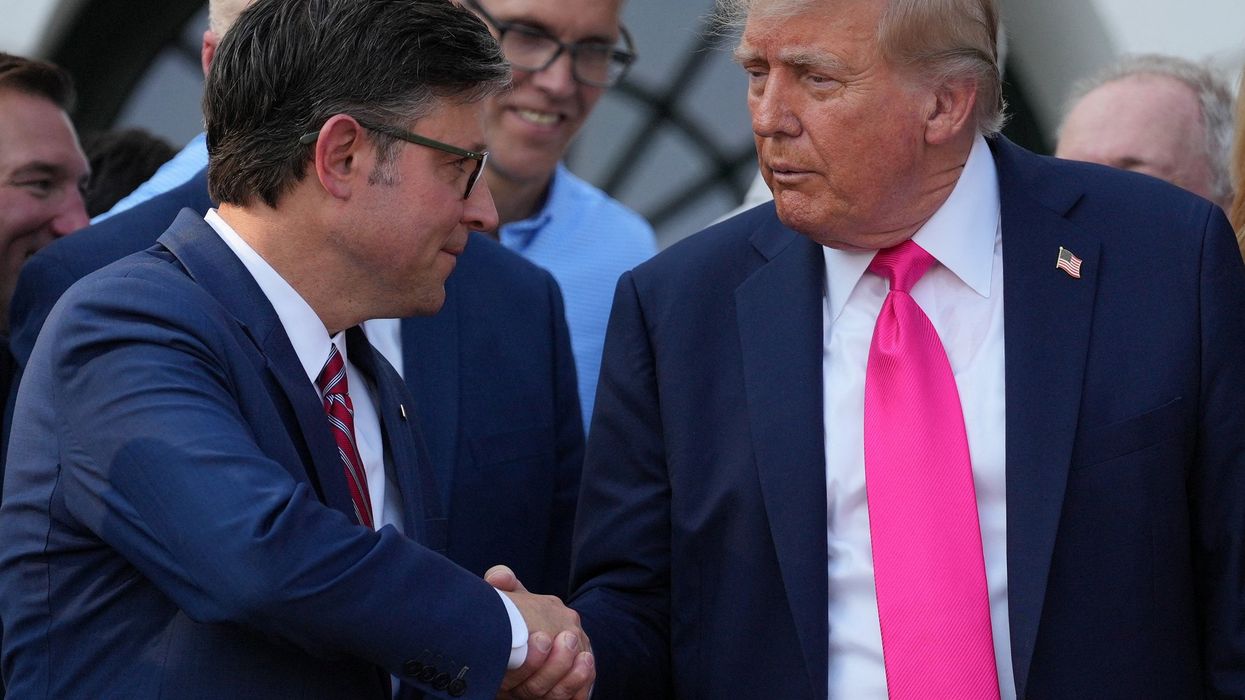
One member of the House Republican Conference is hoping his GOP colleagues will stop ceding their constitutional powers to President Donald Trump.
The New York Times' Carl Hulse reported Friday that as Trump prepares to enter year two of his second term later this month, some lawmakers are calling for Congress to re-assert its Article I powers as a co-equal branch of government. This includes Rep. Don Bacon (R-Neb.), who told the Times that he hoped Republicans in 2026 would stop being a rubber stamp for the term-limited commander-in-chief.
"The president would be better off if the Republican House pushed back more," said Bacon, who is not running for another term in November. "I think his tariff policy would be better. I think it would be better on Ukraine. I think we could push him in a much better direction if he was open to it."
"But if you feel like you have a bunch of lackeys that are going to do whatever you say, then he doesn’t feel constrained," he added.
Hulse observed that during Trump's first year back in office, he "mostly ignored the legislative branch on matters great and small." This even included federal spending, with Office of Management and Budget Director Russ Vought carrying out an agenda of aggressively "impounding" federal money already appropriated by Congress by refusing to allow that money to be disbursed. Trump has also bypassed Congress in matters of war, with his Department of Defense carrying out strikes in the Caribbean Sea and even off the Venezuelan coast without first seeking Congressional approval.
"With this Republican majority in the Senate, Donald Trump has basically walked all over Congress," Sen. Michael Bennet (D-Colo.) told the Times. He noted that Republicans would likely revolt if a future Democratic president chose to minimize Congress' role in a manner similar to Trump.
"It is absolutely outrageous, and the Senate Republicans know it is outrageous too,” Bennet said. “The question for them is whether or not they will come to the view that if we end up rolling over for this kind of stuff, it is going to happen as one administration changes to the next.”
Click here to read the Times' full report (subscription required).