
'We found the communists': WSJ exposes Trump’s 'unprecedented' state capitalism
REUTERSYves Herman
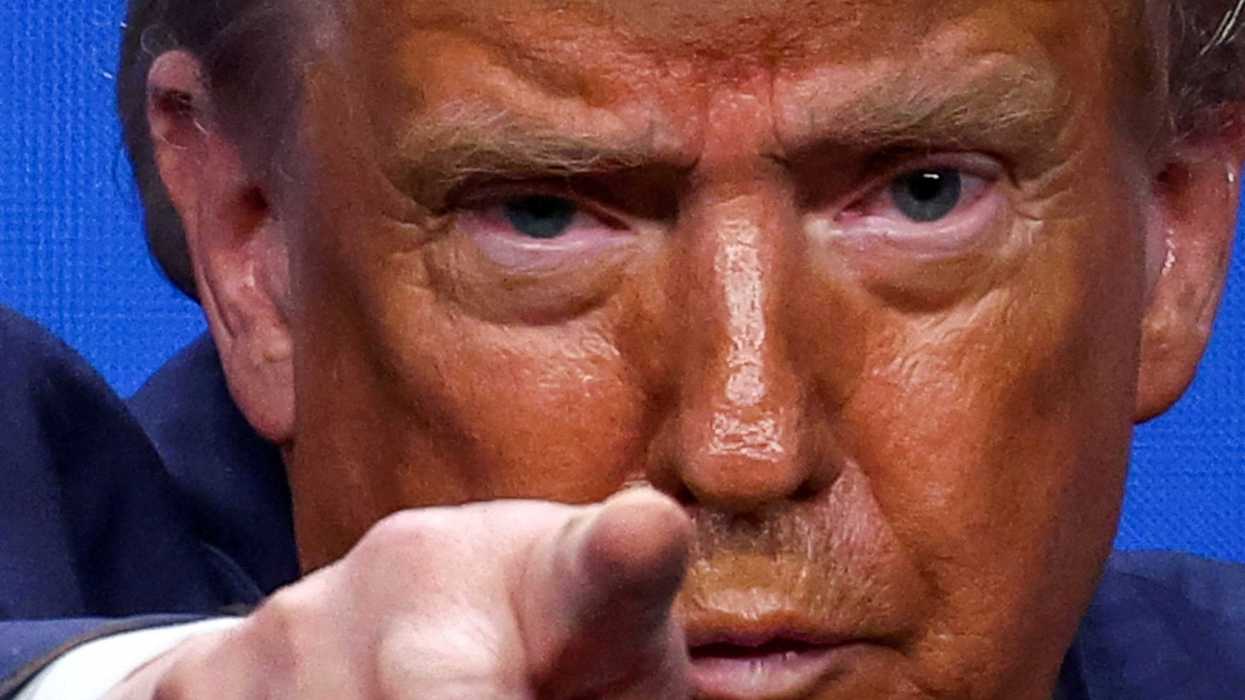
U.S. President Donald Trump gestures during a press conference at a NATO summit in The Hague, Netherlands June 25, 2025.

U.S. President Donald Trump gestures during a press conference at a NATO summit in The Hague, Netherlands June 25, 2025.
According to the Wall Street Journal, President Donald Trump has sought to fuse government with business and create a “state capitalism” that is “unprecedented” in recent history. Many commenters have suggested, however, that “this is not state capitalism” but “another ism MAGA is always yelling about.”
As the Journal explains, Trump played an instrumental role in Apple CEO Tim Cook’s decision to go into business with the microchip producer Intel, which was struggling after sitting out the early AI boom. Trump pushed Cook to hire Intel to manufacture some of Apple’s new device chips, and Intel has since shown a dramatic turnaround — a financial windfall that has benefited Trump personally, as he bought a “significant share” of Intel stock before its value shot up after the deal with Apple was announced last month.
What’s more, writes the Journal, “the Trump administration, now Intel’s largest shareholder, has also taken a hands-on approach to the company, keeping close tabs on the development of new manufacturing technologies and offering strategic guidance. This type of state capitalism is unprecedented in recent tech history.”
While Trump described his administration’s involvement with Intel and other companies merely as “help,” other commenters see something else in the situation.
“I think we found the communists,” posted HuffPost White House correspondent S.V. Date. “Something something communism,” posted Lincoln Project co-founder Rick Wilson. “Seems kind of socialist,” noted journalist Brahm Resnik. “State ownership,” came another response. “And he calls Mamdani a commie.”
Trump has long used the specter of communism as a talking point at his rallies, but has railed against it with greater frequency lately as he has flailed for a scapegoat to distract from his historically low approval rating and talk of a blue wave in the coming midterms. On Monday, for example, he shared a video calling for the deportation of New York City Mayor Zohran Mamdani and other “hardcore communist b——.”
But as many have noted, there is no shortage of hypocrisy in Trump’s attacks. A year ago, the CATO Institute wrote that Trump’s policies mirror the “populist authoritarian movement” spoken of by libertarian thinker Roy A Childs Jr. when in 1982 he warned that the New American Right was working to build a country that would be “hostile to free markets and committed to some form of managed economy. Forty-three years later, Donald Trump is president, and the Wall Street Journal’s chief economics commentator describes his policies as ‘state capitalism,’ a ‘hybrid between socialism and capitalism in which the state guides the decisions of nominally private enterprises.’” The Journal takes things even further, arguing that Trump is “imitating the Chinese Communist Party by extending political control ever deeper into the economy.”
Another example came last week, when Trump announced the launch of his “Freedom Fuel Network,” which imposed price controls on a series of Philadelphia gas stations, prompting a slew of comparisons to the “ism” so vocally reviled by Trump. As one commenter said of the news, “I thought we were fighting against communism?”

