


Lawyers who have long pursued corruption cases said Thursday that the government may be able to take back corruptly obtained funds, which “may be the most viable approach for effective accountability” for powerful insiders, potentially amounting to billions of dollars.
Noah Bookbinder, who from 2015 to 2026 headed the watchdog group Citizens for Responsibility and Ethics in Washington, and Justin Florence, a co-founder and senior adviser at Protect Democracy, wrote in an essay for Just Security that prosecutions alone cannot make the powerful accountable.
They noted that the Supreme Court has, over the years, overturned corruption convictions, including those of former Virginia Gov. Bob McDonnell and Enron executives.
The court’s decision in Trump v. United States, which extended broad immunity to the president, and likely widespread blanket pardons could make prosecutions even more difficult going forward, they wrote.
The remedy they suggest is a civil process called disgorgement, which they argue would allow the government to sue to recover funds and other assets gained through corruption.
For example, if it were shown that a senior official had taken money, “or an airplane,” in exchange for favorable treatment, the government would probably be able to bring a lawsuit to reclaim it, the authors wrote. Unlike in criminal court, the government would have to establish its case by only a preponderance of the evidence.
They pointed to a Supreme Court ruling this year in which the justices upheld the Securities and Exchange Commission’s authority to recover funds that had been acquired through fraud, and to asset recovery efforts in Peru and Hungary.
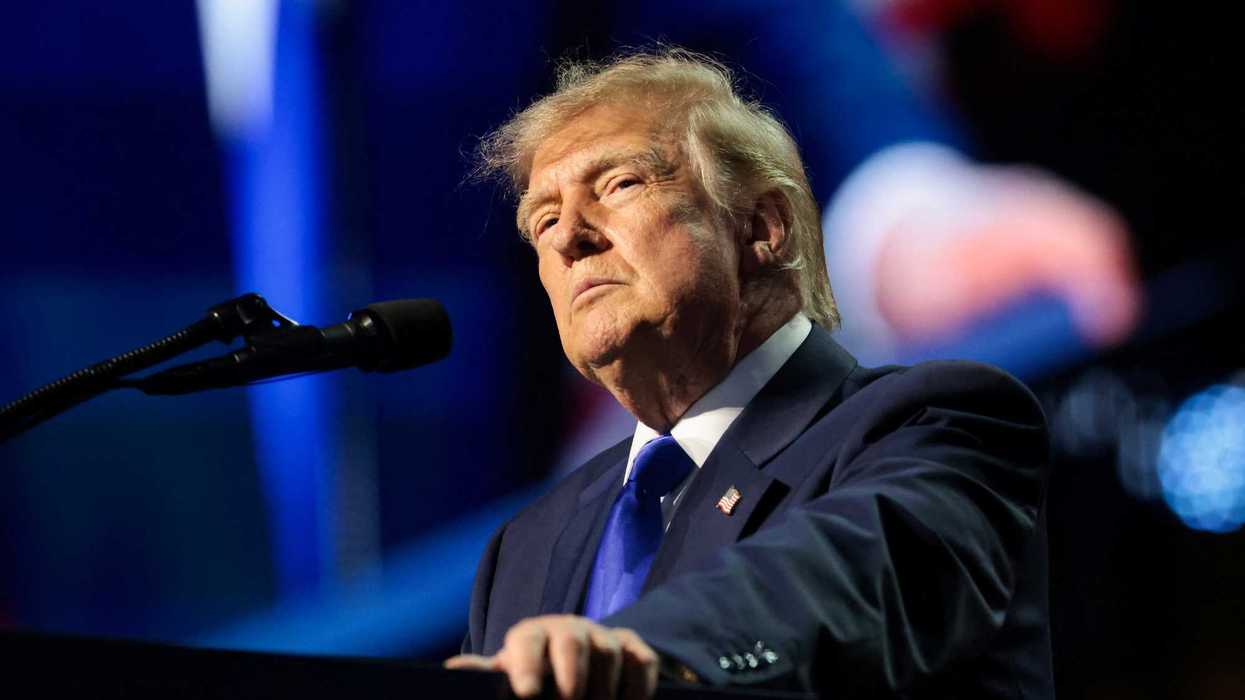
The authors linked the suggestion to recent reporting on the president’s finances. The New York Times reported that Trump had earned more than $2 billion in his first year back in office, and Trump Media, the company behind Truth Social, has started charging Wall Street firms as much as $100,000 a month for early access to Trump’s posts.
Recovering such funds would strike a blow against the people who have gotten rich through corruption, hitting them “in the currency they care about most,” the authors wrote. It could also benefit struggling Americans, to whom the recovered funds could be returned.
The lawyers argued that asset recovery is less likely to trigger the recriminations that have resulted from prosecutions, because it does not involve depriving the target of liberty.
They warned that the government should pursue such cases only if it has a strong body of evidence and presents it in the open, because weak cases could be viewed as an abuse of power.
Congressional investigations starting in January could develop evidence and set the stage, but it is unlikely the Justice Department will pursue asset recovery until 2029, the lawyers wrote.
However, some state attorneys general and private litigants may be able to move sooner and could start looking into the option now, the authors wrote.
Report typos and corrections to:
feedback@alternet.org.

#story_page_sidebar
MOST POPULAR
{{ post.roar_specific_data.api_data.analytics }}
MOST POPULAR
ContactAdvertise with AlterNetPrivacy PolicyWriter GuidelinesPress InformationAbout AlterNetMeet the AlterNet StaffDebug Logs
@2026 - AlterNet Media Inc. All Rights Reserved. - "Poynter" fonts provided by fontsempire.com.