
'Third-rate' America welcomes losers exiled from other democracies: top historian
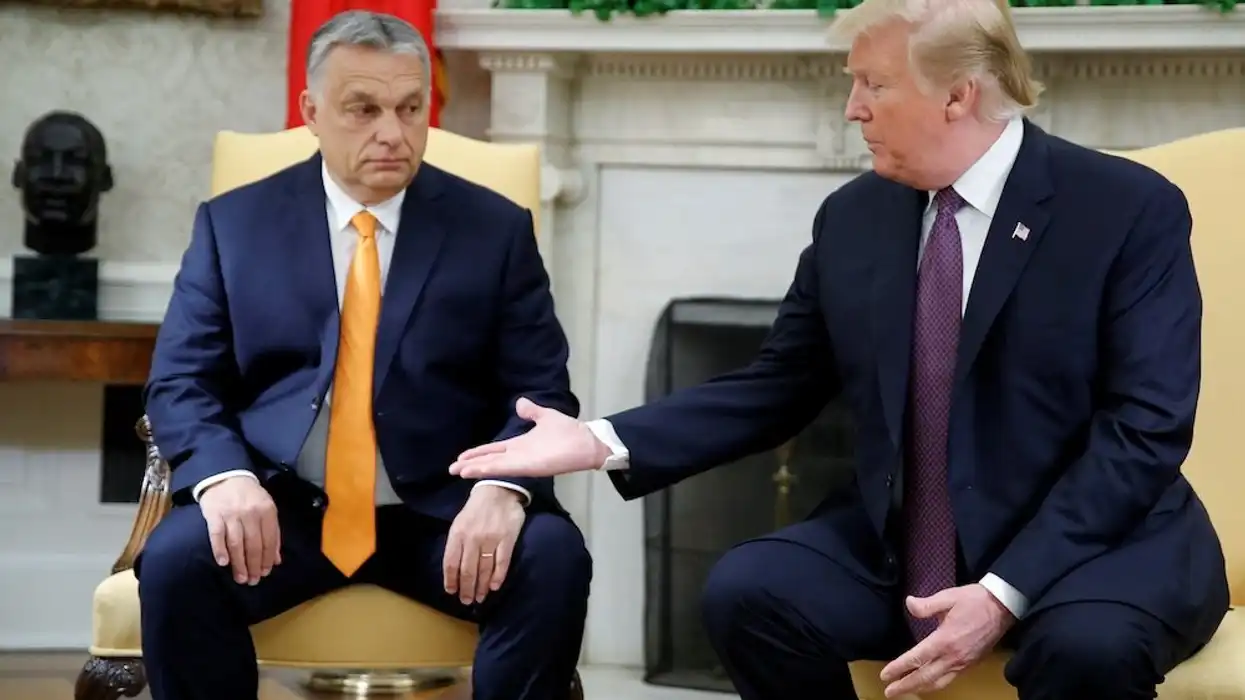

In the wake of Hungarian strongman Viktor Orbán’s electoral loss — which was widely interpreted as a major blow to the global MAGA movement — a number of his cronies have been forced to flee abroad. Among these is Polish politician Zbigniew Ziobro, who fled to Hungary in 2023 after his attempts to instill Poland with authoritarianism failed. Now Ziobro has gone to the United States under the protection of President Donald Trump, and according to renowned historian and fascism expert Timothy Snyder, this raises disturbing questions about the present state of the U.S.
As Snyder explains, by the time Ziobro arrived in Hungary, he was on the run from serious crimes. As a justice minister in Poland, he was found guilty of mishandling funds intended to be used for the victims of crime, diverting the money instead to a spyware program he leveraged to monitor journalists and political opponents. In Hungary, he appeared safe alongside fellow authoritarian Orban, but when the latter lost power, the likes of Ziobro were no longer welcome.
“Hungary will no longer be a dumping ground for internationally wanted criminals,” said Orban’s successor Peter Magyar, who called out Ziobro by name.
“When democracy wins, the losers go to America, it seems,” said Snyder. “What was left for Ziobro? The United States. You might not have heard of Ziobro, but Donald Trump has.”
Ziobro’s arrival in the U.S. has caused a global scandal. As Snyder notes, “Ziobro is a wanted man with no passport. The Trump White House just went to a good deal of trouble to bring him to the U.S.” The international community is wondering how Ziobro could have crossed the border without a passport, with many suggesting that it could only have been done with the express support of the Trump administration. Now Poland says it expects the U.S. to extradite Ziobro to face charges.
“This teaches us, once again, how much the Trump project is an international one,” explains Snyder. “Americans are punished every day, but foreign authoritarian friends are remembered.”
Beyond the many legal and political issues this situation raises, Snyder argues that Trump’s willingness to embrace Ziobro prompts pressing questions about the ethics underpinning American society.
“What does this mean about our country when we become a place where we welcome people who are accused of corruption, we welcome people who are architects of attempted authoritarian transitions, we welcome people who are fleeing not only from their own country but from another attempted authoritarian regime — what does that mean?” Snyder muses. “Doesn’t that make us a bit third-rate ourselves — to become the kind of third repository of people like this?”
To Snyder, it comes down to a matter of identity: “It’s a question for us as Americans. Don’t we all agree that we would like the rule of law? Don’t we all agree that we would like for politicians at home or abroad to be following the rule of law? What does it mean when we go around the law to bring people to our country who are serious opponents to the rule of law? What does it mean when the people who get special treatment in the United States are precisely those who have been trying to break democracy elsewhere? What does that say about us?”

