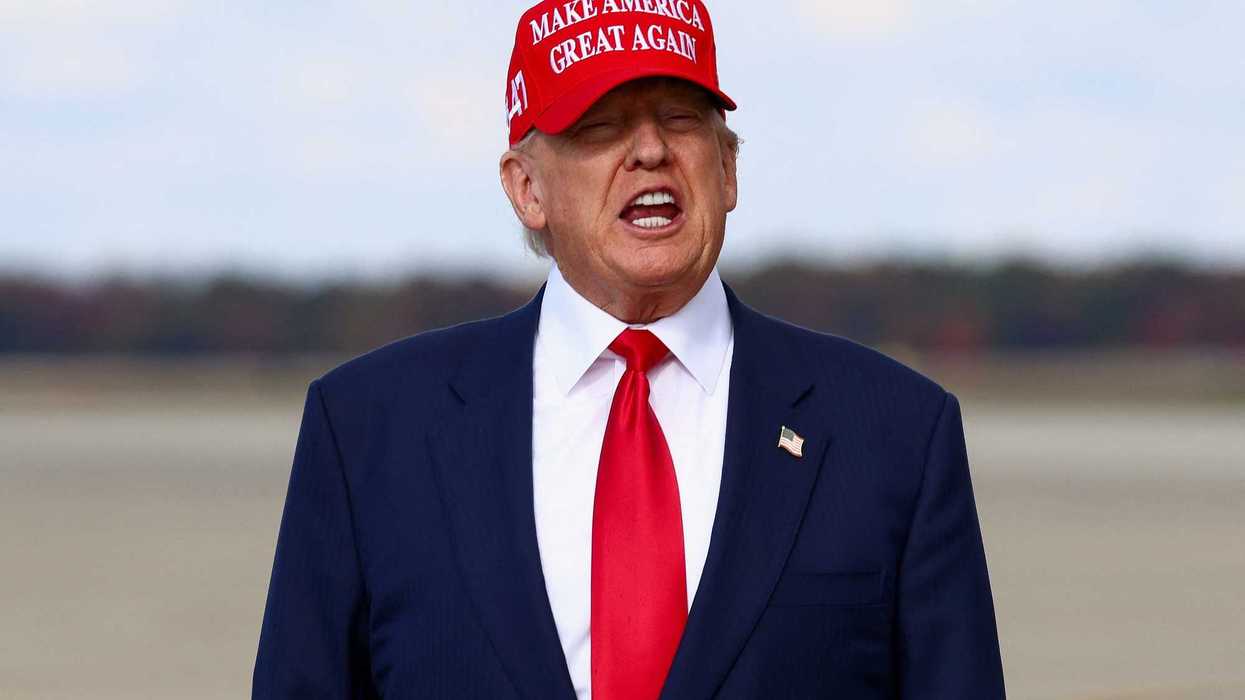
New York Times writer E.J. Dionne Jr., says a great many Americans who helped put Donald Trump in office have absorbed what’s happened since.
“They may not be glued to every chaotic twist of this presidency, but they do pay attention and have concluded, reasonably, that this is not what they voted for,” said Dionne.
Compared to Trump’s 49.8 percent of the 2024 popular vote, Trump’s approval ratings are a slide. A New York Times analysis of public polling this month found his net approval rating had dropped to 42 percent, while a A.P./NORC poll and a Gallup poll put him at 36 percent.
“This suggests that 15 to 25 percent of his voters have changed their minds,” Dionne said. “I think of these shifts as the triumph of reasonableness — and not because I agree with where these fellow citizens have landed (although I do). I’m buoyed by the capacity of citizens to absorb new facts and take in information even when it challenges decisions they previously made. It turns out that swing voters are what their label implies. The evidence of their own lives and from their own eyes matters.”
The shift dispels myths about Trump having “magical powers to distract and deceive,” said Dionne. It also proves that reality can still get through the breakdown of U.S. media and information systems.
Furthermore, Dionne said the decay of Trump’s standing is a rebuke to widespread claims a year ago that his victory represented “a fundamental realignment in American politics, akin to those led by Franklin D. Roosevelt in the 1930s or Ronald Reagan in the 1980s.”
“The case for a Trump realignment was built in large part on Republican wishcasting and Democratic despondency, married to a few facts, including substantial Trump gains among Latinos and young men,” wrote Dionne. “True, the Republicans secured majorities in the Senate and the House. But the G.O.P. won two fewer seats in the House in 2024 than it did two years earlier — far from the sweeping gains typically yielded by realigning elections.”
But a nationwide trend in a single election is not a realignment, argued Dionne, and Trump squandered whatever opportunity the G.O.P. might have had to expand its map with his extremism.
In 2025, “Trumpian flimflam hit its limits,” Dionne said, with even the G.O.P. in the Indiana State Senate defying Trump’s demand for a midterm congressional redistricting.
“His power to intimidate is ebbing. A reasonable majority exists. It’s searching for alternatives to a leader and a movement it has found wanting,” Dionne said.
Read the New York Times report at this link.