
Supreme Court primed to deliver Trump 'major legal losses': report
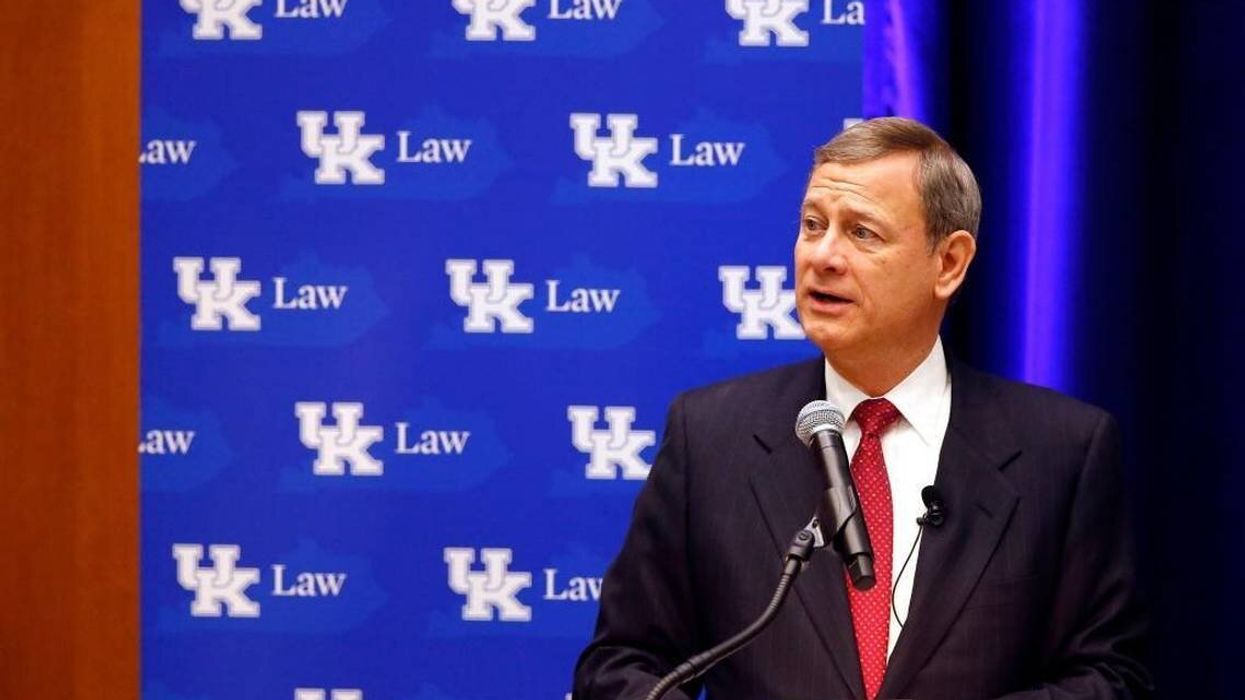
U.S. Supreme Court Justice John Roberts in 2022 (Creative Commons)
U.S. Supreme Court Justice John Roberts in 2022 (Creative Commons)

U.S. Supreme Court Justice John Roberts in 2022 (Creative Commons)
Thus far, the U.S. Supreme Court has largely managed to stay away from direct conflicts with President Donald Trump by ruling on case technicalities and handing the Republican leader the wins he wants.
NBC News speculated it may end in 2026 despite the conservatives' 6-3 majority.
Among the decisions set to be decided in the new year are questions of birthright citizenship, Trump's unilateral tariffs and the attempt to fire the Federal Reserve's board of governors.
"In all three cases, the justices could have acted sooner, but the Supreme Court has a long history of waiting until a president has lost some of his post-election power and popularity before delivering major legal losses," said NBC.
“The court is not confronting the president head-on until spring this year,” Professor Richard Pildes from the New York University School of Law told NBC. “That’s very different in terms of his political strength.”
Throughout 2025, the Court allowed emergency requests filed by the administration when they sought to bypass lower courts that deliver unfavorable rulings they consider unconstitutional.
"Trump himself has heavily criticized lower court judges who have ruled against his policies but has largely held fire when it comes to the Supreme Court, even on the rare occasions when he has lost, including a decision last month preventing him from deploying the National Guard in Chicago," the report explained.
Given the upcoming rulings, tensions between him and the Court could increase if it declares his executive orders unconstitutional.
The report recalled the Court ruling against Harry Truman's attempt to seize control of steel mills during a labor dispute. It also blocked Richard Nixon's 1974 effort to hide taped conversations at the White House during the Watergate scandal.
George W. Bush was blocked from the effort to detain suspected terrorists and Barack Obama drew rulings against his effort to give amnesty to children who were brought into the U.S. illegally but without choice.
NBC noted that the Court frequently opposed ex-President Joe Biden's executive orders. Now, the Court will decide whether Trump can have the unitary executive powers that the justices have blocked from other presidents.
The only barrier for the Supreme Court, however, is that it has no power to enforce its rulings. Thus far, American leaders have recognized the authority of the judiciary branch. That might not be the case for Trump, however.
Harvard Law's Jack Goldsmith, an expert in presidential power, wrote in November, “the Court has acted, as it generally has through its history, to maximize its authority in the face of the reality that it lacks sword or purse.”
Therein lies the the conflict, the report said, and with it, a different kind of constitutional crisis.

