Supreme Court expert has bad news for people hoping Congress will stop Trump
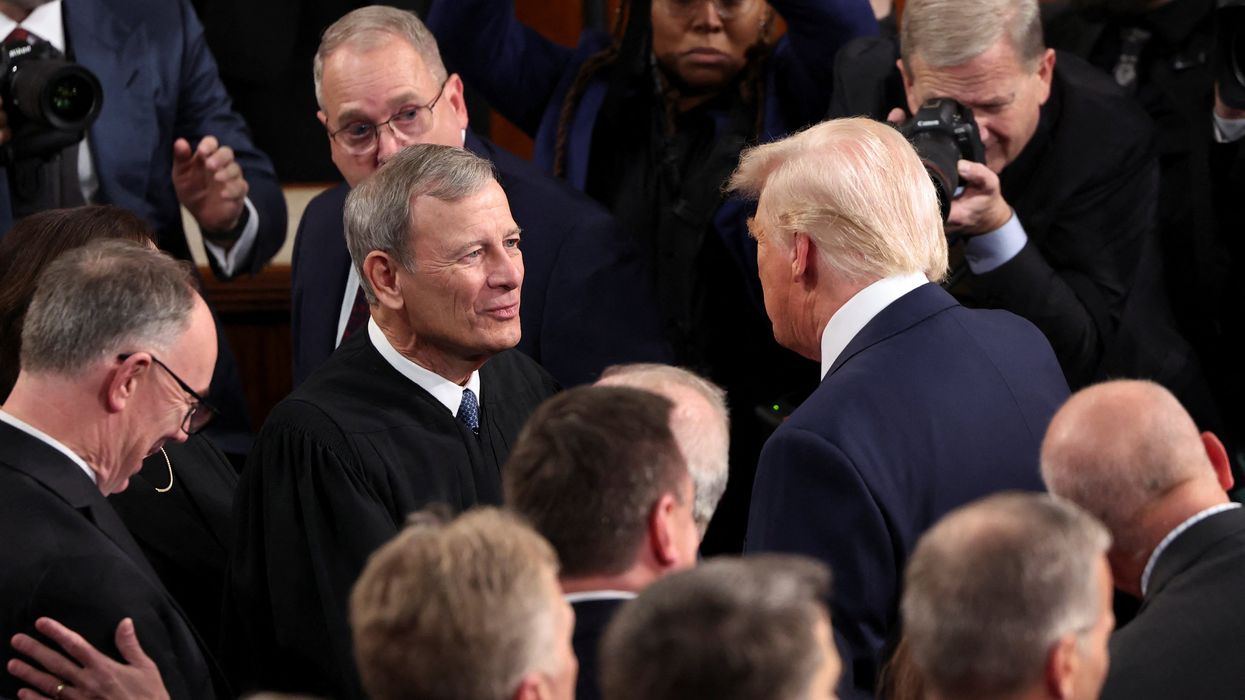

President Donald Trump has been extremely powerful since the start of his second term due in part to the compliance of the Republican-controlled Supreme Court and Congress. Democrats hope that they can rein Trump in by first taking over Congress and then appointing more Supreme Court justices — but a Supreme Court expert is arguing that, at least while Trump is in office, there is not in fact much they can do to stop him.
"Democrats controlled the House in the last two years of Mr. Trump’s first term, and he was able to stonewall most attempts at meaningful oversight," wrote The New York Times' Jeffrey Toobin on Sunday. "He refused to comply with subpoenas and fought enforcement in the courts, where he exploited the inevitable delays that come with appeals to run out the clock on his term."
Toobin added, "To cite just two examples, the House Oversight Committee sued over access to information about the census, and the case ended with President Joe Biden providing the information over two years later. The Ways and Means Committee sued to obtain Mr. Trump’s tax returns, and the Biden administration settled that case, too — nearly four years after it began."
In addition to Congress lacking the tools to force Trump to work with them, the Supreme Court has empowered Trump more than any president in American history, Toobin wrote.
"Even better for President Trump, the law is now more skewed toward the executive branch, thanks to the Supreme Court’s 2024 decision in Trump v. United States," Toobin wrote. "Its main holding was that former presidents, including Mr. Trump, enjoy absolute criminal immunity for actions in connection with their core constitutional powers and presumptive immunity for other official acts. In short, the president could not be criminally prosecuted for any 'official' actions he undertook while in office."
Toobin continued, "There is also language in Chief Justice John Roberts’s opinion that suggests the president cannot even be investigated for his official actions."
Toobin even said that Congress, though empowered to defund the war in Iran, cannot automatically end it through this action.
"But even that power has important limitations," Toobin said. "Congress cannot usually block the use of previously appropriated dollars, and given the vast size of the Pentagon budget, the administration can surely use existing funds to keep paying for that war. Even more to the point, the federal budget — with any restrictions that Democrats might seek to attach — is subject to a presidential veto. Following any plausible outcome of the midterms, the chances are remote that two-thirds of the lawmakers in each house will vote to override any of President Trump’s vetoes."
Toobin said that the only way to address this is to stop Republicans from retaining control of the Supreme Court.
"When Justice Antonin Scalia died in 2016 with nearly a year left in President Barack Obama’s term, Senator Mitch McConnell, then the leader of the Republican majority, refused to hold hearings or a vote on Mr. Obama’s nomination of Merrick Garland to the Supreme Court. Democrats can — and must — return the favor if Mr. Trump tries to fill a seat on the court in his final two years in office," Toobin wrote. "Democrats should exercise that power because it’s the right thing to do, but also because they are going to have little power to do much else."
Earlier in October, however, Toobin expressed alarm that the Supreme Court seems to plan on allowing Trump to decide who gets to vote in the 2028 presidential election.
"Last month, the Supreme Court gave tentative approval to one of the administration’s attempts to ferret out improperly registered voters, including noncitizens," Toobin wrote at the time for The New York Times. "The Department of Homeland Security decided to expand a database called Systematic Alien Verification for Entitlements, which for almost four decades has allowed federal, state and local government agencies to verify the citizenship and immigration status of noncitizens applying for public benefits using biographic and other details. Under the Trump expansion, the database added Social Security records, and the administration invited localities to use it to make bulk demands to determine eligibility for voting, not just benefits."