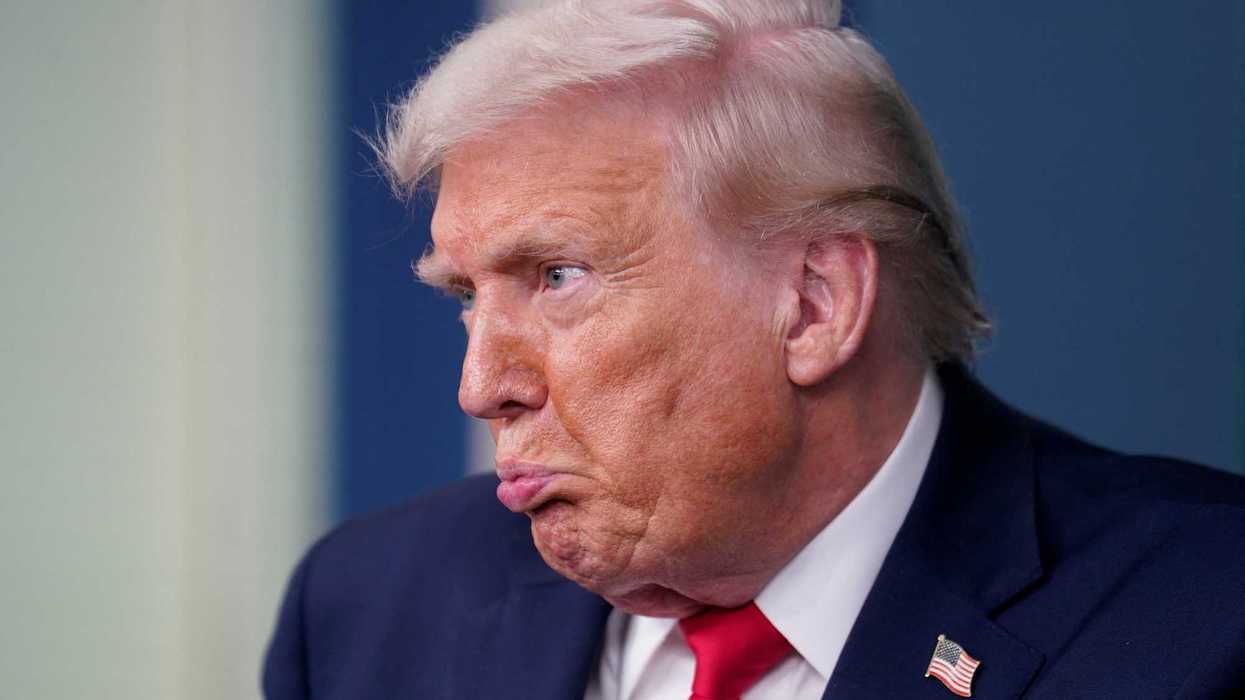
After a Republican senator put a roadblock in the way of his federal judicial nominee, President Donald Trump has officially caved and switched to a new nominee.
On Wednesday evening, Senate Judiciary Committee Chairman Chuck Grassley (R-Iowa) said that his committee had received a partial nomination package for Steve Fahey, a former prosecutor, to fill a vacancy on the U.S. District Court for the Northern District of Texas based in Dallas, the Independent reported. Fahey's nomination is for a position Trump had initially offered to Justice Department official T. Elliot Gaiser.
The change represents a victory for outgoing Sen. John Cornyn (R-Texas), who supported Fahey's nomination and refused last week to return his "blue slip" for Gaiser. The "blue slip" is a Senate tradition that allows senators to veto the nomination of a district court judge in their state.
Sources close to Cornyn said this week that Gaiser was a "dead" nominee, and the senator had publicly called on Trump to nominate Fahey instead. He had said that Gaiser is not even from Texas and that the White House was attempting to "jam him down our throat without adequate vetting for a lifetime job."
Gaiser is a former Ohio solicitor general who clerked for Supreme Court Justice Samuel Alito. He is currently heading the Justice Department's Office of Legal Counsel, which has frequently provided legal cover for the administration's actions. Gaiser was nominated after the election by Trump with the support of Texas' other Republican senator, Ted Cruz.
Cornyn is the latest Republican senator to block his own state's judicial nominee, and this is the second time the White House has had to switch nominees after home-state Republican senators objected.
Cornyn doesn't owe Trump anything. Trump endorsed Texas Attorney General Ken Paxton against Cornyn in the primary, and Cornyn lost. The seat ended up going to Democrat James Talarico in November.
Trump allies had expected Cornyn to buckle and not risk allowing Democrats to fill the position, according to MS NOW. Instead, the White House caved.
The standoff comes at a time when the administration is racing to fill lifetime judgeships before Democrats take control of the Senate on Jan. 3, when they will hold a 56-seat majority. Trump has installed 295 lifetime judges during his two terms, including three justices on the Supreme Court's 6-3 conservative majority.
Still, Fahey's nomination is not guaranteed to go through. Grassley's office said that he will consult with other senators about whether he thinks Fahey's nomination, along with that of Jim O'Neill, a new nominee from North Carolina, can be confirmed.