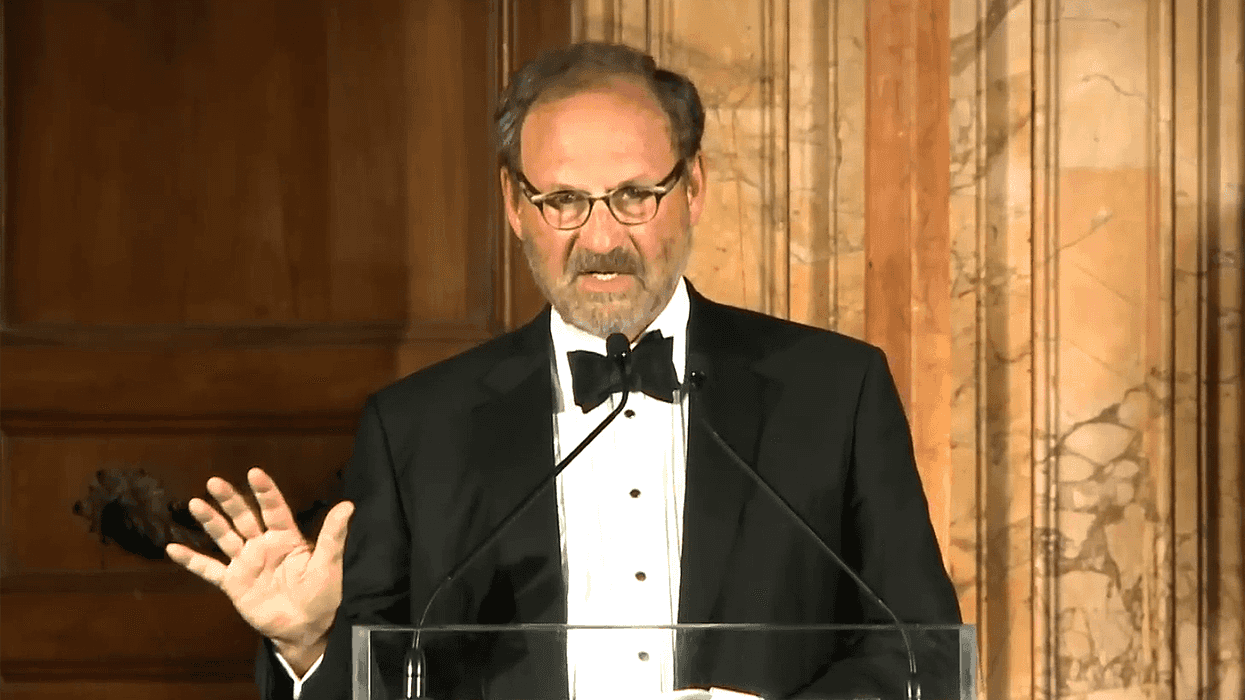
One of the examples that legal analysts took issue with in the arguments before the U.S. Supreme Court on Wednesday came from Justice Samuel Alito.
"Justice [Antonin] Scalia had an example that dealt with this situation. He imagined an old theft statute that was enacted well before anybody conceived of a microwave oven, and then afterwards (sic) someone is charged with the crime of stealing a microwave oven. And this fellow says, well, I can't be convicted under this because the microwave oven didn't exist at that time," said Alito.
"And he dismissed that. There's a general rule there, and you apply it to future applications. And what we're dealing with here is something that was basically unknown at the time when the 14th Amendment was adopted, which is illegal immigration. So, how do we deal with that situation when we have a general rule?" Alito asked, arguing that illegal immigration "was basically unknown in the 1860s."
Solicitor General John Sauer agreed with him, echoing the claim.
"Yeah, I strongly agree with the way that you framed it, that there is a general principle," Sauer began. "That's a broad principle that's adopted the phrase 'subject to the jurisdiction thereof.' And we submit that our theory of allegiance and domicile-based allegiance is what explains those specific exceptions that everybody was aware of. But it is broad enough to sweep in future situations. And as you pointed out, illegal immigration did not exist then."
Michigan University Law School Professor Leah Litman responded to the sentiment on BlueSky, writing, "Sam Alito is open to the federal government's arguments on birthright citizenship. His [question] is putting forward a framework to justify him saying, 'Well, illegal immigration didn't exist at the time of the 14th Amendment so you and I can just do whatever we want!'"
"Yep," agreed Slate's legal reporter Mark Joseph Stern. "Alito embraces the deranged argument that the extremely narrow exceptions to birthright citizenship approved by its ratifiers actually laid down a broad principle that should be applied to exclude visa-holders and undocumented people from birthright citizenship today. Awful!"
Tom Wolf, director of Democracy Initiatives at the Brennan Center for Justice, echoed Stern's comments, saying, "[Plus], the real rule on citizenship isn't just 'everyone born here is a citizen, with a few small exceptions.' It's also that we've constitutionalized this universalistic rule to prevent politicians from manipulating the definition of 'citizenship.'"
Constitutional Law Professor Anthony Michael Kreis pleaded, "Someone, please, interrupt Saurer and say they are citing white supremacist treatises!"
Constitutional law expert and legal editor Garrett Epps alleged, "Alito has never been an 'originalist,' and he proposes a Living Constitutional reading of the Clause, meaning that since there supposedly were no 'illegal aliens' in 1868 so we can apply that concept to the contemporary problem without worrying about 'original understanding.'"
Social studies assistant professor Rebecca C. Geller commented, "*stares at Alito in Second Amendment*"