
Republican politics is killing the modern-day church: analysis
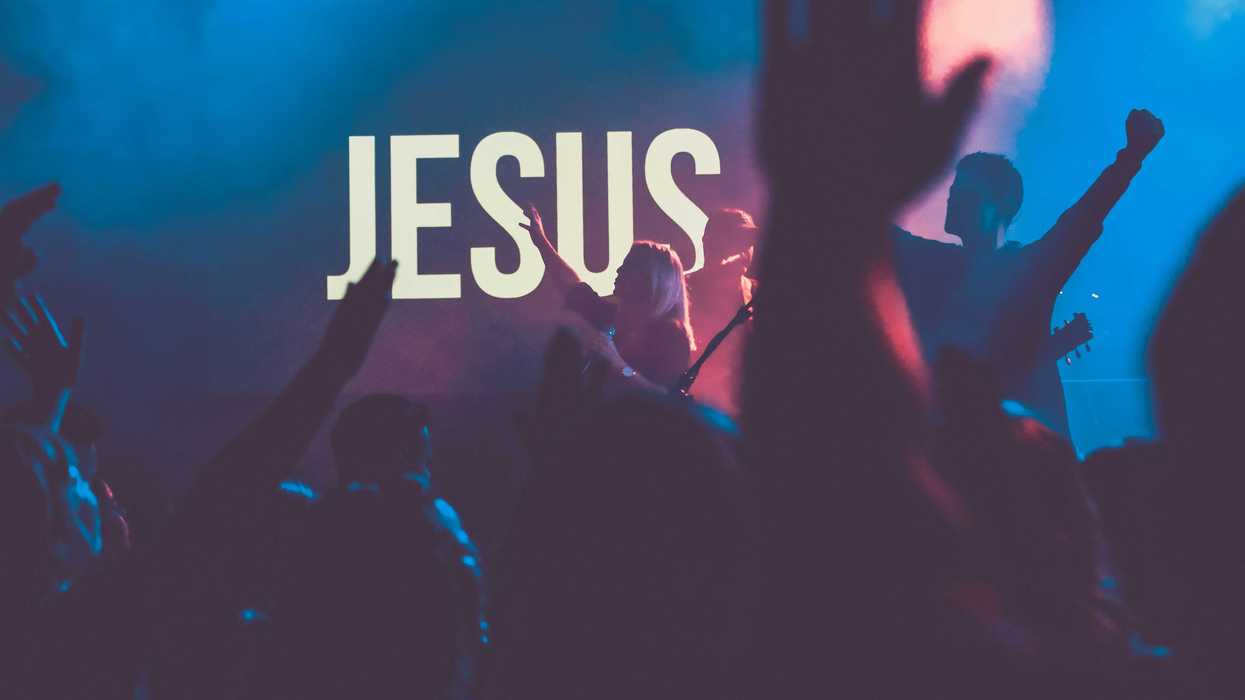
Photo by Edward Cisneros on Unsplash
religious concert performed by a band on stage
January 22, 2026 | 08:31AM ETBank
Over the years, traditional religious practice has declined in both the United States and globally, according to one political scientist.
Speaking to The New York Times' "Interesting Times" podcast, Ryan Burge, an ordained Christian minister who became a professor, analyzed data trends for his new book, "The Vanishing Church: How the Hollowing Out of Moderate Congregations Is Hurting Democracy, Faith, and Us."
The number of people declaring they aren't affiliated with any church appears to have stalled, Burge said, but this has not benefited traditional Christian churches.
Burge argues that polarization and sorting are central to the trend, with moderate, mainline Protestant churches hollowing out while more intense, ideologically defined communities remain. White evangelical congregations on the right remain comparatively stable.
Burge emphasizes that "nones" are not secretly spiritual seekers in disguise. Many are neither religious nor particularly spiritual. Instead, they reject the institutions themselves, reflecting a broader anti-establishment sentiment in the U.S.
"I think education, social trust, and institutional trust are all locked together in this matrix of things that make you either more willing to engage in polite society, or less willing to engage in polite society. Educated people have a level of trust that less educated people do not," Burge said on the podcast.
One consistent theme is that "dropping out begets dropping out." Those who drop out of church also have lower educational attainment rates. Only about 25 percent have four-year college degrees.
"So they're dropping out of education, they're dropping out of religion, and they're dropping out of politics. They're basically isolating themselves from American society," Burge said.
Unlike in previous decades, politics is shaping the religious mindset of those who do not return to the churches in which they were raised. While churches were once places where Democrats and Republicans could sit in the same pews, today people seek out others who are largely similar to themselves. Families are seeking out churches based on political alignment rather than other factors.
"What's happened in America, especially with white Christianity, is that it is coded as Republican — and that's not always been the case," Burge said. "I think this is a point that people forget: Even in the 1980s, among the white evangelical church, the share who were Republicans and the share who were Democrats was the same."
The sorting of people by similar beliefs has increased the decline of politically mixed, moderate congregations, while reinforcing the perception that white evangelical churches are an extension of the Republican Party.
"So what we're seeing here is a unique moment. The number one predictor of whether you're going to be religious or not in America — besides the religion question itself — is: What is your political ideology? If you're a liberal, there's a 50-50 chance you're a nonreligious person. If you're a conservative, it's about a 12 percent chance that you're a nonreligious person," Burge said.
Young people are most affected by political ideologies in determining religious behavior.
"Young people think, 'I'm a liberal, so I'm going to be irreligious,'" Burge said. "They don't even accept the possibility that you can be a liberal Christian anymore."
Burge noted that responses to right-wing churches have included setting up left-wing alternatives. However, mainline church members want a completely non-political space. While the Covid lockdown brought many people to watch services online, once it ended, Burge said people wanted in-person attendance. He has observed this with young people as well: only 15 percent preferred online learning, and 15 percent had no preference. The rest preferred to meet in person.
Burge concluded by saying, "Listen, religion's endured for all of Western civilization because it works for lots and lots of people. And no matter how much we try to remake it with technology and A.I. and the internet, showing up on an average Sunday with a bunch of people and singing some songs and saying some creeds and hearing a sermon is transformative and will be for all of human history, as far as I can tell."

